Printing Technology Offers Diverse Career Opportunities in India
From publishing and packaging to digital printing, security printing and software solutions, the sector offers specialised career paths across multiple industries

 The Impressive Times
TIT Correspondent
info@impressivetimes.com
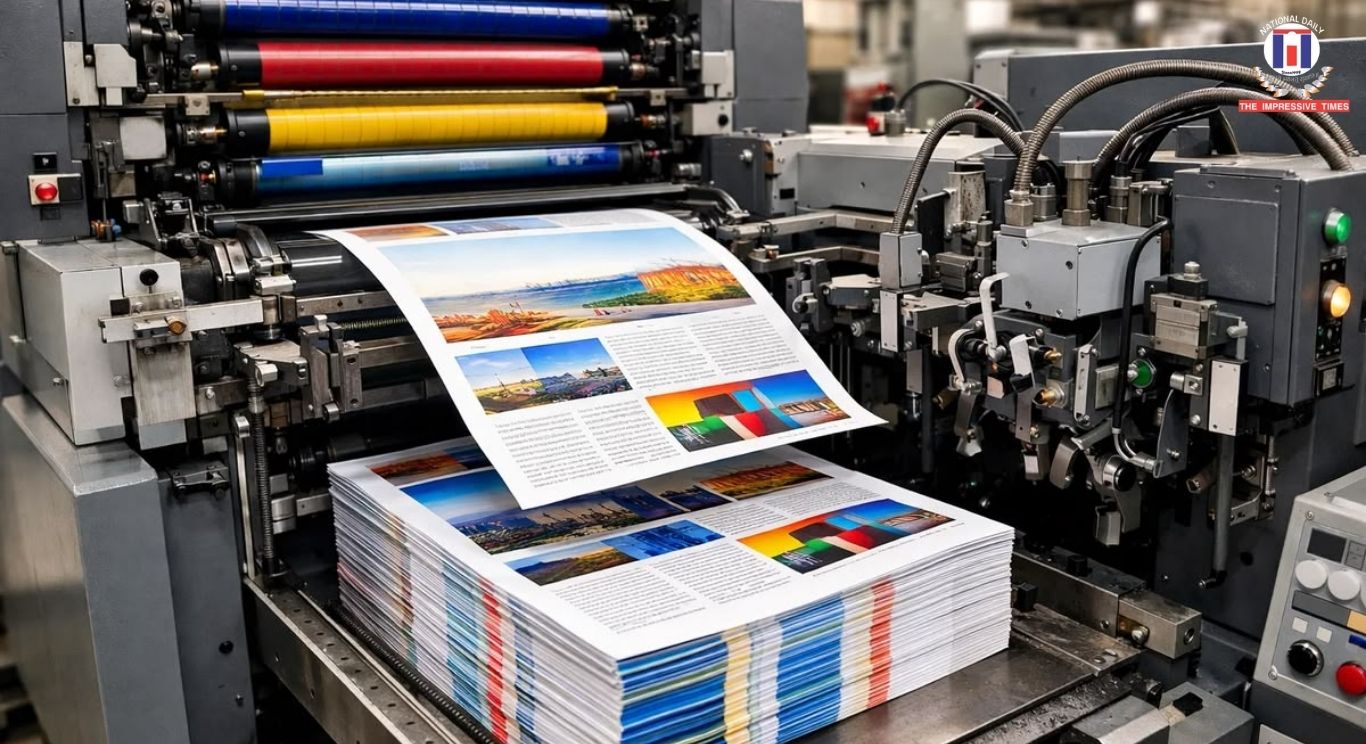
Printing continues to be an important medium of communication despite the rapid growth of digital platforms. Books, newspapers, magazines, packaging materials and other printed products remain an integral part of everyday life, while the industry also plays an important role in education, information dissemination and nation-building.
The invention of the printing press and movable type by Johannes Gutenberg transformed the way information was produced and distributed. Since then, printing has evolved significantly, incorporating advanced technologies, computerisation and digital processes.
For students interested in technology, design, production and media, Printing Technology offers a specialised career field that combines technical knowledge with creative and managerial skills.
The printing industry requires professionals with expertise in areas ranging from pre-press operations and designing to printing, binding, packaging and quality control.
Printing technologists can explore employment opportunities in:
The industry has a presence across newspapers, magazines, advertising agencies, publishing companies, packaging firms, government organisations and manufacturing units.
A large number of government departments, autonomous organisations and institutions undertake publishing and printing-related activities. These include organisations such as the Indian Council of Agricultural Research, Indian Council of Medical Research, Indira Gandhi National Open University, National Institute of Open Schooling, National Book Trust, National Council of Educational Research and Training, Publications Division, Survey of India, universities, state textbook corporations, Government of India presses, Parliament of India and the Security Printing and Minting Corporation of India.
Private-sector opportunities are also available with publishers, newspapers, magazines, advertising agencies, packaging companies, printing machinery manufacturers and companies producing printing materials and consumables.
Printing professionals may work as production supervisors, printing officers, technical officers, production managers, consultants, publication officers and quality-control professionals. With experience, they can progress into senior management and leadership positions.
A printing technologist joining the production division of a newspaper or magazine may begin as a production supervisor and gradually move into managerial and senior leadership positions.
Other career avenues include:
Qualified professionals can also find opportunities with companies involved in printing machinery, paper, inks, photographic materials, packaging and other consumables.
The sector also has links with the software industry. Companies working in design, publishing, digital production and related technologies can require professionals with knowledge of both printing processes and information technology.
Printing Technology programmes are available at diploma, undergraduate, postgraduate and doctoral levels.
| Course | Eligibility | Duration |
|---|---|---|
| Diploma in Printing | Class 10 with Mathematics and Science | 3 years |
| B.Tech/B.E. in Printing or Packaging Technology | Class 12 with Physics and Mathematics along with the specified science/technical subjects; admission through applicable entrance or merit criteria | 4 years |
| B.Voc. in Printing Technology/Printing and Publishing | Class 12 in any stream | 3 years |
| M.Tech/M.E. in Printing Technology | B.Tech/B.E. in Printing or Packaging Technology | 2 years |
| Ph.D. in Printing Technology | As prescribed by the concerned university | 2–4 years |
The source also notes that diploma holders can obtain lateral-entry admission to the second year of certain engineering programmes through applicable entrance mechanisms.
B.Voc. programmes in Printing Technology have been introduced in several institutions as part of skill-oriented higher education initiatives. These programmes are designed to provide students with industry-relevant skills and improve their employment prospects.
The programmes follow the skill-based education framework associated with the National Skill Qualification Framework and emphasise practical learning alongside academic study.
Industrial Training Institutes also offer certificate-level training in areas such as:
These courses focus on developing practical knowledge required for entry-level positions in printing establishments.
Printing Technology is an interdisciplinary field. Students are introduced to printing processes, materials, pre-press technologies, binding and finishing operations, cost estimation, entrepreneurship and business management.
Bachelor’s and master’s programmes can also include subjects related to mechanical engineering, information technology, electrical and electronics engineering, computers, chemistry, quality management, operations management, project management and technology management.
Students also gain knowledge of printing inks, paper and other consumables used in the industry.
The growth of modern printing facilities has created demand for professionals at different levels. These include supervisory personnel for large production units, works and production managers, engineers involved in printing machinery and materials, maintenance engineers and sales or marketing professionals.
Printing technologists may also work as faculty members in institutions offering diploma and degree programmes. Advertising agencies and other media-related organisations can offer opportunities in production and coordination roles.
The employment landscape extends well beyond conventional printing presses. Professionals can build careers in:
Publishing: Books, newspapers, magazines and educational publications.
Packaging: Flexible packaging, commercial packaging and related production operations.
Digital Printing: Computer-based design and modern digital production systems.
Security Printing: Specialised printing for documents and other secure materials.
Machinery and Equipment: Manufacturing, installation, servicing and maintenance of printing equipment.
Advertising and Media: Production and coordination roles within advertising agencies and media organisations.
Software and Technology: Digital publishing, design, colour management and printing software solutions.
Academics: Teaching and research in institutions offering printing-related programmes.
The source lists several institutions offering programmes in Printing Technology. These include Anna University, Guru Jambeshwar University of Science and Technology, Jadavpur University, Manipal Institute of Technology, Pune Vidyarthi Griha’s College of Engineering and Technology, Kurukshetra University, OM Institute of Technology and Management, Somany Institute of Technology and Management and other institutions.
Institutions listed for B.Voc. programmes include Derozio Memorial College, Jayasingpur College, Kalindi College, Moolji Jaitha College, KRT Arts, BH Commerce and AM Science College, Lyallpur Khalsa College, Pusa Institute of Technology and Tata Institute of Social Sciences.
Diploma-level programmes are listed at institutions including Pusa Institute of Technology, Government Polytechnic Gulzar Bagh in Patna, Government Institute of Printing Technology in Secunderabad and Bangalore, Institute of Printing Technology in Sivakasi and Chennai, Maharashtra Institute of Printing Technology, Regional Institute of Printing Technology in Jadavpur and other specialised institutes.
The list is indicative and may vary according to the programmes offered by institutions at a particular time.
The expansion of digital media has raised questions about the future of conventional print. However, printing continues to remain relevant across publishing, packaging, education, advertising, government communication and specialised applications.
Increasing computerisation and technological advancement are also transforming the nature of the profession. Today’s printing professional is expected to understand not only conventional printing processes but also digital technologies, production management, quality control and emerging industry practices.
For students seeking a career that combines engineering, technology, production, design and management, Printing Technology can therefore provide a wide range of professional options.
The sector’s continued evolution is expected to create opportunities for skilled professionals across printing, packaging, publishing, machinery, digital production and related industries.


























No Comments: