NEET Preparation Guide: How to Prepare Effectively for the Medical Entrance Exam
Focus on NCERT, prioritise high-weightage topics and use the final days for intensive revision and previous-year papers

 The Impressive Times
TIT Correspondent
info@impressivetimes.com
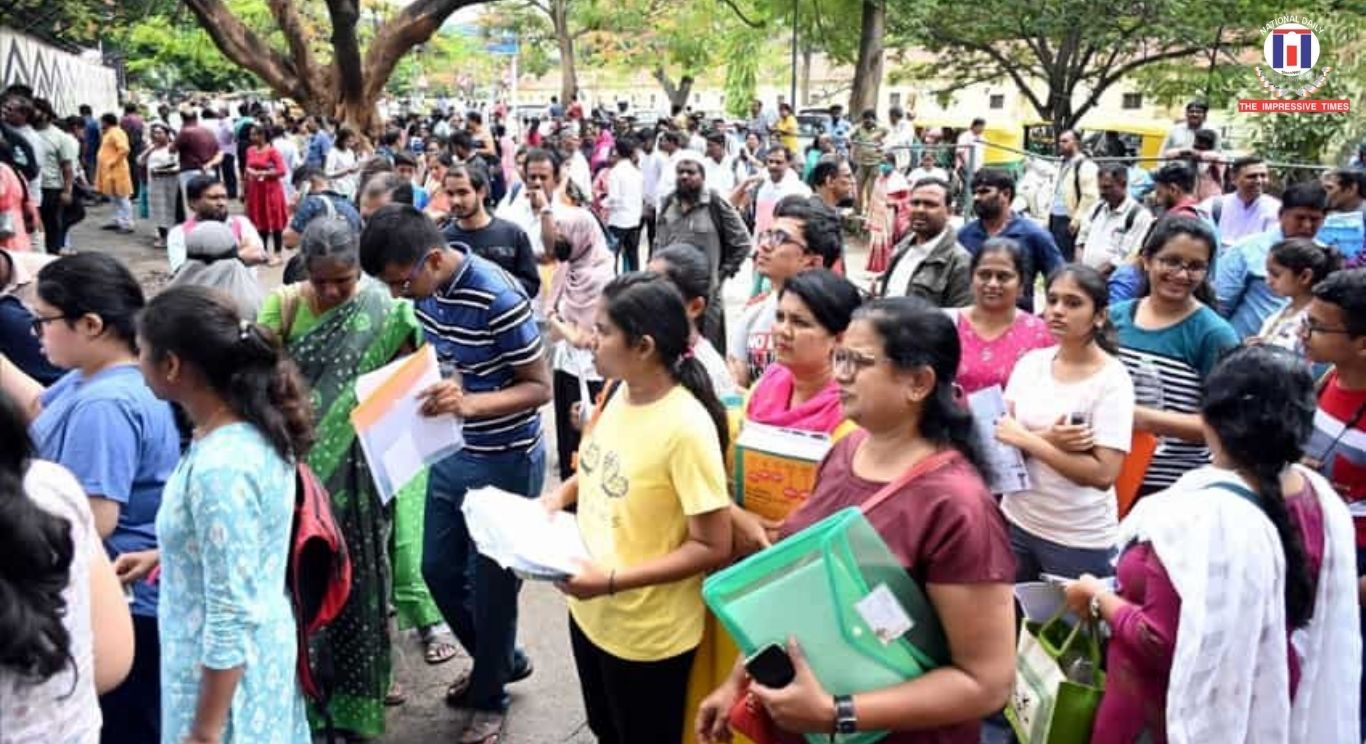
The National Eligibility cum Entrance Test (NEET) is one of India’s key medical entrance examinations for admission to undergraduate medical and dental programmes. For students aspiring to pursue a career in medicine, focused preparation, effective time management and familiarity with the examination pattern are essential.
For the 2017 admission cycle, participating states were required to fill 15 per cent of their MBBS and BDS seats through the centralised All India counselling process, while the remaining 85 per cent seats were to be filled through state counselling. Institutions including Delhi University, Banaras Hindu University and Jamia Hamdard University also considered NEET scores for medical and dental admissions.
According to the source material, candidates appearing for NEET 2017 had to meet several academic and age-related requirements.
Applicants were required to have passed or appeared for Class 12 or an equivalent examination with Physics, Chemistry, Biology or Biotechnology and English.
The qualifying marks requirements were:
Candidates were required to be at least 17 years old by December 31, 2017. The source also notes that the upper age limit was removed during the 2017 admission process, although the matter was subject to further judicial consideration.
For seats under the 85 per cent state quota, candidates were required to meet the relevant domicile and residency requirements of the state.
The source further states that Aadhaar was required for most applicants, with an exception for candidates from Jammu and Kashmir, Assam and Meghalaya.
NEET 2017 was scheduled for May 7, 2017. Candidates were required to apply online through the official NEET website by providing their personal and academic details and selecting examination-centre preferences.
Applicants needed a valid email ID, password and a scanned recent photograph. The application fee was listed as ₹1,400 for General and OBC candidates and ₹750 for SC, ST and PH candidates.
The admit card was scheduled to be released on April 15, 2017. Candidates were also advised to preserve the confirmation page after completing the application process.
Preparing for NEET in just one month can be challenging, particularly for students who have not completed the syllabus. However, the source recommends using the limited time strategically rather than attempting to study every topic in equal depth.
The first priority should be completing important topics, followed by revision and extensive practice.
With limited preparation time, students should primarily rely on NCERT textbooks. Additional preparation books can be used for reference and MCQ practice.
Rather than spending excessive time on new study material, aspirants should concentrate on:
The source recommends prioritising topics such as:
Laws of Motion, Alternating Current and Work, Energy and Power should receive additional practice.
Physics preparation should not be limited to memorising formulas. Students should understand how those formulas are applied to numerical and conceptual problems. NCERT numerical problems should be solved carefully, followed by MCQs from reliable preparation material.
The recommended priority areas for Botany and Zoology include:
The source highlights the importance of NCERT for Biology preparation and advises students to study diagrams, definitions and concepts carefully.
Aspirants should avoid simply reading chapters repeatedly. Active revision through questions and self-testing can help strengthen retention.
Important Chemistry areas listed in the source include:
Inorganic Chemistry requires thorough revision of important facts and NCERT content. Organic and Physical Chemistry require a combination of conceptual understanding, formula revision and problem-solving practice.
The final week should be dedicated largely to revision and examination practice. The source recommends solving at least 10 previous-year NEET and AIPMT papers.
Previous-year papers can help students understand the question pattern, assess the difficulty level and identify areas that require further revision.
The source highlights negative marking in NEET 2017. Candidates should therefore avoid attempting questions purely through guesswork when they have no reasonable basis for selecting an answer.
Long study hours should not come at the cost of basic health. Adequate sleep, nutritious food and short breaks can help maintain concentration.
Mobile phones and social media can consume valuable preparation time. Students should minimise unnecessary screen time during the final phase of preparation.
The final days should focus on strengthening already studied concepts, revising formulas and facts, and practising questions.
NEET preparation can be stressful, particularly when the examination is approaching. Maintaining a positive approach and focusing on achievable daily targets can help students remain consistent.
A short preparation window does not necessarily mean giving up on the examination. The key is to study selectively, rely on reliable material, revise strategically and practise as many relevant questions as possible.
For medical aspirants, disciplined preparation combined with NCERT-based study, regular testing and effective time management can make the final phase of NEET preparation considerably more productive.






















No Comments: