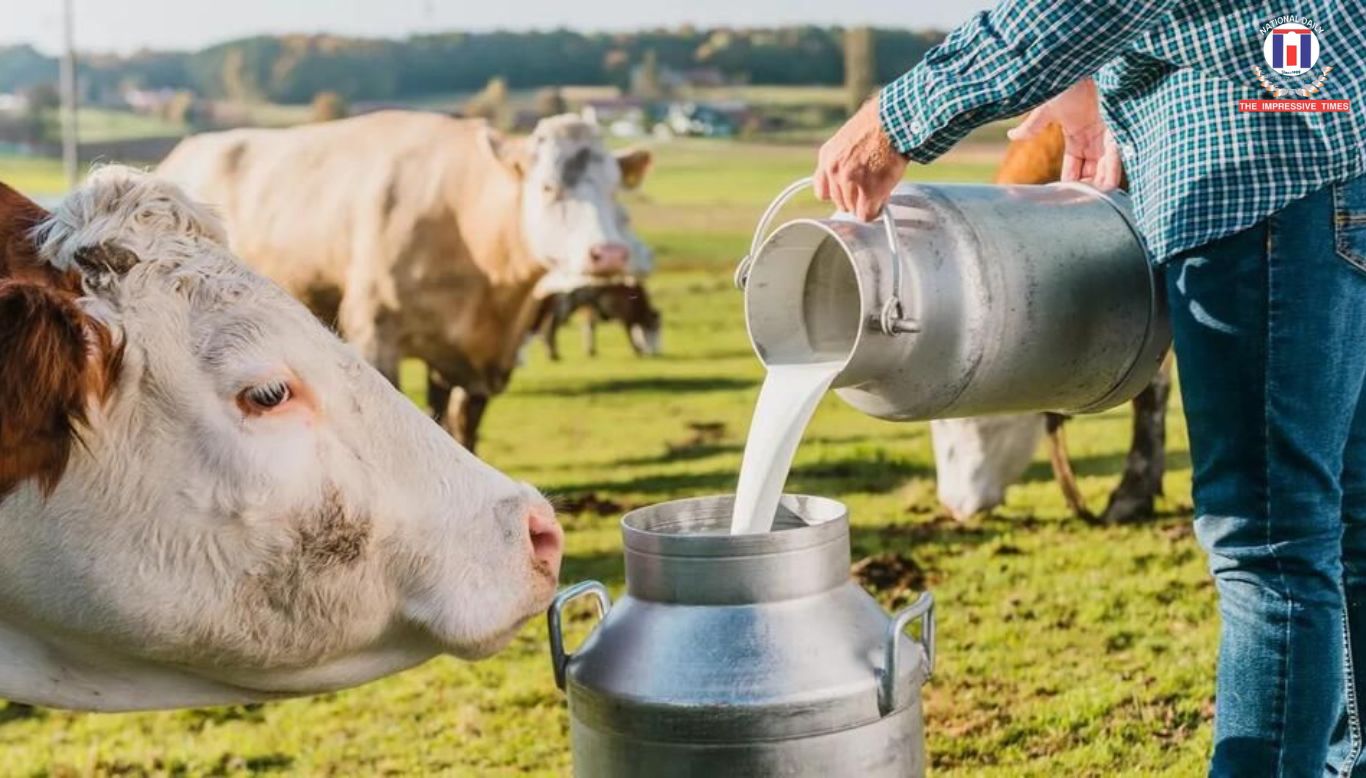
A glass of milk has long been a familiar part of Indian households, whether served with breakfast, added to a cup of tea or enjoyed before bedtime. Beyond its place in everyday food habits, milk continues to play an important role in nutrition, family health and the rural economy. As India celebrates National Milk Day on November 26, the occasion offers an opportunity to rediscover the nutritional value of milk while recognising the millions of farmers who keep the country’s dairy industry thriving.
Observed every year to commemorate the birth anniversary of Dr. Verghese Kurien, widely known as the Father of India’s White Revolution, National Milk Day celebrates the transformation of India’s dairy sector through cooperative institutions and farmer participation. His contribution helped establish a model that connected rural milk producers with organised markets and made India a global leader in milk production.
Milk and Its Role in Everyday Nutrition
Milk is valued for its combination of essential nutrients that support overall health. It provides high-quality animal protein along with calcium, magnesium and potassium, making it an important dietary component for people across different age groups.
Calcium contributes to healthy bones and teeth, while protein supports muscle development and tissue repair. Other minerals present in milk contribute to several essential bodily functions.
For growing children, milk can form part of a balanced diet that supports physical development. Adults can include it as a convenient source of protein and calcium, while older people may benefit from its contribution to maintaining bone health.
However, individual nutritional requirements differ. Milk is best consumed as part of a balanced diet that also includes fruits, vegetables, whole grains, pulses and other protein sources.
India Retains Its Position as the World’s Largest Milk Producer
India’s dairy story is not limited to household nutrition. It is also one of the country’s most significant agricultural success stories.
According to government data, India’s milk production reached 247.87 million tonnes in 2024-25, compared with 146.31 million tonnes in 2014-15. This represents an increase of 69.41 per cent over the decade.
India contributes nearly one-fourth of global milk production, maintaining its position as the world’s largest milk producer.
The improvement is also reflected in per capita milk availability, which increased from 319 grams per person per day in 2014-15 to 485 grams in 2024-25.
Uttar Pradesh leads among India’s milk-producing states, accounting for 15.66 per cent of national production. Rajasthan follows with 14.82 per cent, while Madhya Pradesh, Gujarat and Maharashtra are other major contributors.
These figures underline how dairy farming has developed into an important source of food security, agricultural income and rural employment.
Women at the Heart of India’s Dairy Revolution
One of the most significant aspects of India’s dairy industry is the contribution of women. From caring for livestock and managing daily milking activities to collecting and supplying milk, women play a central role in sustaining dairy operations across villages.
Nearly 70 per cent of India’s dairy farming workforce comprises women, highlighting the sector’s importance in strengthening women’s economic participation.
Farmer-owned Milk Producer Organisations are further expanding opportunities for women by connecting them with organised procurement systems, transparent pricing and direct bank payments.
As of October 31, 2026, NDDB Dairy Services had established 25 Milk Producer Organisations, of which 18 had entirely women members and women producer directors. These organisations collectively covered more than 13 lakh milk producers across 175 districts in 12 states.
Women accounted for approximately 78 per cent of producers associated with these organisations.
Such initiatives demonstrate how dairy farming can contribute not only to household income but also to financial independence and greater participation of women in rural institutions.
White Revolution 2.0: Taking Dairy Development to the Next Level
India is now working towards expanding its dairy cooperative network through White Revolution 2.0, a cooperative-led initiative launched on December 25, 2024.
The programme aims to increase milk procurement by dairy cooperatives by 50 per cent over five years. It also seeks to establish 75,000 new Dairy Cooperative Societies in uncovered villages and Panchayats and strengthen 46,422 existing societies by 2028-29.
As of October 31, 2026, 24,097 new Dairy Cooperative Societies had been formed, while 31,394 existing societies had been strengthened.
The initiative also focuses on sustainability by encouraging better utilisation of cattle dung and agricultural waste. These resources can be converted into biogas, organic manure and other useful products, creating additional economic opportunities for rural communities.
Beyond Milk: Building a Sustainable Dairy Ecosystem
The development of India’s dairy industry also depends on animal health, scientific breeding, quality infrastructure and modern technology.
Government programmes such as the Rashtriya Gokul Mission are supporting the conservation and improvement of indigenous bovine breeds. Initiatives involving artificial insemination, sex-sorted semen and in-vitro fertilisation are intended to improve livestock productivity.
Meanwhile, the Livestock Health and Disease Control Programme supports veterinary services, including doorstep assistance through Mobile Veterinary Units. By October 31, 2026, around 4,019 such units were operational across 29 states and Union Territories.
Digital technology is also becoming an important part of livestock management. Under the Bharat Pashudhan database, animals receive a unique 12-digit identification number known as Pashu Aadhaar. This system helps maintain digital records of vaccination, breeding and treatment.
Together, these measures are aimed at improving animal welfare, strengthening dairy infrastructure and making milk production more efficient.
National Milk Day and the Legacy of Dr. Verghese Kurien
National Milk Day is more than a celebration of a widely consumed food product. It is a reminder of how collective efforts, scientific development and farmer-led institutions can transform an entire sector.
Dr. Verghese Kurien’s vision helped establish a cooperative movement that changed the economic landscape of rural India. Today, millions of dairy farmers continue to contribute to this legacy through their daily work.
From a glass of milk on the breakfast table to the livelihoods of rural households, the dairy sector connects nutrition with economic opportunity. As India observes National Milk Day 2026, the occasion celebrates not just the country’s achievements in milk production but also the farmers, women and cooperative institutions working behind every drop.
The real strength of India’s dairy revolution lies in its ability to nourish families while creating opportunities for the communities that produce it.































No Comments: