Matri Van Urban Forest Launched in Gurugram: A Green Lung for Delhi NCR Under ‘Ek Ped Maa Ke Naam’ Campaign
From Neem to Peepal, the forest will revive traditional species and displace invasive flora.


 The Impressive Times
Gurugram— In a landmark step towards climate resilience and urban biodiversity, Union Environment Minister Bhupender Yadav and Union Minister for Housing and Urban Affairs Manohar Lal jointly launched the ambitious ‘Matri Van’ initiative in Gurugram. Spread across 750 acres of the Aravalli hill region along the Gurugram-Faridabad Road, the Matri Van is a theme-based urban forest project designed to become the ecological heart and lungs of Delhi NCR.
The initiative is a part of the Government of India’s ‘Ek Ped Maa Ke Naam’ campaign and was launched under the ongoing Van Mahotsav 2025 celebrations. Organized by the Forest Department of Haryana, the event witnessed participation from key dignitaries including Rao Narbir Singh, Minister for Industries and Forest, Haryana, alongside public representatives, senior officials, and members of the civil society.
Union Minister Bhupender Yadav described Matri Van as a living tribute to Mother Nature. He highlighted that this green cover will provide a much-needed breathing space for residents of NCR while also conserving the unique ecosystem of the Aravallis. He thanked the Haryana government for its proactive approach in transforming this once-barren, thorny terrain into a vibrant forest ecosystem through the plantation of native tree species. The forest will offer a peaceful space for both young and elderly citizens, enhancing overall quality of life and promoting well-being.
Addressing the audience, Manohar Lal emphasized that increasing carbon emissions remain a serious global challenge, but India is actively addressing it by expanding renewable energy, planting trees, and discouraging deforestation. He encouraged citizens to become ‘Van Mitras’ by adopting the tradition of tree plantation. He added that Gurugram, being a leading urban center, must set an example in adopting sustainable models like green buildings, biodiversity parks, and eco-tourism practices such as jungle safaris.
The Matri Van will focus on the removal of invasive species such as Kabuli Kikar and will see large-scale plantation of long-rotation native trees including Peepal, Neem, Bael, Bargad, Amaltash, Bamboo, Khair, and other species endemic to the Aravallis. Various themed ecological zones like Bodhi Vatika, Pushp Vatika, Sugandh Vatika, Nakshatra Vatika, and Butterfly Gardens will be developed to educate and engage the public while preserving ecological diversity. These carefully curated groves will reflect traditional Indian connections with nature and promote environmental awareness among visitors.
In addition to dense plantations, the forest will be equipped with public infrastructure including nature trails, cycling tracks, yoga areas, gazebos, and eco-friendly public utilities. A treated water irrigation system, along with misting and sprinkling solutions, will ensure the forest’s sustainability. Water bodies will be created at select locations to aid in water conservation and to help prevent urban flooding, especially during monsoon months.
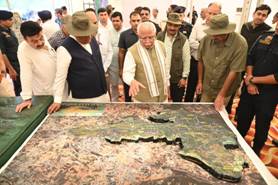
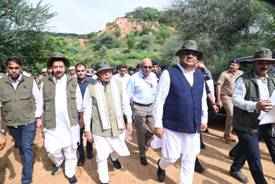
The initiative is a result of a multi-stakeholder collaboration involving Corporate Social Responsibility (CSR) partners, Resident Welfare Associations, NGOs, multinational companies, educational institutions, and government organizations. Earlier in the day, dignitaries also reviewed the progress of the Aravalli Jungle Safari Park and took part in sapling plantations at five designated locations in IMT Manesar, under the facilitation of the Haryana State Industrial and Infrastructure Development Corporation (HSIIDC).
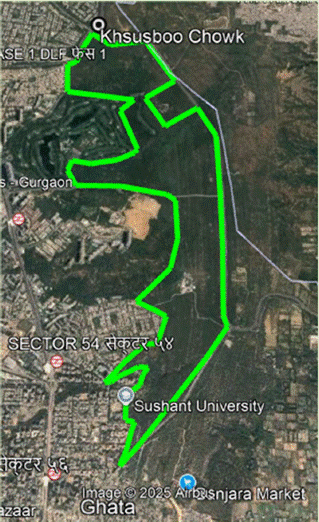
Minister Bhupender Yadav thanked Prime Minister Narendra Modi for inspiring the movement to green the Aravalli hills and for launching ‘Ek Ped Maa Ke Naam’—an effort that symbolizes gratitude to nature. He also reaffirmed India’s commitment to Mission LiFE, which advocates for saving water, energy, food, managing solid and e-waste, banning single-use plastics, and following a healthy, eco-conscious lifestyle.
With its ecological significance and urban relevance, Matri Van is set to become a model for other metropolitan areas across the country. As Gurugram aspires to become an ‘Ideal Millennium City,’ this green lung in the heart of the Aravallis reflects India’s vision of sustainable development and environmental stewardship.
·






























No Comments: