Chief Minister Rekha Gupta launches DPCC’s Integrated Command and Control Centre
AI and CCTV cameras to enable 24x7 live monitoring of over 700 construction sites, GPS tracking and body cameras to strengthen transparency


 The Impressive Times
New Delhi, 1 October 2026 : Delhi Chief Minister Rekha Gupta on Thursday launched the Delhi Pollution Control Committee’s (DPCC) Integrated Command and Control Centre (ICCC) at the Delhi Metro Rail Corporation (DMRC) IT Park in Shastri Park as part of the Seva Sankalp Campaign. The state-of-the-art centre will enable real-time monitoring of various sources of pollution in Delhi, AI-based analysis, integration of complaints and field inspection information, and better coordination among concerned departments. Its objective is not merely to collect pollution-related data, but to turn technology-driven information into swift field action and measurable outcomes. Delhi Environment Minister Sardar Manjinder Singh Sirsa, MLA Arvinder Singh Lovely and other dignitaries were present on the occasion.
ICCC to serve as the nerve centre of environmental action, not just a control room
Chief Minister Rekha Gupta said the government’s focus in tackling Delhi’s pollution challenge is not limited to monitoring. Its priority is to bring technology, data and field enforcement together to ensure prompt action. Through the ICCC, pollution hotspots, violations and various sources of pollution can be identified quickly, with the information passed on to the concerned departments to ensure action on the ground.

She said the core principle of the entire system is ‘Detect, Analyse, Act, Verify’, identifying the problem, analysing it, taking immediate action and verifying the outcome. The Delhi Government is making continuous efforts against pollution throughout the year and round the clock. Work is being undertaken simultaneously on all major sources of pollution, including mechanical road sweeping, dust control, smog guns, mist sprays, monitoring of construction sites, expansion of green cover, clean transport and electric mobility.
Direct link between technology and field action
Real-time information generated by the ICCC will be directly linked to field-level action. Once a pollution hotspot is identified, the concerned department can be alerted for action, while the movement of field teams will also be monitored through GPS-enabled vehicles. During this winter, 78 sub-division-level teams will be engaged in monitoring and enforcement through the centre. This will establish a direct link between problems identified through technology and action taken on the ground.

Technology to strengthen pollution monitoring and field action
Chief Minister Rekha Gupta said field monitoring is being integrated with technology to effectively control pollution caused by road dust, open waste burning and construction activities. Pollution-causing activities will be identified and acted upon through ‘Vayudoot’ teams, while their body cameras will be connected to the command centre, enabling real-time monitoring of field activities.
Mechanical road sweeping machines operating in Delhi have also been connected to GPS. Through the ICCC, the location of these machines, cleaning within designated areas, distance covered and operating hours can be monitored. This will further strengthen transparency, accountability and timely action in cleaning and pollution control efforts.
‘Jan Suggestion’ portal to strengthen public participation
Referring to the ‘Jan Suggestion’ portal launched during the programme, the Chief Minister said strengthening public participation in pollution control efforts is also a priority for the government. Citizens will be able to share their suggestions, complaints, pollution-related concerns and information about good work being undertaken to reduce pollution through the portal. Complaints can be acted upon, useful suggestions can be incorporated into the system, and good efforts by citizens towards pollution control can also be recorded and encouraged.
AI-CCTV monitoring of 700+ construction sites
Delhi Environment Minister Manjinder Singh Sirsa said the state-of-the-art 24×7 ICCC has been set up to strengthen the fight against pollution and was completed before the stipulated six-month deadline. It will function as an effective war room during winter. More than 700 construction sites covering over 500 square metres are being monitored live through AI and CCTV, and the concerned department and site owner will be alerted immediately if PM10 levels rise.
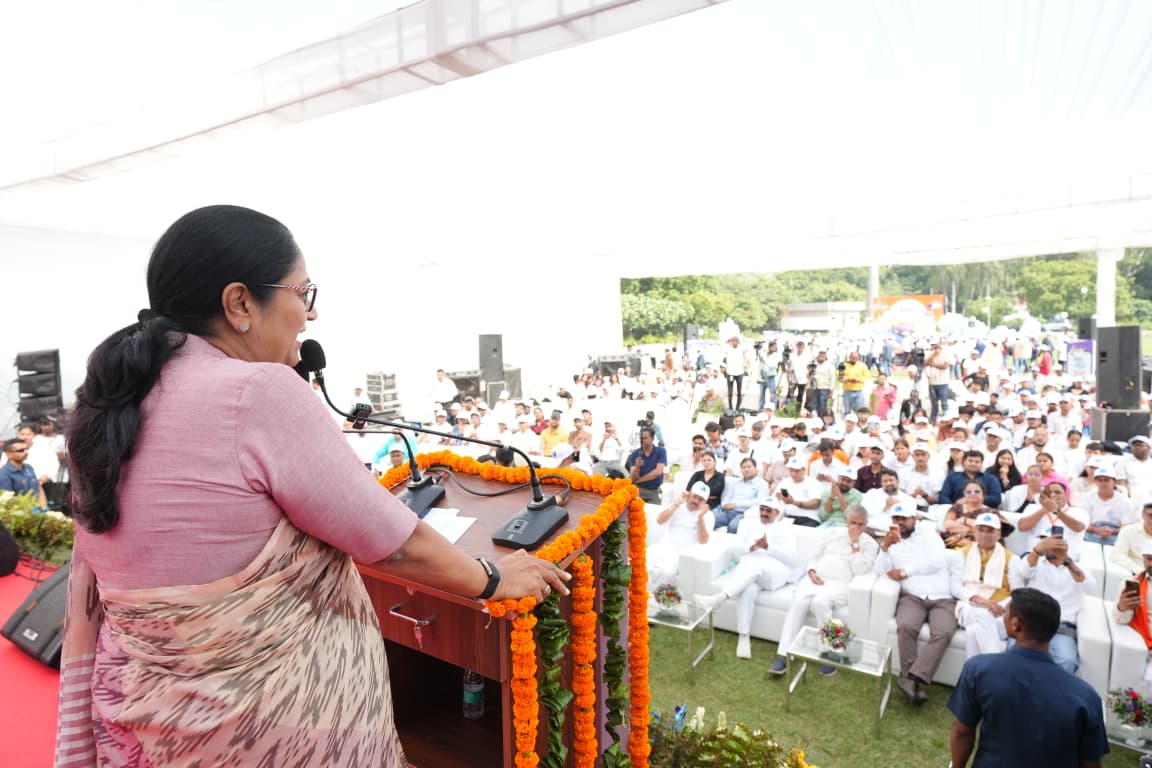
He said the ICCC will monitor all AQI stations in Delhi, analyse data from previous years and track local causes of pollution, along with the location, routes and operations of road sweeping machines. New cameras will be used to monitor open waste and biomass burning, while body cameras have been made mandatory for DPCC officials conducting inspections of industries and polluting sites, ensuring greater transparency and accountability in enforcement.
The Environment Minister said public participation is crucial to controlling pollution. Through the ‘Jan Suggestion’ portal launched by the Chief Minister, citizens are being invited to submit suggestions, and those making notable contributions will be recognised. Against the target of 70 lakh trees, 72 lakh trees have already been planted and the campaign is continuing. The government aims to control pollution through public participation and prevent a situation such as GRAP Stage-IV. Officials and staff will be deployed at the ICCC round the clock in shifts, with facilities including food, a kitchen, pantry, mess and bunk beds available for them.





































No Comments: