
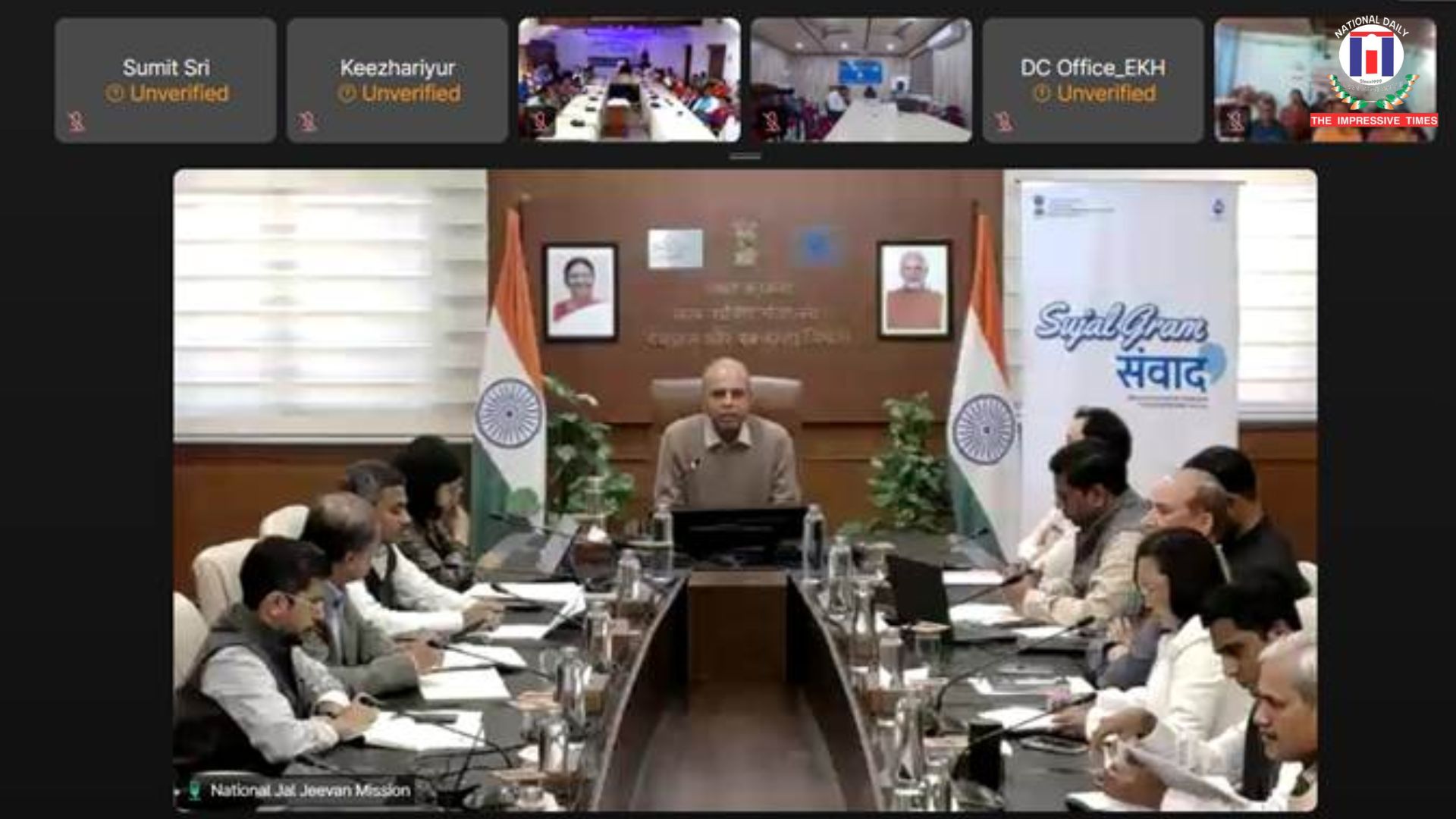

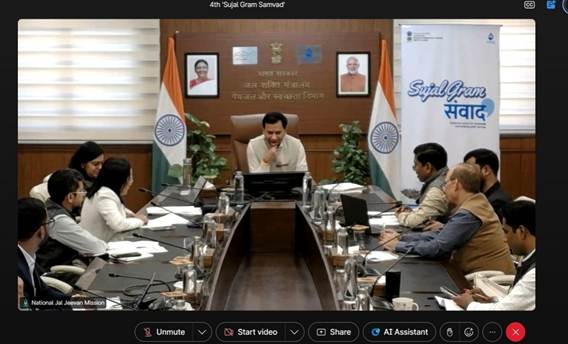
New Delhi, February 24: The Department of Drinking Water and Sanitation (DDWS) under the Ministry of Jal Shakti conducted the fourth edition of its multilingual outreach initiative, ‘Sujal Gram Samvad’, strengthening grassroots participation in rural water management under the Jal Jeevan Mission.
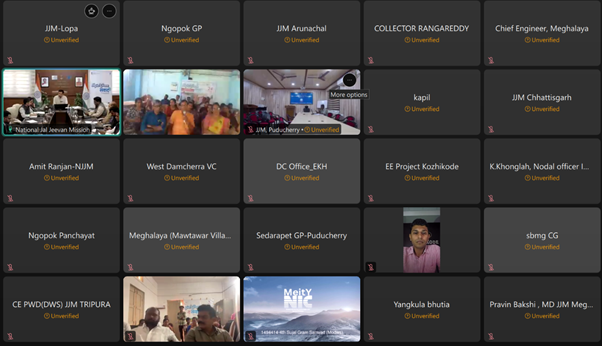
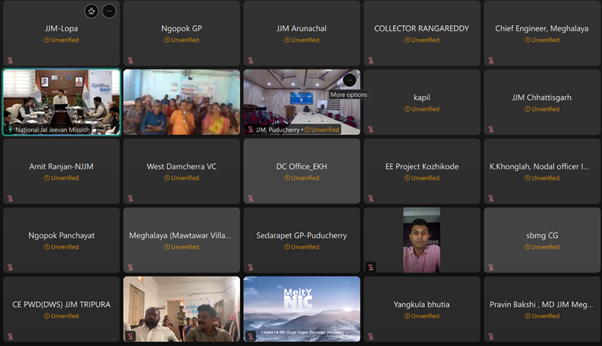
The virtual programme brought together representatives from six Gram Panchayat headquarters spread across five States and one Union Territory. Around 2,000 participants, including Panchayat leaders, Village Water and Sanitation Committee (VWSC) members, women self-help groups, frontline workers, students and district officials, joined the dialogue. Community members also gathered in large numbers at village levels, ensuring wider public engagement.
Focus on Sustainability and Local Ownership
Addressing the session, DDWS Secretary Shri Ashok K.K. Meena highlighted that while significant progress has been made in creating rural drinking water infrastructure, ensuring long-term sustainability and regular service delivery is now the priority. He stressed that Gram Panchayats and VWSCs must take full ownership of operations and maintenance of water supply systems.
He noted that institutional mechanisms such as District Technical Units will be strengthened to provide technical support. Emphasis was also laid on transparency measures like ‘Jal Seva Aankalan’, an annual exercise where Gram Panchayats present water service details before the Gram Sabha.
The Secretary also announced that a nationwide ‘Jal Mahotsav’ will be organised from March 8 to March 22, aligning with International Women’s Day and World Water Day. The campaign will focus on formal asset handover to Panchayats, water quality monitoring, institutional capacity building and enhanced community participation.
Village Voices from Across India
During the Samvad, communities shared their experiences in their respective local languages:
-
West Damcherra, North Tripura (Tripura): Villagers described the transition from unsafe hill streams to household tap connections, leading to reduced waterborne diseases and improved quality of life. Greywater management through soak pits was also highlighted.
-
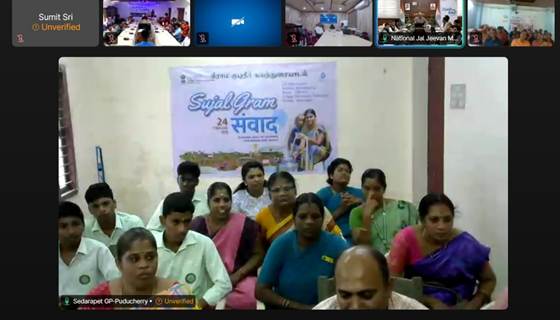
Sederapet (Puducherry): The Panchayat reported 100% Functional Household Tap Connections (FHTCs), supported by overhead tanks, borewells and a structured maintenance system ensuring reliable water supply.
-
Pulimamidi, Rangareddy (Telangana): Community members spoke about universal tap coverage in homes, schools and Anganwadi Centres, along with preparations for Jal Arpan ceremonies during Jal Mahotsav.
-
Ngopok Pokdum, East Siang (Arunachal Pradesh): The Panchayat shared its achievement of 24×7 gravity-based water supply to all households, supported by trained “Nal Jal Mitras” and women conducting regular quality testing. A user charge system sustains operations.
-
Mawtawar, East Khasi Hills (Meghalaya): Residents explained how elevated tanks now ensure steady supply in difficult hilly terrain, significantly reducing the burden on women who earlier spent hours fetching water.
-
Kunnummal, Kozhikode (Kerala): The Panchayat described its shift from tanker dependence to round-the-year supply, supported by local volunteers and real-time monitoring systems.
Strengthening Community-Led Water Governance
In his concluding remarks, Additional Secretary and Mission Director, NJJM, Shri Kamal Kishore Soan appreciated the participatory model and encouraged open discussions on both achievements and challenges. He urged Panchayats to actively engage in the upcoming Jal Mahotsav and further institutionalise water governance practices.
The session began with a welcome address by Dr. Ankita Chakraborty, Deputy Secretary, NJJM, and concluded with a vote of thanks by Shri Y.K. Singh, Director, NJJM.
The fourth edition of ‘Sujal Gram Samvad’ once again underscored the Centre’s focus on community-driven water governance, peer learning and strengthening ‘Jan Bhagidari’ in rural drinking water management.











No Comments: