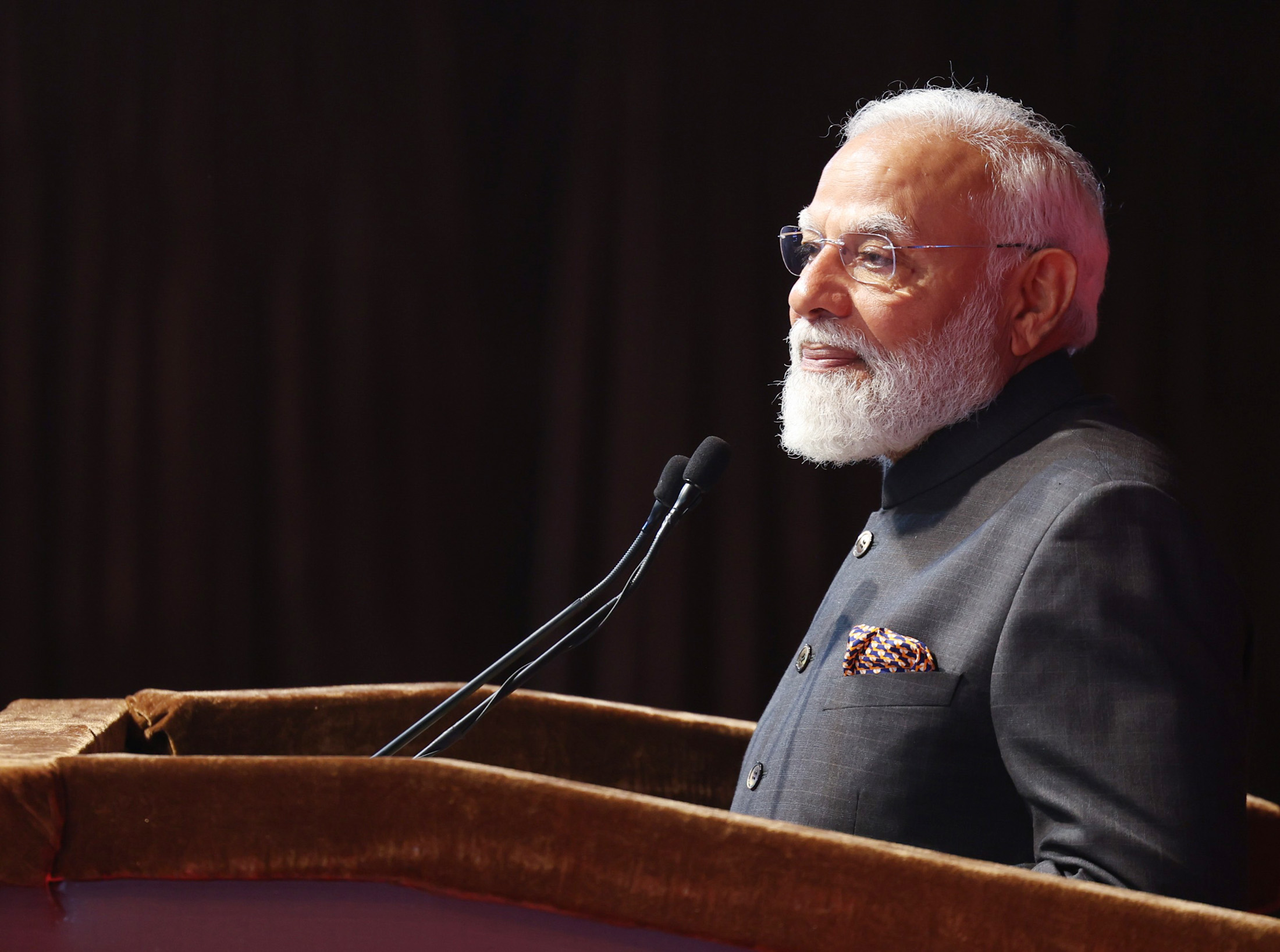
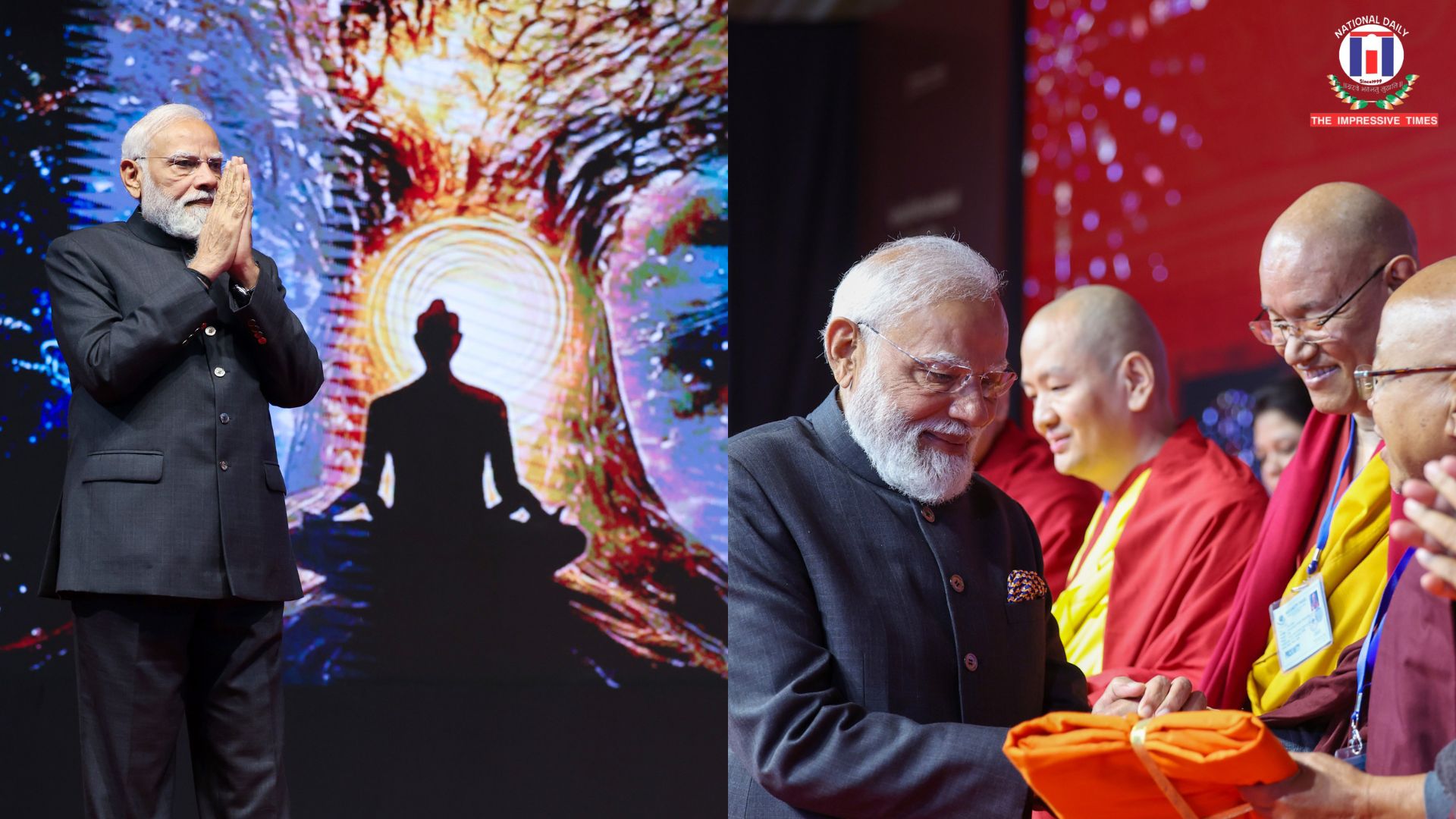
New Delhi, January 3, 2026: Prime Minister Narendra Modi on Friday inaugurated the Grand International Exposition of Sacred Piprahwa Relics of Bhagwan Buddha at the Rai Pithora Cultural Complex in the national capital, describing the return of the relics as a historic moment that reconnects India with a deeply spiritual chapter of its civilisation after more than a century.
Addressing monks, scholars, dignitaries, and citizens, the Prime Minister said the relics of Bhagwan Buddha are not museum objects for India but a living part of its spiritual heritage, inseparable from the nation’s cultural identity. He expressed hope that the beginning of 2026, marked by this sacred occasion, would usher in a new era of peace, harmony, and prosperity for the world.
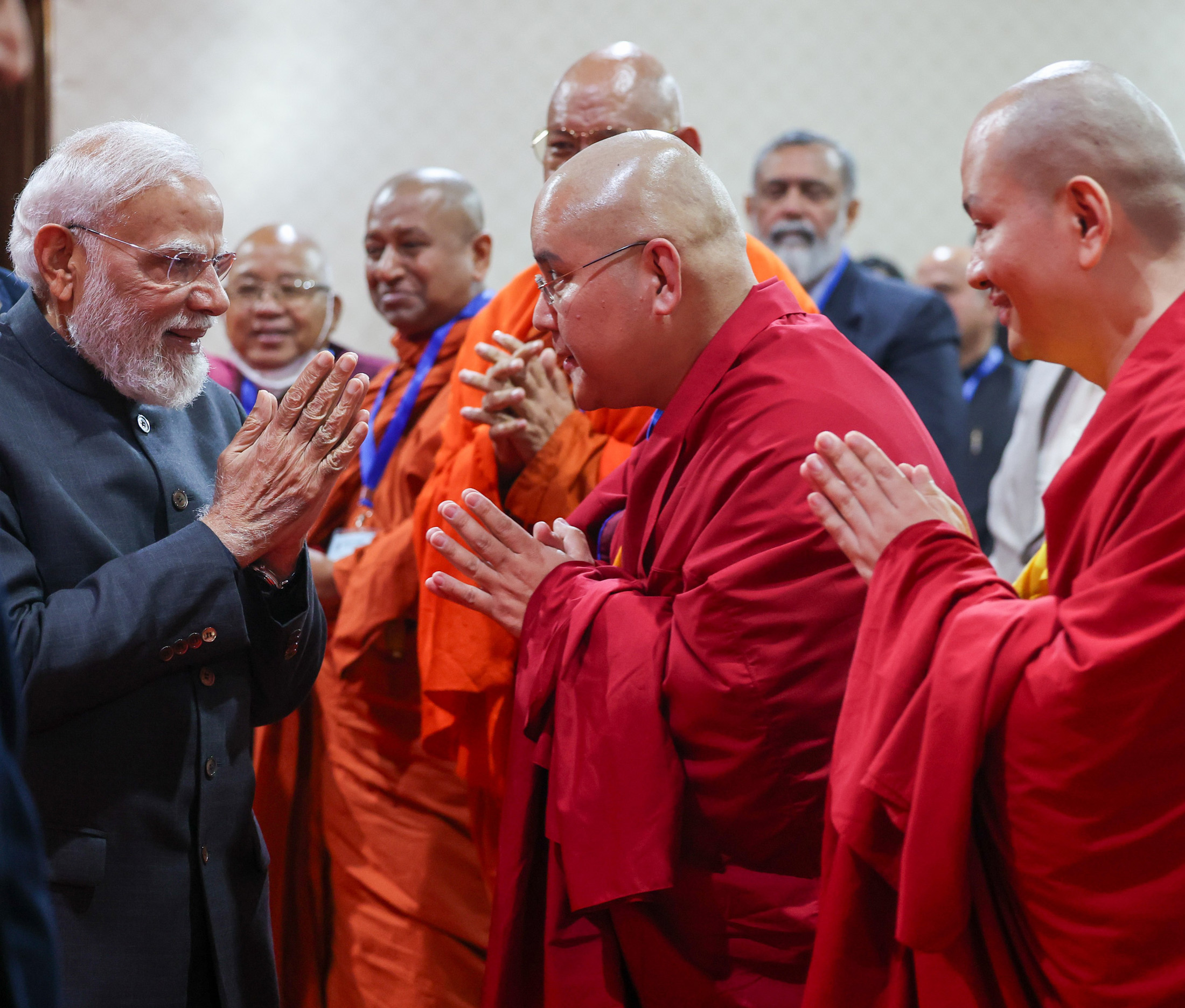
The Prime Minister noted that the return of the Piprahwa relics after nearly 125 years symbolises the restoration of India’s lost heritage. He recalled that these sacred remains were taken away during the colonial period and treated merely as collectibles abroad, even being considered for auction. India, he asserted, firmly opposed any such attempt and ensured their return through determined efforts and cooperation.
Modi acknowledged the role played by the Godrej Group in facilitating the repatriation, stating that the relics have now returned to the land of Buddha’s awakening, contemplation, and Mahaparinirvana.
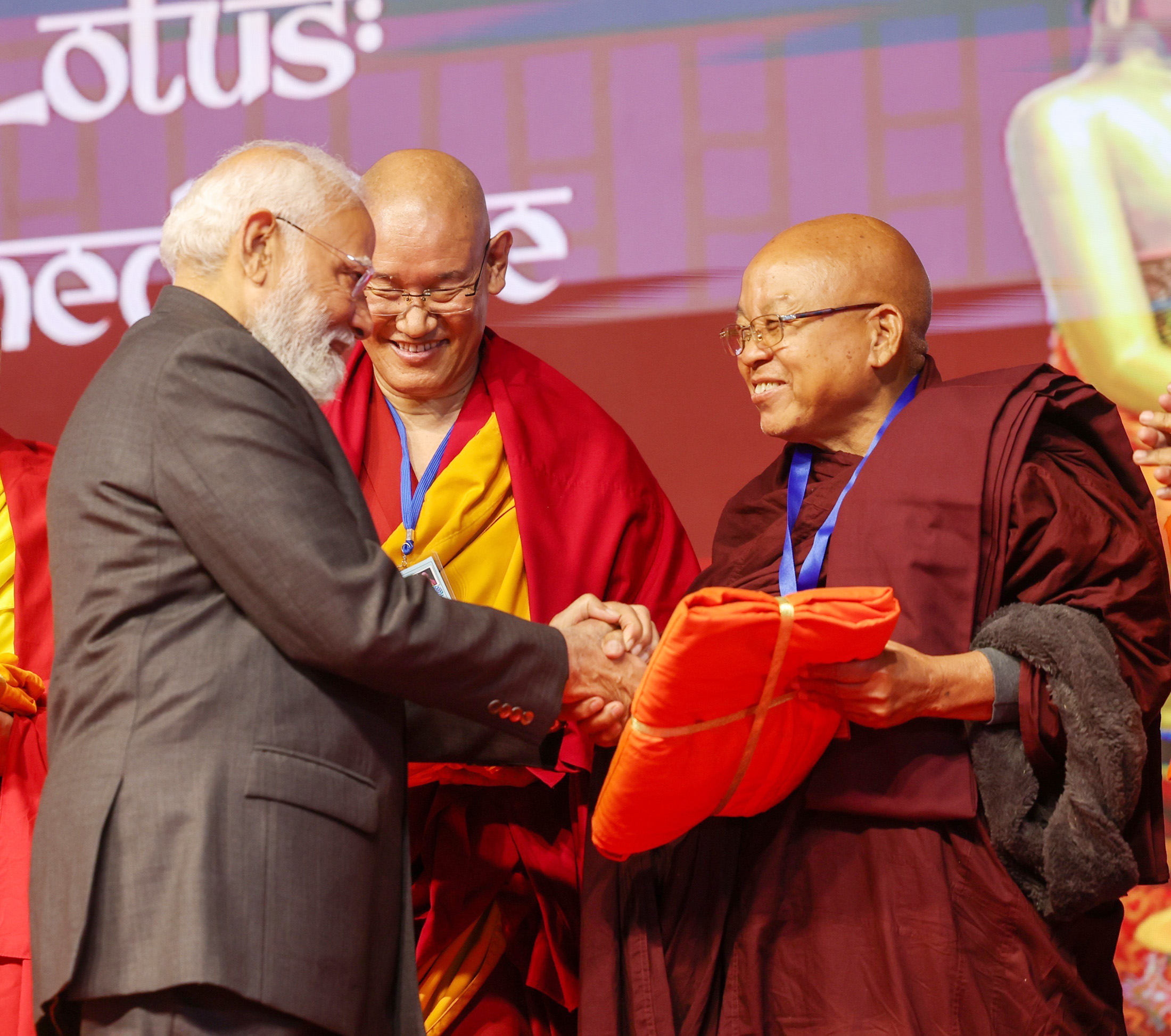
Emphasising the universal relevance of Buddha’s teachings, the Prime Minister said that the wisdom and path shown by Bhagwan Buddha transcend borders, religions, and generations. He cited the overwhelming public response witnessed during the international display of these relics in countries such as Thailand, Vietnam, Mongolia, and Russia, where millions of devotees paid homage irrespective of nationality or social status.
He observed that the devotion witnessed across continents reinforces the idea that Bhagwan Buddha belongs to everyone and unites humanity through compassion and peace.
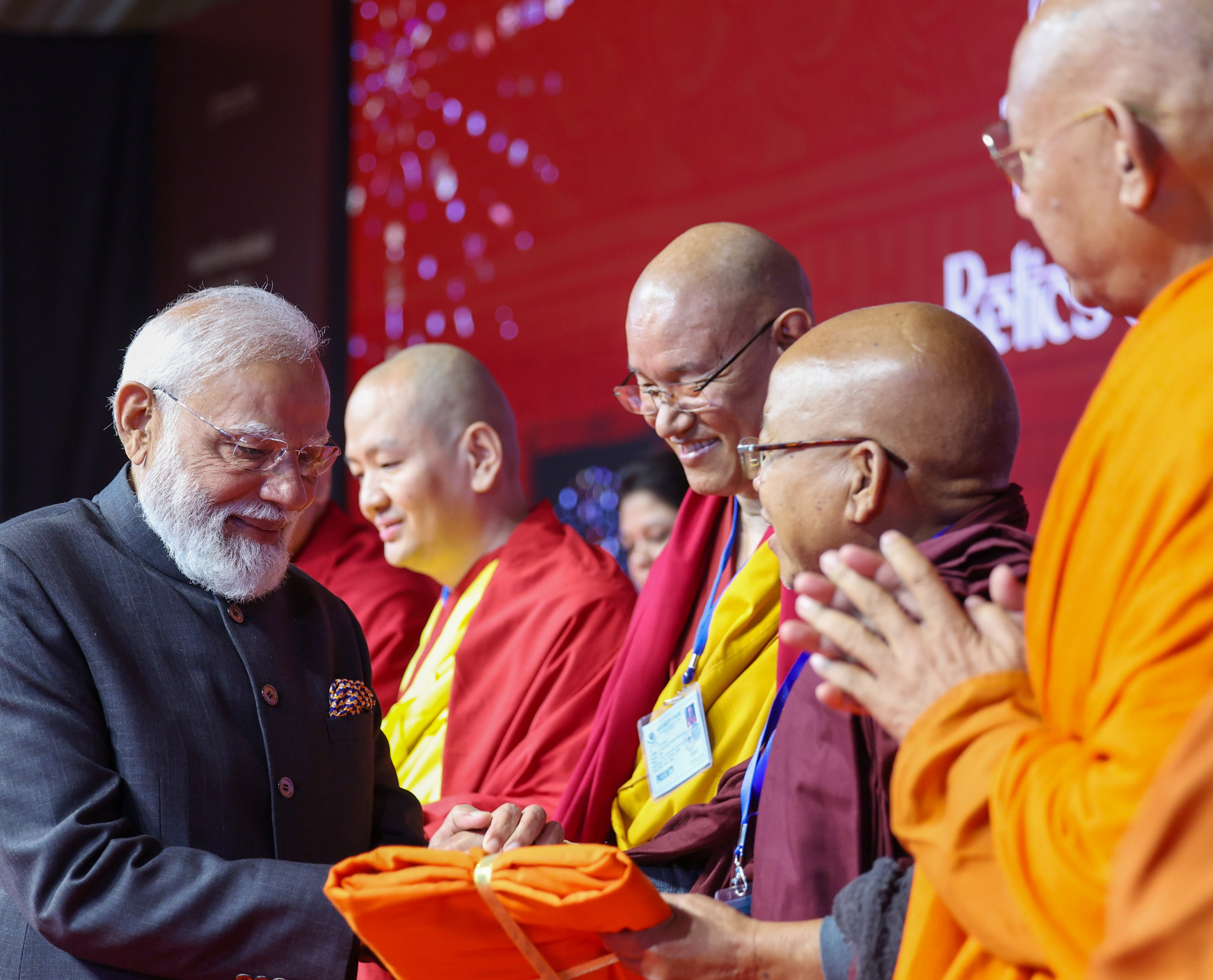
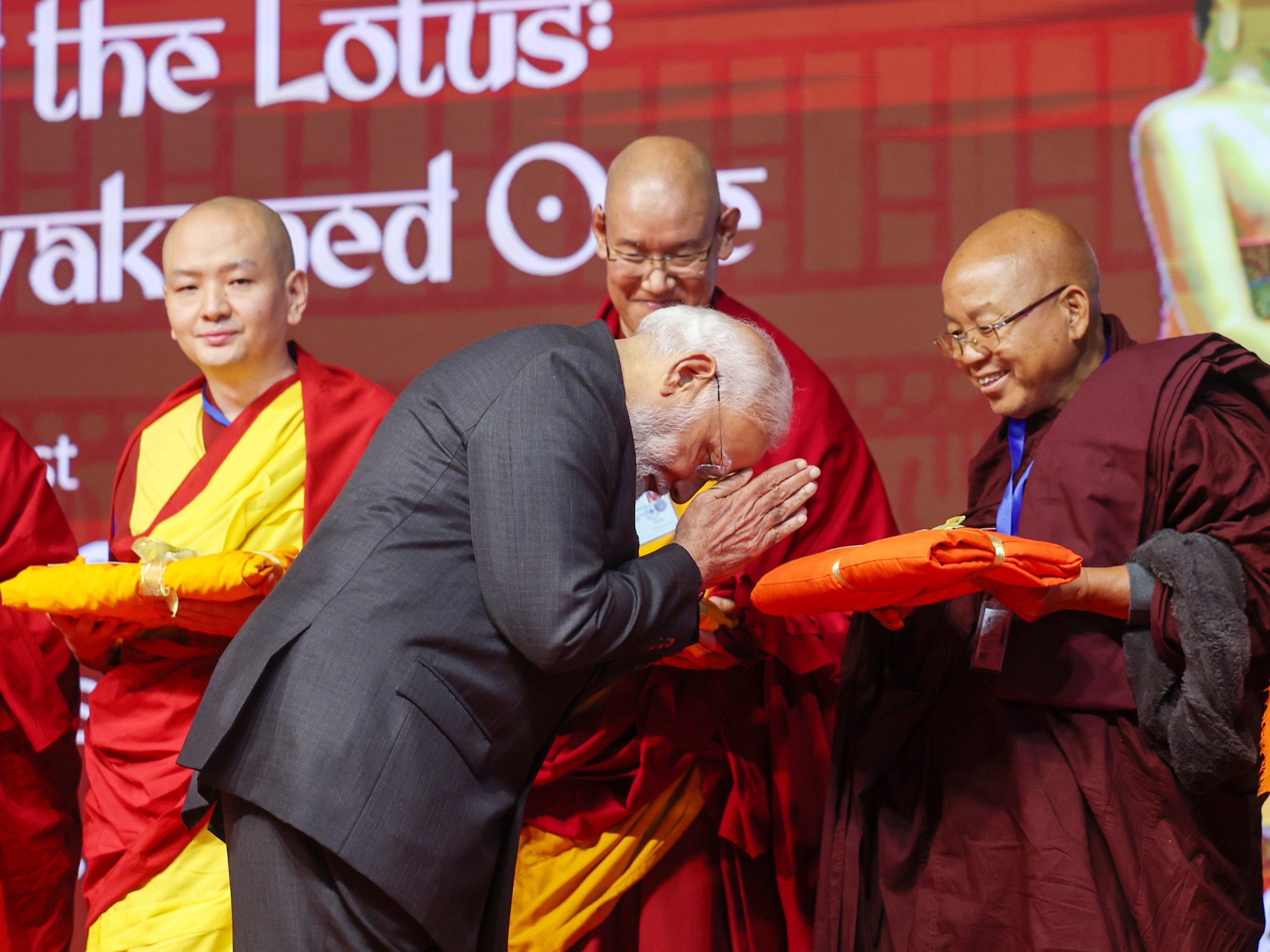
Modi reflected on his own spiritual journey, sharing that his birthplace Vadnagar was once a major centre of Buddhist learning, while Sarnath, where Buddha delivered his first sermon, is part of his karmabhoomi. He recalled visiting sacred Buddhist sites across Asia as both a pilgrim and as Prime Minister, including Lumbini, Sarnath, Japan, China, Mongolia, Sri Lanka, Thailand, and Singapore.
He also spoke of carrying Bodhi tree saplings to various countries, noting the symbolic power of planting one in Hiroshima, a city once devastated by atomic destruction.
The Prime Minister underlined that India’s connection with the Buddhist world is rooted not merely in diplomacy or economics, but in shared spiritual consciousness. He said relics discovered at sites such as Piprahwa, Vaishali, Devni Mori, and Nagarjunakonda represent living testimonies of Buddha’s message, preserved through both scientific methods and spiritual reverence.
He highlighted India’s continued efforts to restore and preserve Buddhist heritage globally, including reconstruction support in Nepal after the earthquake, conservation of pagodas in Myanmar, and multiple heritage initiatives within India.
Modi said the government has worked extensively over the past decade to integrate Buddhist heritage with modern infrastructure. Developments include meditation centres and convention facilities in Bodh Gaya, a light-and-sound show in Sarnath, improved pilgrim facilities in Shravasti, Kapilvastu, Kushinagar, Sanchi, Amaravati, and Nagarjun Sagar, and digital experience centres in Telangana.
He added that a nationwide Buddhist Circuit is being developed to enhance connectivity and provide pilgrims with a holistic spiritual experience.
The Prime Minister emphasised that Buddha’s teachings were originally delivered in Pali, and making the language accessible is essential to preserving the original essence of Dhamma. He said granting classical language status to Pali will promote research, education, and global understanding of Buddhist philosophy.
He also referred to initiatives such as the Global Buddhist Summit and observance of Vaishakh and Ashadha Purnima as efforts to pass this heritage on to future generations.
Calling the exhibition a powerful bridge between India’s glorious past and its aspirations for the future, Modi urged students, youth, and citizens from across the country to visit the exposition and experience Buddha’s teachings firsthand.
He concluded by reiterating India’s commitment to the ideals of “Sarvajan Hitaya, Sarvajan Sukhaya”, stating that in an age of global uncertainty, Buddha’s message of compassion, self-reliance, and peace remains more relevant than ever.
Union Ministers and senior dignitaries, including Gajendra Singh Shekhawat, Kiren Rijiju, Ramdas Athawale, Rao Inderjit Singh, and Delhi Lieutenant Governor Vinai Kumar Saxena, were present at the inauguration.


















No Comments: