New Criminal Laws to Deliver Justice Within Three Years by 2029: Amit Shah
Modi government has reduced the ‘Grey Area’ by defining cybercrime, organized crime, terrorism and digital fraud

 The Impressive Times
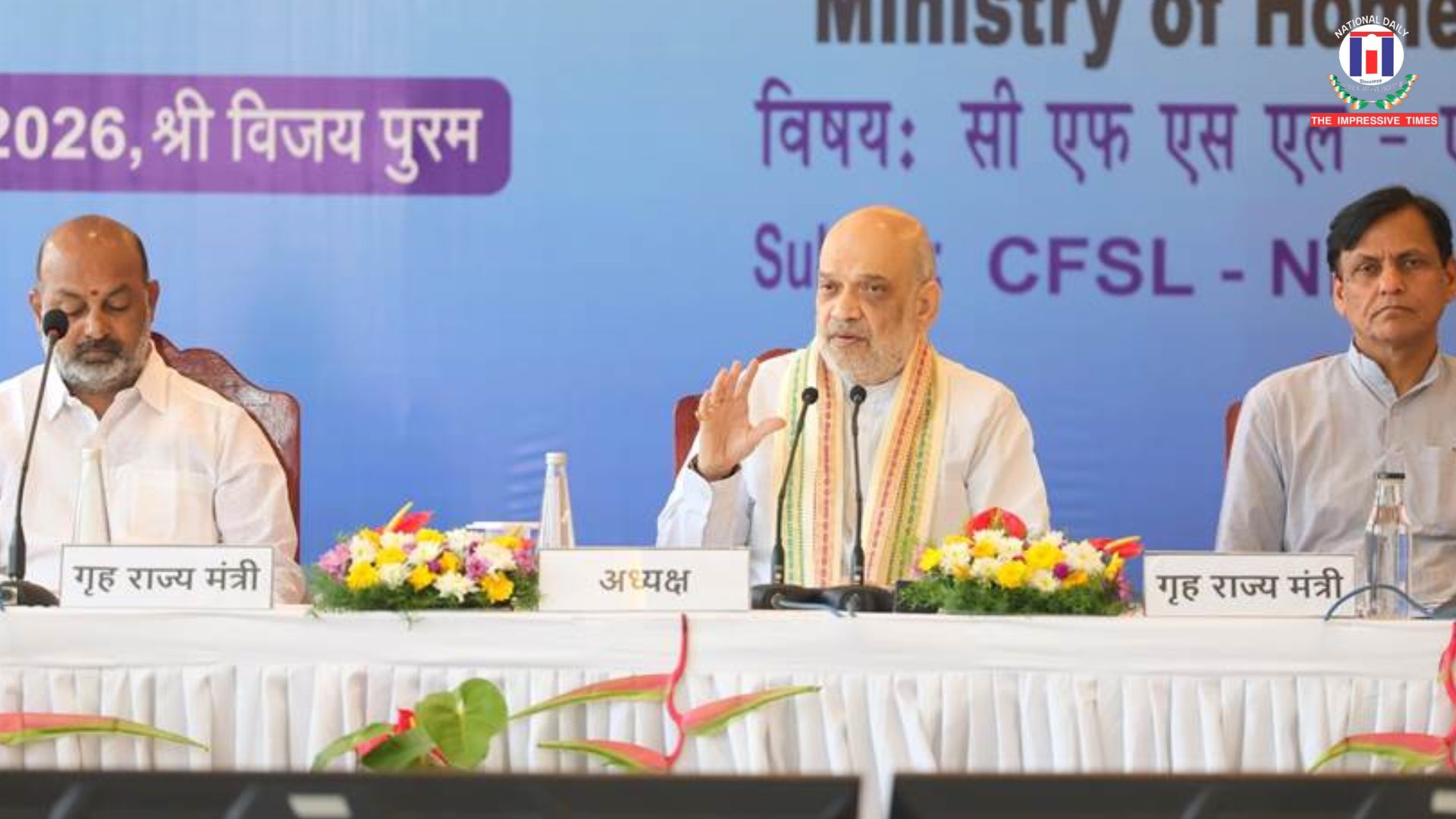
Sri Vijaya Puram (Andaman & Nicobar Islands), January 3, 2026: Union Home Minister and Minister of Cooperation, Amit Shah, on Saturday said that India is moving rapidly towards a justice system where cases will be resolved from FIR stage to the Supreme Court within three years by 2029, driven by newly enacted criminal laws and large-scale forensic reforms.
Chairing a meeting of the Parliamentary Consultative Committee of the Ministry of Home Affairs at Sri Vijaya Puram, Amit Shah underlined that time-bound justice is a core vision of Prime Minister Narendra Modi, and the government is monitoring its implementation through a comprehensive, technology-driven approach.
The Home Minister highlighted that the government began strengthening forensic infrastructure as early as 2020, well before the new criminal laws came into force in July 2024. As a result, the speed of investigations has increased and conviction rates have improved across states.

He cited recent cases where fast-track justice was delivered — including a death sentence in a minor rape case in West Bengal within 62 days, and convictions in a triple murder case in Bihar in just 50 days — as early indicators of reform success.
Amit Shah announced that the Centre and states will jointly invest ₹30,000 crore over the next five years to create a nationwide network of forensic laboratories. By 2029, every state and Union Territory will have access to either a National Forensic Sciences University (NFSU) campus or a Central Forensic Science Laboratory (CFSL).
He noted that India had zero mobile forensic labs in 2021, while today the number has crossed 1,000, significantly improving on-ground investigation capabilities.
The Home Minister said the Modi government has modernised all five pillars of the justice system — police, courts, prisons, forensics, and prosecution — by integrating them through digital platforms.
Key achievements include:
Additionally, data related to terrorism cases under UAPA is now separately maintained by the NIA, enhancing national security oversight.
Amit Shah said that one of the biggest reforms under the new laws is the clear definition of cybercrime, organized crime, terrorism, and digital fraud, which earlier caused legal ambiguity. Digital and electronic evidence now has strong legal backing, making it fully admissible in courts.
Mandatory videography of seizures, direct submission of forensic reports to courts, and trial in absentia provisions are also expected to prevent misuse of loopholes and curb absconding accused.
The Home Minister stressed that e-FIR and Zero FIR provisions have made the justice system more accessible, particularly for women and economically weaker sections. Crimes against women and children have been given special priority under the new legal framework.
Amit Shah said the National Forensic Sciences University (NFSU) has emerged as a global hub for forensic education, achieving 100% placement so far. By 2029, NFSU is expected to produce 35,000 forensic experts, addressing India’s long-standing shortage of skilled professionals.
Currently, NFSU operates 14 campuses, runs over 100 training programs, and has trained 16,000 officers in the last four years. The university has also registered 46 patents, with a sharp rise in innovation during 2024 alone.
Looking ahead, the Home Minister announced plans for:
He concluded that the early results of the new criminal laws are encouraging and that India is firmly on track to deliver a faster, transparent, and technology-driven justice system in the coming years.














































No Comments: