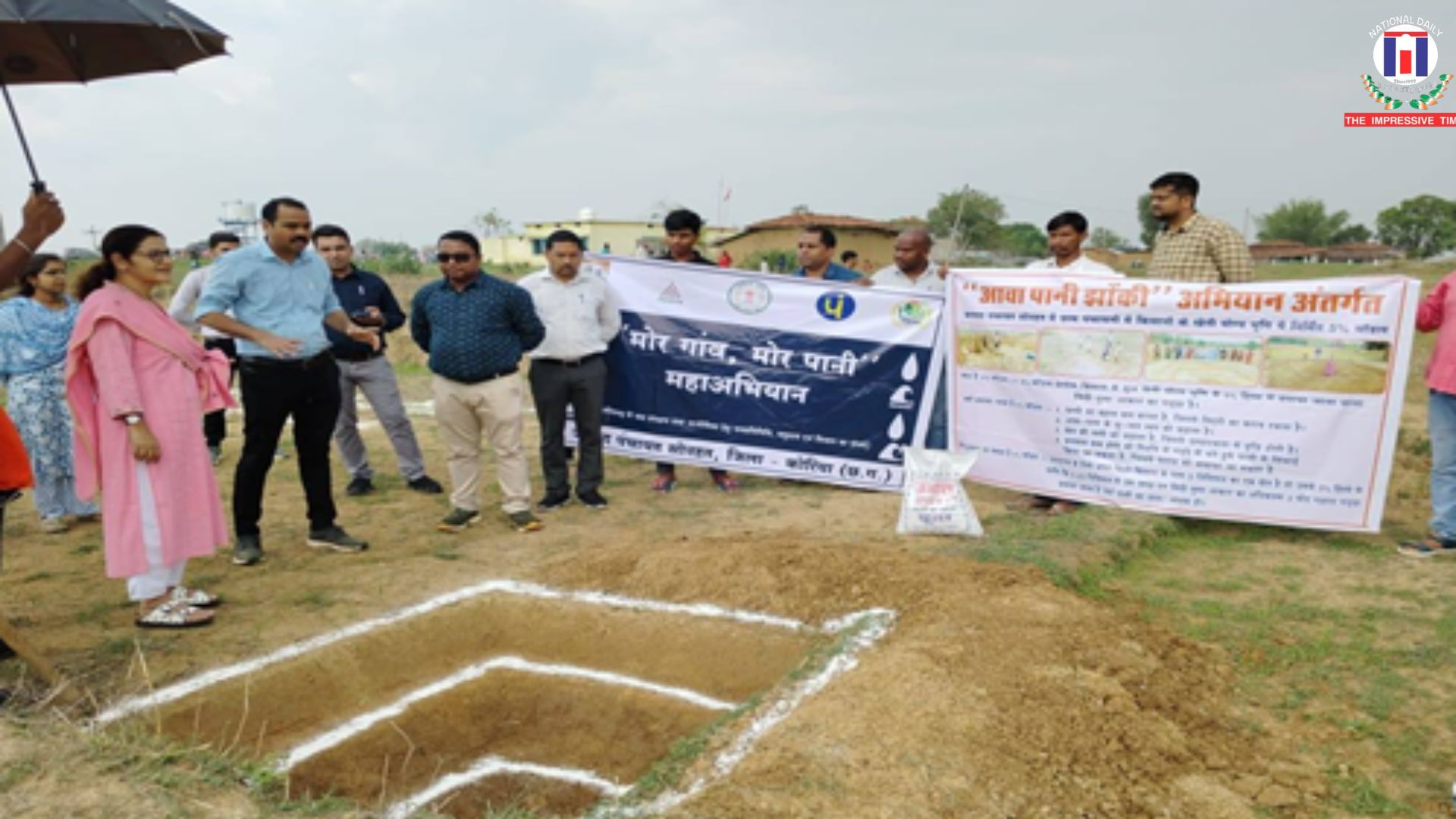
The initiative, known locally as the Aawa Paani Jhoki Movement, encourages farmers to set aside a small portion of their farmland to build recharge ponds and terraced pits. These structures capture rainwater directly within agricultural fields during the monsoon, preventing it from flowing away and allowing it to seep into the soil and underground aquifers.
This simple intervention has brought significant environmental benefits. Rainwater that previously drained away now helps recharge groundwater reserves, while soil erosion has reduced substantially. The increased moisture content in soil has also improved crop resilience during dry spells, ensuring that agriculture remains stable even during periods of limited rainfall.
A key factor behind the success of the programme has been strong community mobilisation. Women played a major role as “Neer Nayikas,” leading water conservation efforts at the household level and spreading awareness through cultural activities such as folk songs. Youth volunteers, referred to as “Jal Doots,” helped map trenches, clean canals, and organise street plays and wall paintings to promote water conservation practices.
Local communities also contributed through collective voluntary labour, or shramdaan, which helped revive more than 440 traditional ponds across the district. Inspired by the movement, over 500 beneficiaries of the Pradhan Mantri Awas Yojana built soak pits near their homes, integrating water recharge practices into everyday living.
The success of the model lies in the strong sense of ownership among villagers. The initiative was formally adopted through resolutions in Gram Sabhas, ensuring that communities actively participated in planning and implementation.
More than 1,260 farmers in the district have already adopted the 5 percent recharge system on their own land. In addition, over 2,000 soak pits have been created across villages. In a remarkable display of community coordination, residents collectively built 660 soak pits within just three hours, demonstrating the power of organised public participation.
The water conservation efforts have produced measurable improvements across the district. Groundwater levels in several villages have risen by three to four metres, while natural springs have revived in 17 remote tribal settlements.
Improved soil moisture has boosted agricultural productivity, helping farmers maintain crop yields during dry periods. As farming conditions improved, seasonal migration from villages has declined by nearly 25 percent, indicating that better water availability has strengthened rural livelihoods and local economies.
The district administration supported the initiative with scientific planning, including micro-watershed mapping and hydrogeological assessments. Technical guidance ensured that recharge structures were built in the most effective locations for groundwater replenishment.
However, officials emphasised that the success of the programme ultimately depended on community leadership and participation. By combining scientific expertise with grassroots engagement, the district created a sustainable model of water governance.
The Korea district 5 percent model highlights how climate adaptation strategies can be decentralised, affordable, and community-driven. By dedicating a small portion of farmland to water conservation, farmers have collectively secured long-term water availability for their communities.
The initiative demonstrates that sustainable water management does not always require massive infrastructure projects. Instead, it shows that when communities come together with shared responsibility and innovative thinking, they can protect natural resources and build resilience against climate challenges.

 The Impressive Times






































No Comments: