Delhi Air Pollution Plan Gets Major Winter Push With New Enforcement and Public Measures
Union Environment Minister reviews Delhi’s Air Pollution Mitigation Plan with CM Rekha Gupta; Calls for Time-bound, Coordinated Action and Public Participation

 The Impressive Times
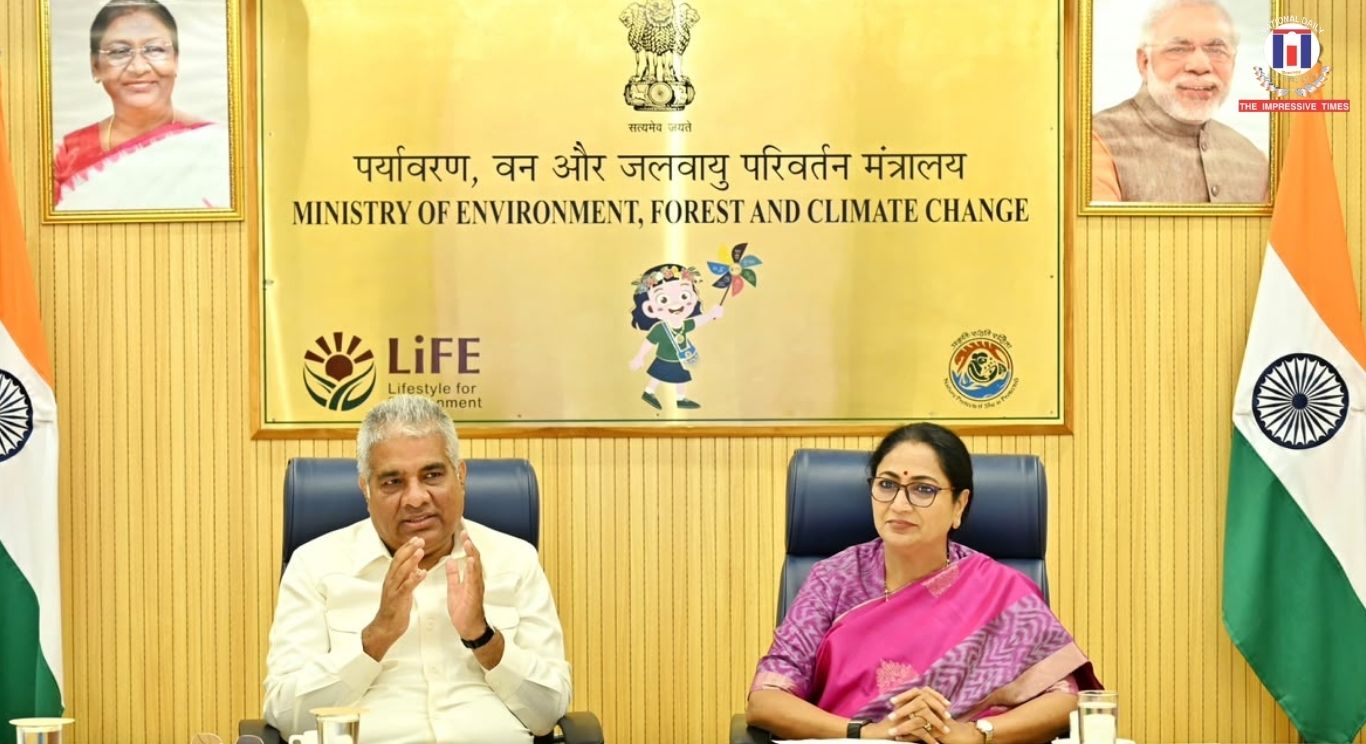
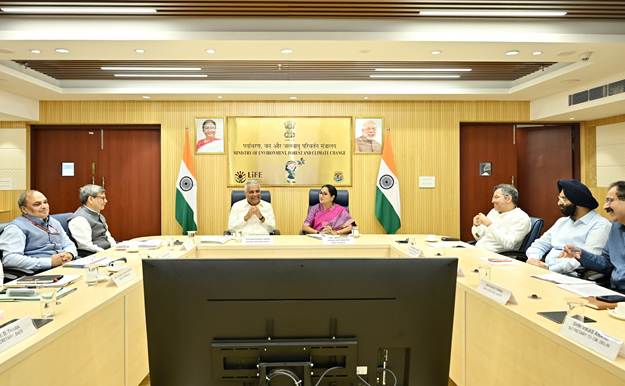
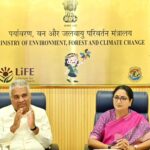
New Delhi- Union Environment Minister Bhupender Yadav and Delhi Chief Minister Rekha Gupta have reviewed the national capital’s preparations to tackle air pollution ahead of the winter season, with a focus on stricter enforcement, hotspot-level interventions, public participation and faster implementation of mitigation measures.
The high-level meeting examined the progress of Delhi’s existing pollution-control measures and finalised a series of targeted interventions covering vehicle emissions, construction and road dust, waste burning, industrial pollution, public transport, traffic management and green cover.
Environment Minister Yadav directed authorities to organise Jan Bhagidari programmes at Delhi’s 37 identified pollution hotspots by October 10. Officials and public representatives will monitor the implementation of location-specific measures, while residents, market bodies and other stakeholders will be encouraged to participate.
Yadav stressed that Delhi’s air quality cannot be addressed through isolated action and called for greater coordination among Delhi and other NCR authorities.
He also proposed discussions with the Union Agriculture Minister and Agriculture Ministers of NCR States to tackle pollution linked to agricultural activities. Action plans for NCR areas are to be finalised before October 10.
The minister emphasised that pollution-control decisions must translate into measurable action on the ground, with continuous monitoring and greater public awareness.
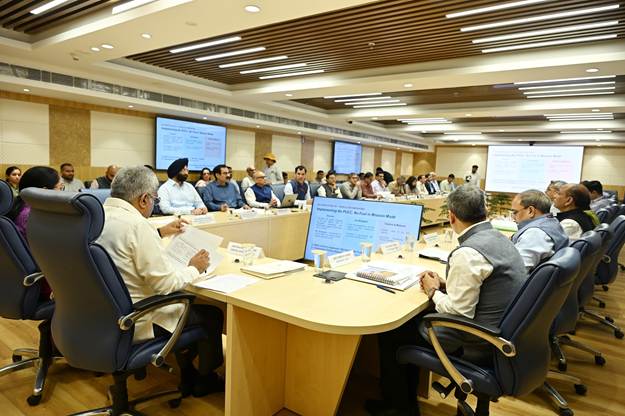
A major decision taken during the meeting was to implement the ‘No PUCC, No Fuel’ initiative on a mission basis across Delhi.
The campaign will cover all 500 fuel stations equipped with Automatic Number Plate Recognition (ANPR) systems. Authorities will also take action against fuel stations that fail to comply with the requirement.The government will run a city-wide campaign from October 1 to 10 to encourage greater use of public transport and the Delhi Metro Sarthi App.
Download camps will be organised with RWAs and public representatives. Authorities said last-mile connectivity is currently available at all 228 Metro stations.
Delhi’s bus fleet has also expanded to 6,840 buses, including 5,088 electric buses, according to information shared during the meeting
Authorities will conduct regular inspections at pollution and traffic hotspots involving public representatives, officials, RWAs, traders and traffic police.
The Delhi Government reported that 42 hotspots have already been rectified, with eight more targeted for completion by October.
Traffic decongestion measures, including one-way trials, will be considered at selected locations in consultation with Delhi Traffic Police. Residents will also be encouraged to report encroachments, illegal parking and waste dumping.
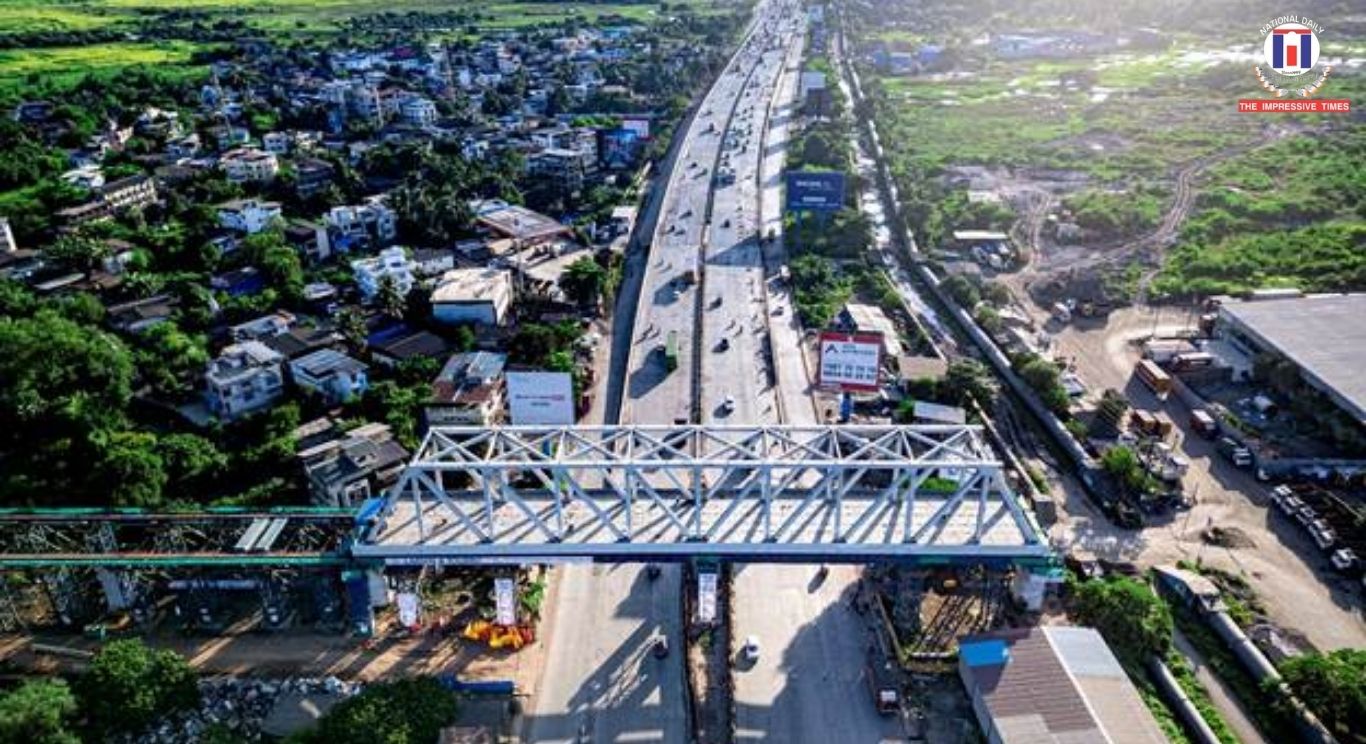
Eight identified road stretches have already been made signal-free, while work on seven more is targeted for completion by October 2026.
The meeting also reviewed road redevelopment and dust-control measures.
Around 1,193 km of road work has been completed, with the remaining work targeted for completion by November 15. Authorities were directed to ensure proper paving of footpaths to improve walkability and reduce dust.
Under the prescribed SOP, complaints related to such issues are expected to be resolved within 72 hours.
Delhi will strengthen measures against open waste burning through deeper cleaning, improved waste collection and tighter enforcement of waste-management rules.
The number of MRSMs has risen to 98 from 76 last year, according to the Delhi Government.
A city-wide ‘Zero Burning’ pledge campaign will also be launched, while ward and district-level monitoring teams are to be deployed by October 15.
Special attention will be given to unauthorised regularised colonies and JJ clusters. Heating booths will also be introduced on a pilot basis as part of the winter preparedness measures.
The meeting placed emphasis on expanding and maintaining green areas, particularly degraded or brown areas.
The Delhi Government said 71 lakh plantations have already been carried out and 433 of the 434 acres of identified brown areas have been greened.
To strengthen dust and construction-related pollution control, registrations on the Malba App will be made a mandatory requirement for building-plan approval.
The government plans to prohibit dust-generating demolition and outdoor civil construction activity from November 1 to January 31. A complete ban on construction and demolition activities is planned between December 10 and January 20.
The winter pollution protocol will include several measures, including restrictions on polluting vehicles, higher parking charges, staggered office timings and 50 per cent work-from-home arrangements.
From November 1, 2026, vehicles registered outside Delhi and below BS-VI emission standards will not be allowed to enter the city, except CNG and electric vehicles.
Authorities will step up implementation of EV Policy 2026 and promote incentives for scrapping older vehicles.
A mission-mode registration campaign for the Parivartan Scheme will also be undertaken, supported by Jan Bhagidari camps during October and November.
Industrial pollution control will receive additional enforcement support, including the planned operationalisation of an AI-enabled Command and Control Centre.
The number of monitoring stations is proposed to increase from 47 to 60, while 334 enforcement teams will be deployed to take action against industries violating pollution norms.
The strategy will also strengthen grievance redressal, daily AQI communication, citizen participation and coordinated NCR-level action based on an airshed approach.
The meeting was attended by senior officials from the Ministry of Environment, Forest and Climate Change, Commission for Air Quality Management, Central Pollution Control Board, Delhi Pollution Control Committee, MCD, NDMC, DDA, Delhi Transport Department, Delhi Metro, Delhi Police and PWD.
The Centre and Delhi Government said the emphasis going forward would be on time-bound implementation, continuous monitoring and public participation to improve air quality and provide greater relief to residents during the winter months.
















No Comments: