DAE Year-End Review 2025: Record Nuclear Power Generation, Major Project Milestones and Breakthrough Innovations
India’s Department of Atomic Energy concludes 2025 with historic achievements in nuclear power generation, cancer care expansion, rare earth research, advanced materials, national security systems, space collaboration and global scientific recognition.
The Department of Atomic Energy (DAE) has released its Year-End Review for 2025, highlighting a landmark year marked by record-breaking nuclear power generation, major infrastructure developments, scientific milestones, and international achievements. The DAE continued to advance its core mandate of nuclear power production, research reactor operations, particle accelerator development, radiation technology applications, cancer care facilities, and national security contributions.
A defining highlight of the year came with the Prime Minister laying the foundation stone for the four-unit Mahi Banswara Nuclear Power Project in Rajasthan on 25 September 2025. The project—deployed by the NPCIL-NTPC joint venture ASHVINI—will consist of four 700 MW PHWR reactors. The year also saw a significant boost to operational nuclear capacity as Rajasthan’s RAPP-7 was connected to the Northern Grid and began commercial operations.
For the first time in its operational history, NPCIL crossed 50 billion units of electricity generation in a single financial year, recording a historic 56,681 million units in FY 2024–25. This achievement resulted in an estimated avoidance of 49 million tonnes of CO₂ emissions. Continuous reactor operation beyond a full year has been recorded 53 times so far, with TAPS-3 surpassing its previous 521-day record and Kudankulam Unit-2 also maintaining year-long uninterrupted operation.
The Atomic Energy Commission (AEC) granted approval for pre-project activities for an additional ten 700 MWe PHWRs, beyond the already planned 22.5 GW capacity targeted by 2032.
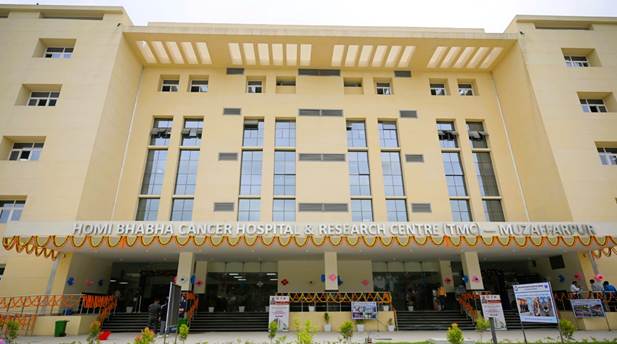
In healthcare, DAE registered major progress, including the inauguration of the 150-bed Homi Bhabha Cancer Hospital & Research Centre at Muzaffarpur, Bihar by the Prime Minister. More than 1.3 lakh patients were registered at Tata Memorial Centre during FY 2024–25, while around 5 lakh women were screened across multiple centres for oral, breast and cervical cancer.
The 30 MeV Medical Cyclotron in Kolkata delivered 371 Ci of radiopharmaceuticals for cancer diagnostics, while new therapeutic and diagnostic radiopharmaceutical interventions were introduced, including 177Lu-DOTA-FAPI-2286 therapy. Electron beam sterilisation facilities continued to support global medical device supply chains, processing more than 1.53 crore devices, many of which were exported to over 35 countries. The completion of ISOMED 2.0, a novel high-intensity gamma irradiator, positioned India as home to the world’s only land-based stationary gamma irradiator of its kind.
DAE achieved significant breakthroughs in advanced materials, lasers, plasma, cybersecurity, and space and defence applications. India released its first ever Certified Reference Material (CRM) for Rare Earth Elements—Ferrocarbonatite (BARC B1401). This innovation certifies 13 REEs and six major elements, making India only the fourth country in the world to develop such a CRM.
NFC successfully produced high Residual Resistivity Ratio niobium, a critical material for advanced accelerator programmes. Towards national and internal security, ECIL integrated CBRN protection systems at vital installations, developed modules for Akash-Prime, and produced integrated systems for Agni missile launchers and Astra missiles. BrahMos export projects were supported through integration of SBASMS C4I systems and vehicle-mounted radar modules.
The Niobium Thermit Production Facility (NTPF), developed in partnership with ISRO’s Vikram Sarabhai Space Centre, produced its first batch of niobium oxide for India’s space programme.
In the domain of basic and directed research, DAE achieved a major scientific milestone with more than 99.8% purity enrichment of Boron-11 at Talcher—crucial for semiconductor and nuclear applications. Researchers at IMSc developed a highly accurate Gompertz-based neonatal weight prediction model using only routine ultrasound scans, aiding early detection of high-risk pregnancies. The Indian Dark Matter Search Experiment (InDEx) began its first run at the Jaduguda Underground Science Laboratory.

DAE’s contributions to agriculture and food preservation included the release of new early-maturing and high-yield mutant crop varieties, including TBM-9 banana and RTS-43 sorghum. Radiation processing continued to expand, with 17 new MoUs and six new gamma facilities commissioned, bringing the national total to 40.
Indian students mentored by TIFR achieved outstanding results in international Olympiads, winning multiple gold, silver and bronze medals across chemistry, physics, biology, mathematics, and astronomy competitions. India also successfully hosted the 18th International Olympiad on Astronomy & Astrophysics (IOAA 2025), welcoming over 300 students from 64 countries.
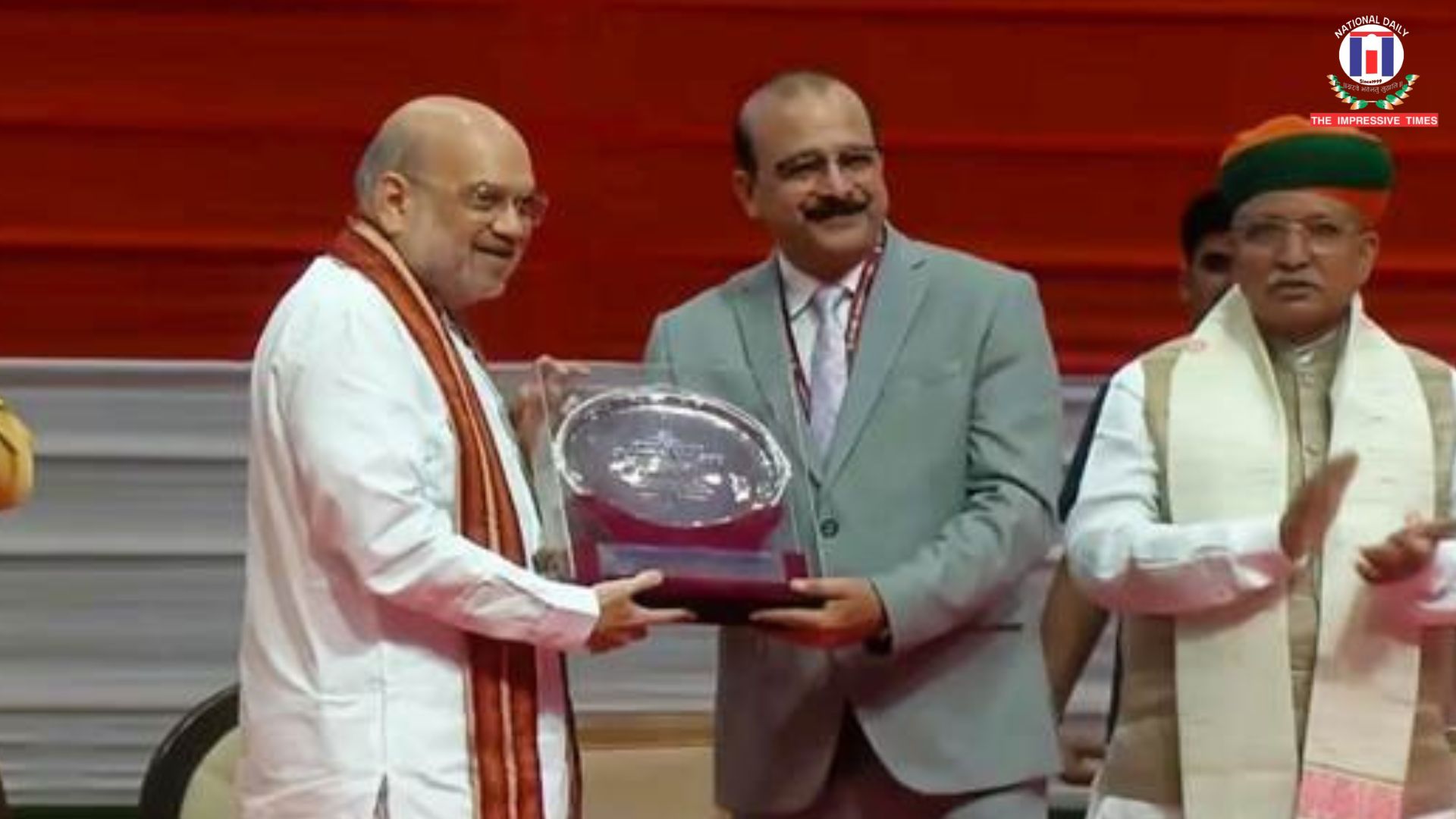
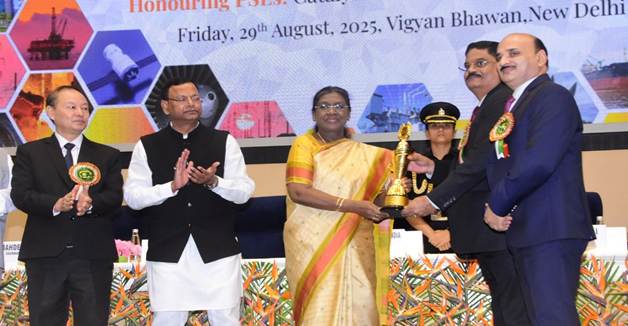
DAE institutions received major national recognitions, including the Rajbhasha Kirti Puraskar for the second consecutive year. IREL and ECIL won SCOPE Eminence Awards presented by the President of India. Smt. Sonia Kapoor, Headmistress of AECS-2 Mumbai, was awarded the National Award for Teachers 2025. HBNI achieved high rankings under NIRF 2025 and the Nature Index, securing first position in physical sciences publications across India.
With historic achievements in power generation, healthcare, research, space and defence applications, and global scientific leadership, the Department of Atomic Energy concludes 2025 as one of its most impactful years in recent decades.










































No Comments: