
 The Impressive Times
TIT Correspondent
[email protected]
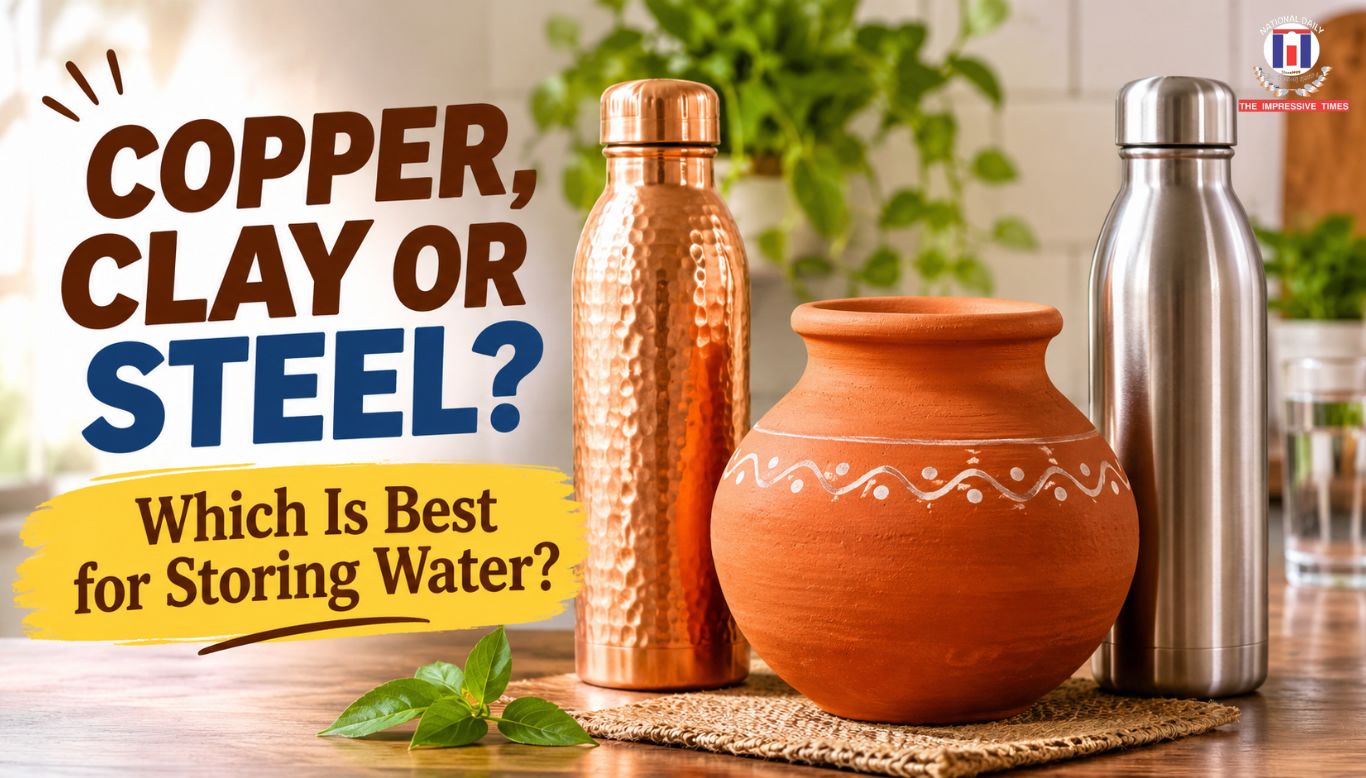
From copper bottles kept on bedside tables to traditional earthen pots placed in kitchen corners, Indian households have long followed different ways of storing drinking water. While some people prefer copper vessels because of their traditional association with health, others choose clay pots for naturally cool water or stainless steel containers for everyday convenience.
With growing interest in traditional kitchen practices and healthier living, the choice of water-storage containers has become an interesting subject of discussion. But do these materials actually offer different benefits, and which one is the safest option for daily use?
The answer depends on more than tradition. Material quality, hygiene, cleaning practices and the condition of the stored water all play an important role.
Copper vessels have been used in Indian households for generations. Traditionally, water stored in copper containers has been associated with Ayurvedic practices, and copper bottles have also become popular among people looking for alternatives to regular plastic bottles.
Copper is an essential mineral required by the human body in small quantities. However, this does not mean that drinking water stored in copper vessels can independently improve immunity, digestion or overall health.
Copper can enter water through contact with the vessel, and the amount depends on factors such as water composition, acidity and contact conditions. Excessive copper exposure can cause gastrointestinal problems, including nausea, vomiting and abdominal discomfort.
Copper Bottle Safety Tip
People using copper bottles should ensure that they are made from suitable, food-safe material and follow the manufacturer’s cleaning and usage instructions. Acidic liquids such as lemon water, fruit juices and vinegar-based drinks should not be stored in copper vessels because acidity can increase metal leaching.
Earthen pots, commonly known as matkas, have been a familiar feature of Indian summers for generations. Their ability to keep water naturally cool makes them a popular alternative to refrigerators.
Unlike metal containers, unglazed clay pots have tiny pores through which a small amount of water gradually evaporates. This evaporation helps lower the temperature of the remaining water.
Clay pots do not require electricity and offer a traditional way of keeping drinking water cool. However, their porous structure also means that cleaning and maintenance deserve special attention.
Consumers should choose good-quality, food-safe pots made specifically for drinking water. They should be cleaned regularly, kept covered and allowed to dry properly between uses when appropriate. Cracked, damaged or poorly finished pots should be avoided.
It is also important to understand that a clay pot does not automatically purify drinking water or remove harmful microorganisms.
Stainless steel containers have become increasingly common in Indian homes, offices, schools and travel bags. Their durability, easy maintenance and resistance to rust make them a convenient option for storing drinking water.
Food-grade stainless steel is generally considered suitable for everyday water storage. Unlike copper vessels, it does not require special precautions related to metal leaching under ordinary storage conditions when the material is appropriate and in good condition.
Stainless steel bottles are also less likely to break than glass or clay containers and can be used for both indoor and outdoor purposes.
However, their cleanliness should not be overlooked. Bottles with narrow openings, damaged interiors or difficult-to-clean lids can accumulate residue and develop unpleasant odours if not washed properly.
There is no single container that is automatically the best in every situation. Each material has its own characteristics, but safe drinking water depends primarily on its original quality and hygienic storage.
Stainless steel offers a convenient option for everyday use, while clay pots are useful for naturally cooling water. Copper vessels require more care because excessive copper exposure can be harmful.
For most households, the more important consideration is whether the container is made from food-safe material, can be cleaned properly and protects the water from contamination.
What Health Authorities Recommend
The US Centers for Disease Control and Prevention (CDC) recommends storing treated drinking water in clean, durable containers with tightly fitting covers. It also advises keeping hands and other objects away from stored water to reduce the risk of contamination.
Even a suitable container cannot guarantee safe drinking water if basic hygiene practices are ignored. Some everyday mistakes can increase the risk of contamination.
The choice between copper, clay and stainless steel depends on your daily requirements and maintenance preferences.
For regular drinking water storage, a good-quality stainless steel container is a practical choice because it is durable and relatively easy to clean.
An appropriately made clay pot can be useful when naturally cooled water is preferred, particularly during warmer months. Copper vessels can be used with appropriate precautions, but there is no established need to choose them over other safe storage materials for better health.
The Bottom Line
Ultimately, the quality of drinking water matters far more than the material of the container. Whether using a traditional matka or a modern steel bottle, clean storage, regular washing and access to safe drinking water remain the most important priorities.









































No Comments: