
 The Impressive Times
TIT Correspondent
[email protected]
Smartwatches have become more than just devices for checking time or counting steps. From monitoring heart rates and sleep patterns to tracking physical activity and stress levels, wearable technology is increasingly becoming part of everyday life. Many users now rely on their watches to understand how their bodies respond to daily routines, exercise and even emotional pressure.
However, a smartwatch displaying a high stress score does not necessarily mean a person is experiencing psychological stress. Similarly, a low score does not always indicate that the body and mind are completely relaxed. This raises an important question: How accurately can these wearable devices actually measure our health?
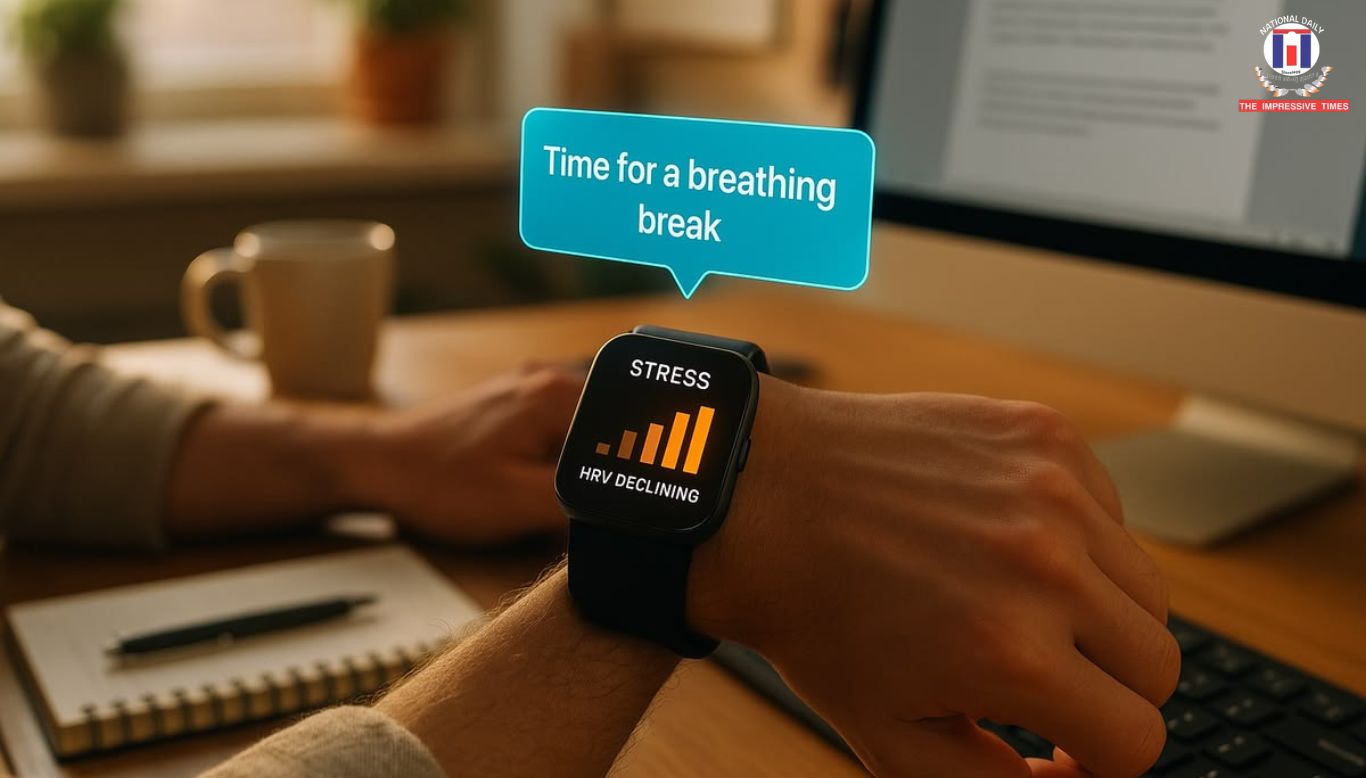
Most smartwatches do not directly measure emotional or psychological stress. Instead, they analyse different physiological signals, particularly heart rate and heart rate variability (HRV).
Heart rate variability refers to the variation in time intervals between consecutive heartbeats. It can provide information about how the autonomic nervous system responds to different situations, including physical activity, rest and stress.
Many wearable devices use optical sensors that shine light onto the skin to detect changes in blood flow. These signals are then processed through software algorithms to estimate HRV and generate a stress score.
Some devices also consider movement, sleep patterns and other physiological information when calculating their readings.
However, the exact methods used to calculate these scores can differ between brands and models.
Not necessarily. Several everyday activities can influence heart rate and HRV, potentially changing the stress readings displayed by a smartwatch.
For instance, physical exercise, inadequate sleep, dehydration, illness and even the body’s digestion process can affect physiological measurements.
A person may receive a higher stress reading after a workout or a heavy meal even without experiencing emotional pressure.
Research published in Interacting with Computers highlights that wearable stress-tracking technology cannot reliably distinguish psychological stress from other factors that influence heart rate and HRV.
This means that smartwatch stress scores should be understood as estimates of physiological responses rather than direct measurements of a person’s emotional state.
Apart from stress monitoring, wearable devices offer several health-related features. However, their accuracy varies depending on the measurement, device and conditions in which it is used.
1. Heart Rate Monitoring
Smartwatches can provide useful heart rate estimates, particularly when a person is resting or performing steady physical activity. However, movement, poor sensor contact and changes in exercise intensity can affect accuracy.
2. Sleep Tracking
Many devices estimate sleep duration and different sleep stages using movement and heart rate patterns. While they can help identify general sleep habits, their readings are not equivalent to a clinical sleep study.
3. Blood Oxygen Levels
Some smartwatches estimate blood oxygen saturation (SpO₂) through optical sensors. However, readings can be affected by device positioning, movement and other factors. These measurements should not replace medical-grade testing.
4. Heart Rate Variability
HRV tracking can help users observe changes in their physiological patterns over time. However, readings may vary depending on activity, sleep, health conditions and measurement methods.
A 2024 systematic review published in Sports Medicine found considerable differences in the accuracy of consumer wearable devices across various health measurements, highlighting the need for better validation.
One of the biggest concerns surrounding wearable technology is the tendency to trust numerical scores more than personal experiences.
For example, someone may feel energetic and relaxed but become worried after seeing a high stress reading on their smartwatch. Similarly, a device may display a normal reading even when someone is experiencing symptoms that require medical attention.
Health measurements generated by wearable devices should therefore be considered alongside how a person actually feels.
Repeated unusual readings, particularly when accompanied by symptoms such as dizziness, chest discomfort, breathlessness or an irregular heartbeat, should be discussed with a healthcare professional rather than dismissed or diagnosed using a smartwatch.
Instead of becoming overly dependent on daily scores, users can make wearable technology more useful by following a few simple practices.
Despite improvements in wearable technology, smartwatches are not designed to replace medical examinations or diagnostic equipment.
Their biggest advantage lies in helping people become more aware of their everyday activity, heart rate patterns and sleep routines. They can also encourage healthier habits by providing reminders and regular feedback.
However, measurements such as stress scores, sleep quality and recovery levels are often algorithm-based estimates. Their accuracy can vary, and they should not be treated as definitive medical results.
Ultimately, a smartwatch can offer useful information about the body’s patterns, but understanding those readings requires context. Technology can help people become more aware of their health, but it cannot replace professional medical advice or the importance of listening to their own bodies.













































No Comments: