Women’s Meaningful Participation Essential for Nation-Building: Governor
Book discussion in Ranchi highlights women’s role in family, society, leadership and achieving the vision of Viksit Bharat 2047

 The Impressive Times
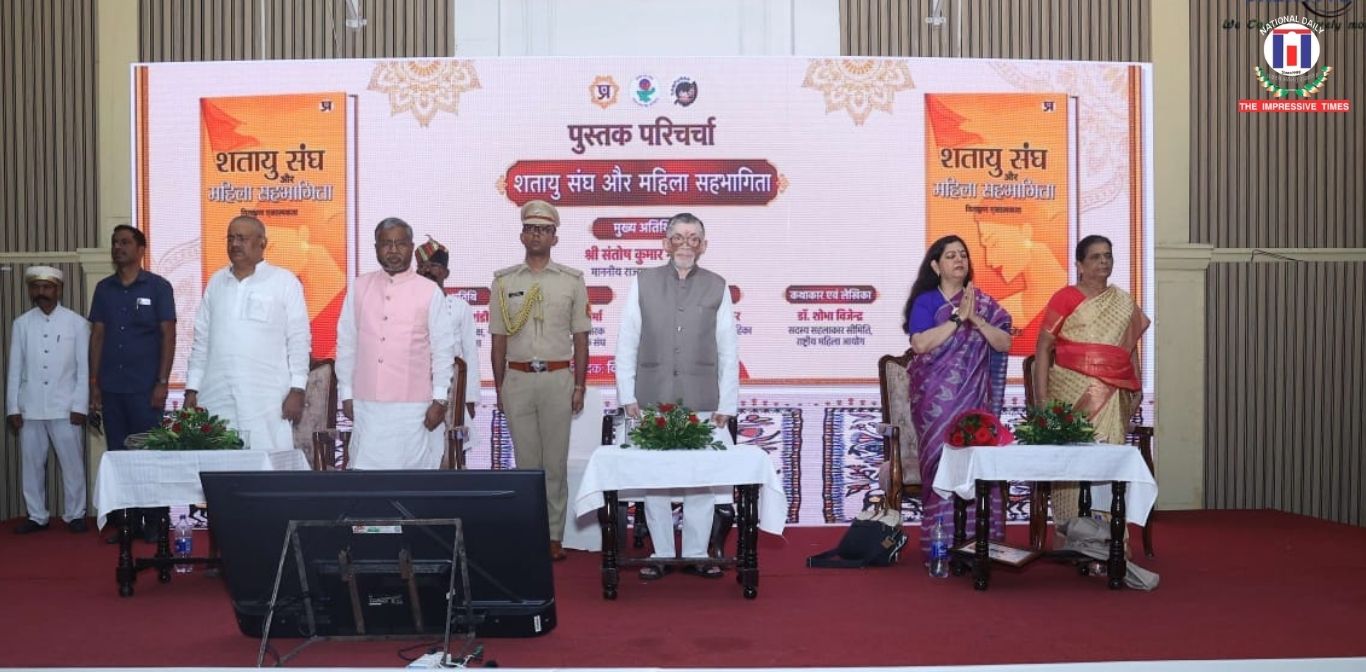
New Delhi : A special discussion on the book “Shatayu Sangh and Women’s Participation” was organised by Vishwa Samvad Kendra, Ranchi, as part of the centenary celebrations of the Rashtriya Swayamsevak Sangh (RSS). The discussion focused on women’s role in nation-building, the Indian family system, social values and the changing role of women in contemporary society.
Jharkhand Governor Santosh Gangwar was the chief speaker at the programme. Leader of Opposition Babulal Marandi, Rashtra Sevika Samiti Akhil Bharatiya Sah Karyavahika Sunita Indulkar, RSS Jharkhand Prant Pracharak Gopal Sharma, Uttar Purva Kshetra Sampark Pramukh Anil Thakur, Prafful Akant Kashtriye Sangathan Mantri Vanvasi Kalyan Ashram Sah Sanghchalak Ashok Srivastava and author Dr Shobha Vijendra were among those present.
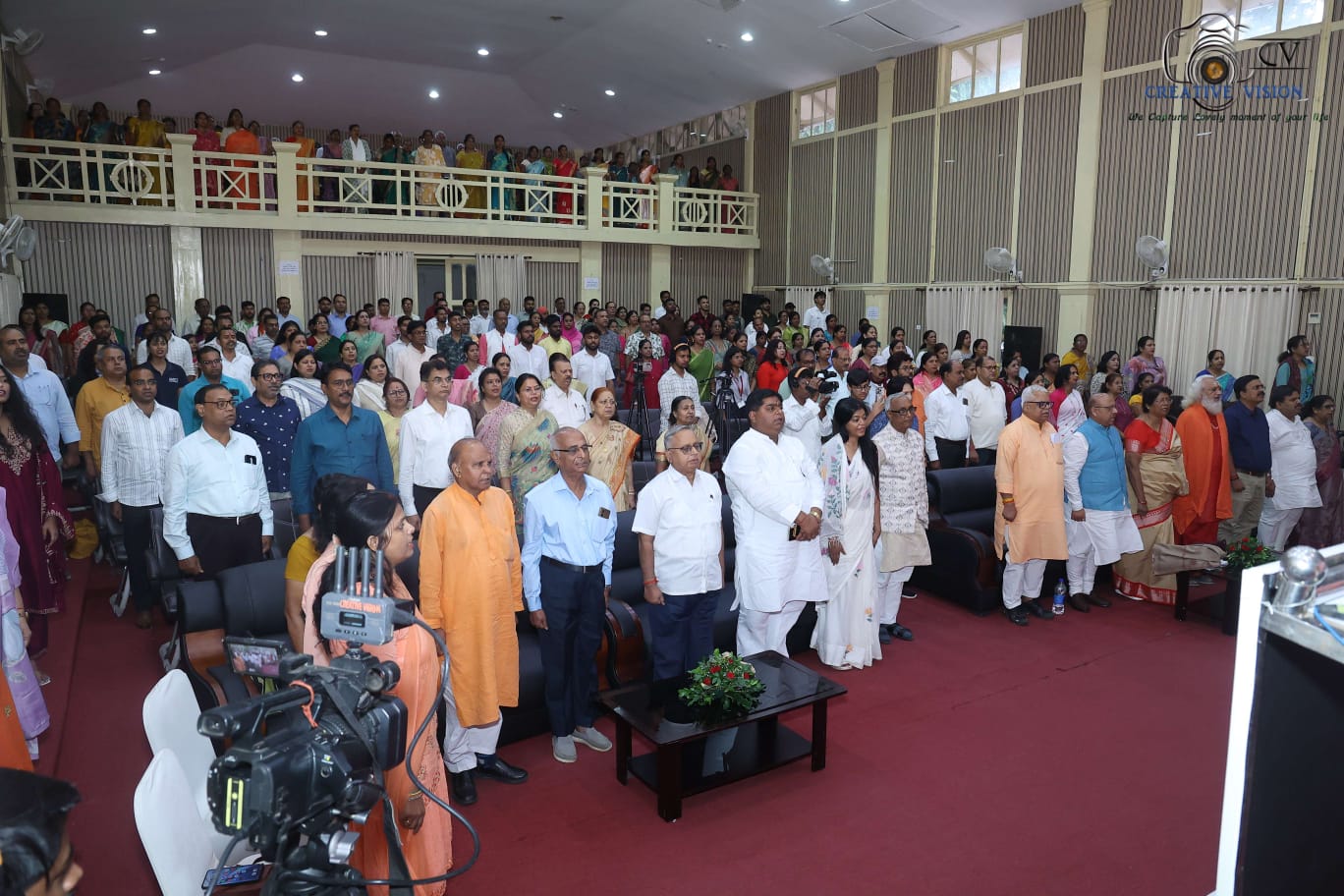
Senior RSS functionaries from the Kshetra, Prant, Vibhag and Mahanagar levels, representatives of other organisations, academicians, eminent women, social workers and distinguished citizens also attended the programme.
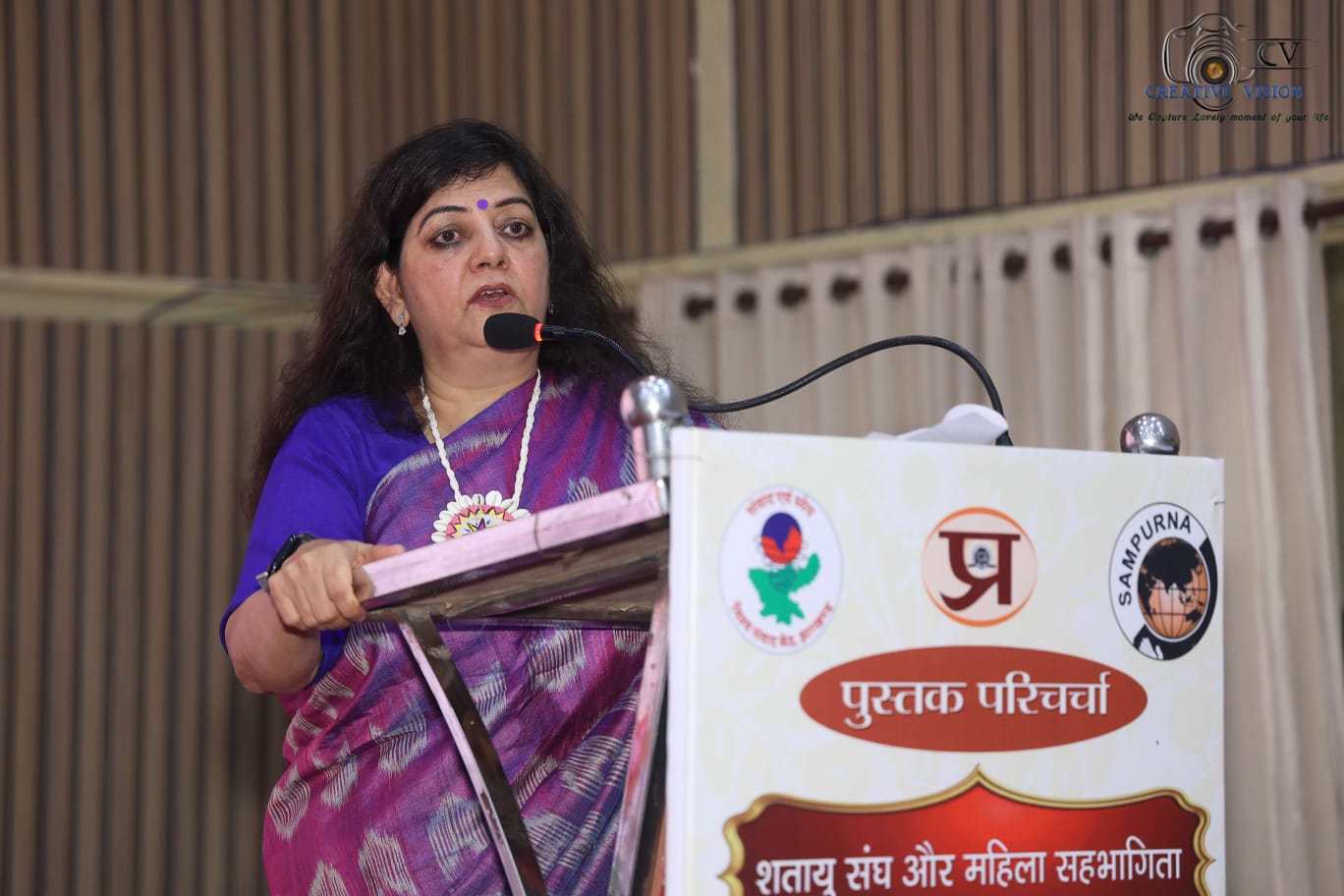
Speaking on the occasion, Dr Shobha Vijendra said the rapid spread of narratives through social media and other platforms has made it important for society to examine claims through facts, research and reasoning rather than emotional responses.
She said a perception has often been created that the RSS seeks to restrict women to household responsibilities. The book, she said, attempts to examine such perceptions through research and the experiences of women associated with the broader Sangh thought.
Dr Vijendra said she interacted with nearly 100 women across the country while researching the book, with the experiences of 34 women finding place in it. The book presents personal experiences, the views of various RSS Sarsanghchalaks on women and nation-building, and the experiences of women associated with the Sangh.
She said the concepts of women’s dignity, freedom and participation are deeply rooted in India’s civilisational tradition. “The Indian perspective sees women and men as complementary rather than competing with each other,” she said.
Referring to the vision of Rashtra Sevika Samiti founder Vandaniya Lakshmibai Kelkar, Dr Vijendra said women have a crucial role in strengthening both the family and the nation. She stressed the need to strengthen women’s knowledge, confidence, values and social awareness to enable them to contribute effectively to nation-building.
She also highlighted the importance of family in shaping children during their formative years. According to her, strengthening families and ensuring healthy values for children are among the first steps towards building a strong nation.
RSS Jharkhand Prant Pracharak Gopal Sharma said women have played an important role throughout the RSS’s hundred-year journey. He said the contribution of women has been visible from the early years of the organisation, while the establishment of the Rashtra Sevika Samiti provided a separate organisational platform for women.
Sharma said describing the RSS as having no role for women was an incomplete understanding of its work. Women associated with organisations inspired by the Sangh are contributing in areas including education, service, social awareness and leadership, he said.
He also described the family system as one of India’s major social strengths and stressed the need for greater emphasis on family awareness and values. “The family is not merely a private unit; it is the foundation of values, social responsibility and nation-building,” he said.
Sunita Indulkar said Indian tradition has viewed women as a source of strength, creativity, values and social cohesion, rather than restricting them to a single role.
She said the RSS and the Rashtra Sevika Samiti have different organisational structures and methods of functioning. The Samiti works independently among women, she said, adding that this organisational distinction should not be interpreted as an anti-women approach.
Indulkar said the idea of comprehensive social development necessarily includes the participation of women. Drawing an analogy with an eagle, she said a nation can progress only when both women and men are strong and actively contribute to its development.
Leader of Opposition Babulal Marandi said Indian society and Hindutva cannot be understood merely through the lens of religious practices. The Indian worldview is based on a broader civilisational outlook, reflected in concepts such as “Vasudhaiva Kutumbakam” and “Sarve Bhavantu Sukhinah”, he said.
Marandi said diversity has always been a strength of Indian society and the country’s tradition has been to accommodate different streams while moving forward collectively.
He said the RSS centenary provides an opportunity to discuss India’s civilisational thought and its approach to society and nation-building. He described “Shatayu Sangh and Women’s Participation” as an important work and said he would study the book himself and encourage others to read it.
Governor Santosh Gangwar said the book provides an opportunity to understand the role of the RSS and the contribution of women to nation-building.
He said books preserve the experiences, ideas and sensitivities of a particular period and carry them to future generations. At a time when digital media is influencing reading habits, the importance of books has increased further, he said.
Gangwar said women’s role in nation-building cannot be confined to the family. Women are contributing across sectors including science, education, administration, industry, sports, social service and public life.
He emphasised that women’s participation should not be measured only by numbers and that their effective participation in decision-making is equally important. He stressed the need for effective implementation of constitutional provisions relating to women’s reservation.
The Governor said the growing participation of women in panchayats and local bodies has demonstrated their ability to handle administrative responsibilities with efficiency and sensitivity. Greater participation of women in decision-making, he said, brings a more humane and sensitive approach to development.
Referring to the vision of Viksit Bharat 2047, Gangwar said women’s active participation would be essential for achieving the goal. An educated woman influences not only her own life but also her family and the next generation, while an empowered woman can become a catalyst for positive change in society.
The Governor congratulated Dr Shobha Vijendra for the book and said her experience in social service, women and child welfare, education and environmental work had added a distinctive perspective to it. He expressed confidence that the book would be useful for researchers, academicians, social workers and young readers.
He also said women’s participation is particularly significant in Jharkhand, where women have an important place in the state’s social and cultural life. He called for creating equal opportunities for women and ensuring their meaningful participation in the nation-building process.
The speakers agreed that women’s participation should be viewed as part of the larger process of nation-building rather than as an issue confined to women alone. They highlighted the role of women in family, education, social awareness, service, leadership and decision-making.
The programme concluded with a call for strengthening women’s meaningful participation in nation-building, reinforcing family and social values and recognising the contribution of women towards the goal of a developed India.











No Comments: