Union Minister Ashwini Vaishnaw Launches Zetwerk Electronics’ Advanced Manufacturing Facility in Bengaluru
Highlighting rapid progress in the sector, Vaishnaw stated that 46 approvals have already been granted under the electronics component manufacturing initiative, with Karnataka expected to attract investments exceeding ₹10,000 crore.
Bengaluru– Bengaluru witnessed a major boost to India’s electronics manufacturing ecosystem as Union Minister for Railways, Information & Broadcasting, and Electronics & IT, Ashwini Vaishnaw, inaugurated Zetwerk Electronics’ state-of-the-art manufacturing unit focused on defence, automotive, and IT hardware electronics.
The facility was inaugurated in the presence of Karnataka’s Minister for Large and Medium Industries, M.B. Patil. Addressing the gathering, the Union Minister emphasized that all products manufactured at the unit will adhere to global quality benchmarks, reflecting India’s growing strength in high-end electronics manufacturing.
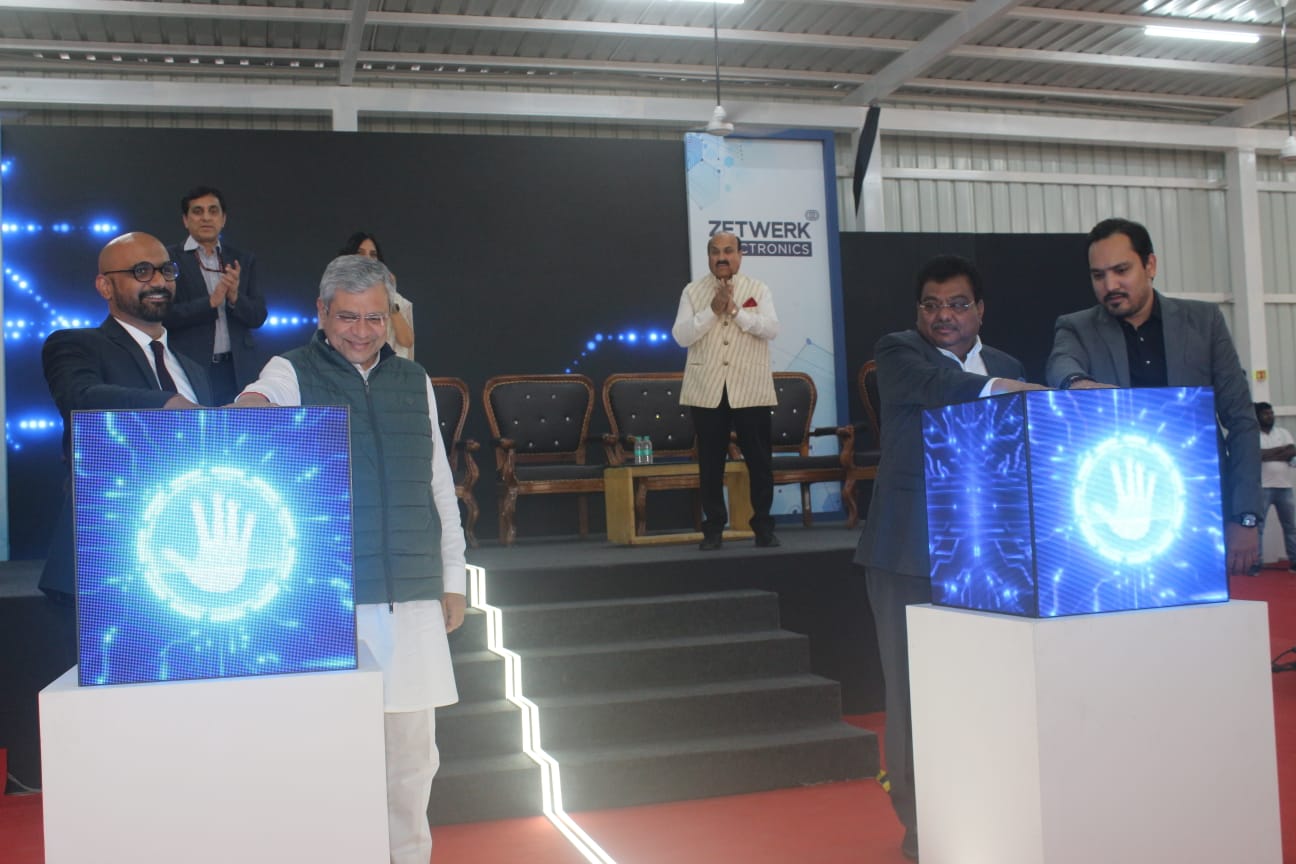
Highlighting rapid progress in the sector, Vaishnaw stated that 46 approvals have already been granted under the electronics component manufacturing initiative, with Karnataka expected to attract investments exceeding ₹10,000 crore.
Referring to the Union Budget, the Minister noted that the allocation for the Electronics Component Manufacturing Scheme has been significantly increased from ₹22,000 crore to ₹40,000 crore, a move aimed at fast-tracking India’s electronics growth. He reiterated the Prime Minister’s vision of achieving $500 billion in electronics production by 2030–31, calling for accelerated efforts across the industry.
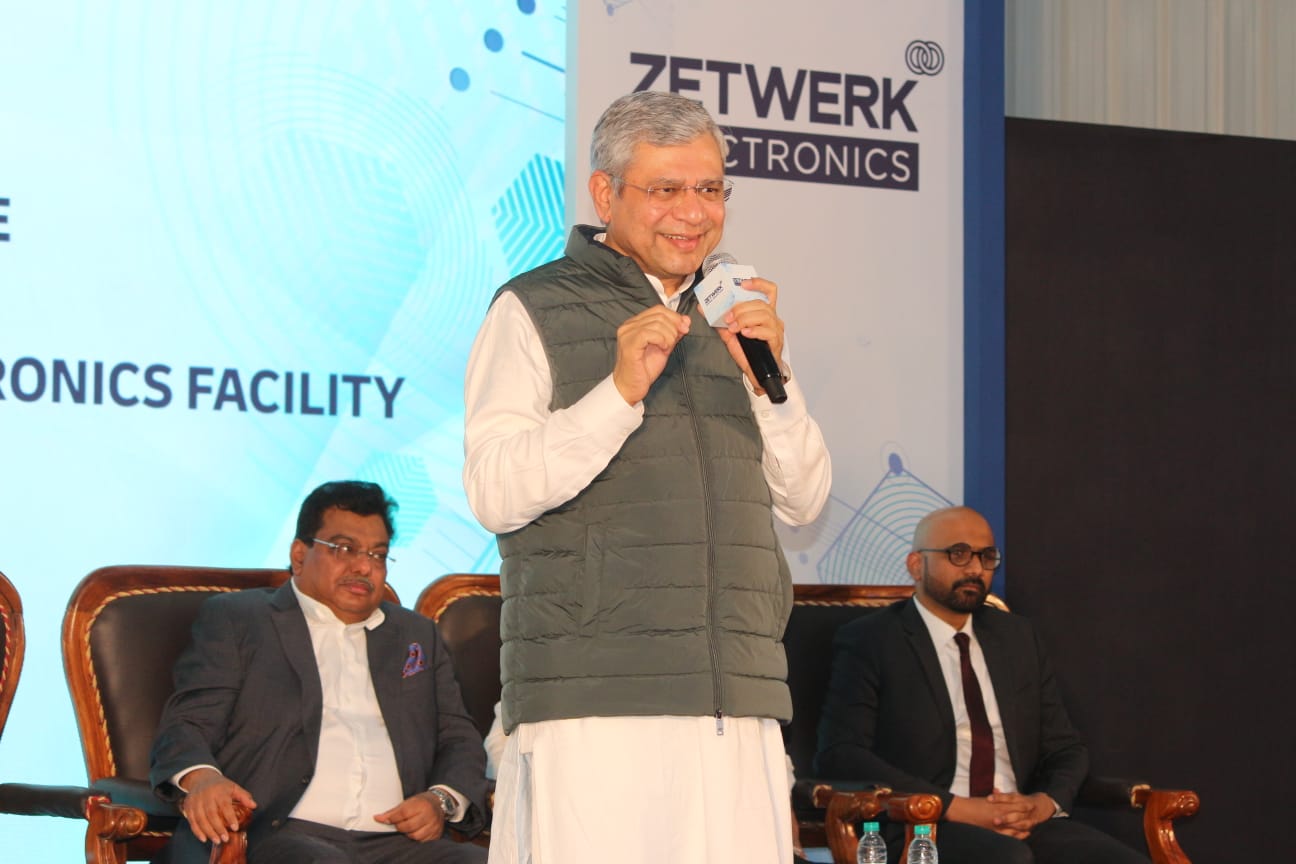
Vaishnaw also highlighted India’s progress in semiconductor technology, stating that complete 2-nanometer chip designs are now being developed within the country. He added that global equipment manufacturers such as Applied Materials and Lam Research have already entered India, while efforts are underway to attract ASML in the future.
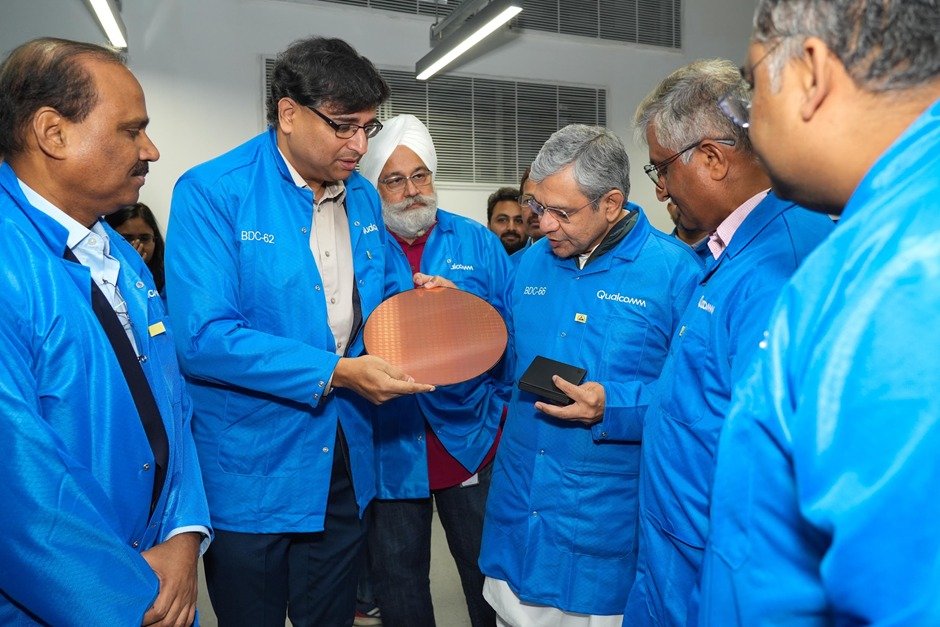
Commercial production at semiconductor facilities is expected to begin this year, and the Minister expressed confidence that India’s first commercially produced semiconductor chip will soon be realized. He also spoke about ‘Semicon 2.0’, which will strengthen the entire semiconductor value chain, including design, equipment manufacturing, chemicals, gases, testing, and yield enhancement.
On skill development, the Minister shared that the government aims to train 85,000 silicon engineers over the next decade, with 67,000 already trained in just four years, positioning India as a global hub for chip design and innovation.
Concluding his address, Vaishnaw stressed the importance of cooperative federalism, stating that India’s growth depends on the growth of all states. He urged stakeholders to adopt a broad, inclusive vision and work collectively towards the goal of building a ‘Viksit Bharat’ by 2047, as envisioned by the Prime Minister.




























No Comments: