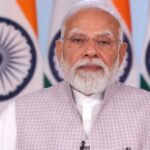
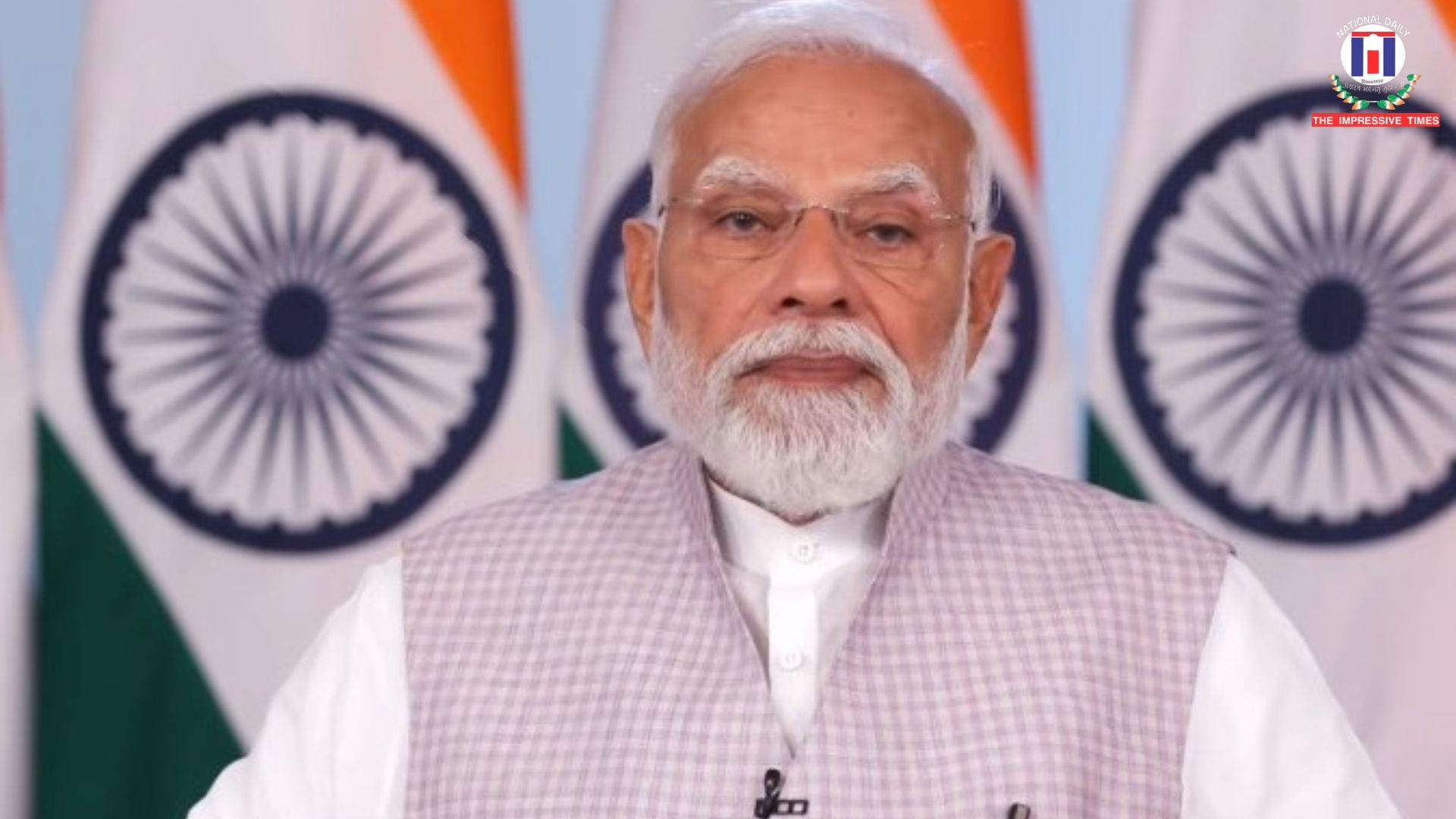
Dediapada, Gujarat– Prime Minister Narendra Modi addressed a large gathering in Dediapada, Gujarat, on the occasion of Janjatiya Gaurav Diwas, held to commemorate the 150th birth anniversary of Dharti Aaba Bhagwan Birsa Munda. Marking the historic day, the Prime Minister inaugurated and laid the foundation stone for multiple infrastructure, welfare, and educational projects valued at more than ₹9,700 crore. He said the celebrations at the sacred banks of the Narmada reflect India’s deep respect for its tribal communities, whose courage and sacrifices have shaped the nation’s history for thousands of years.

Speaking at the ceremony, the Prime Minister recalled that the same venue had hosted celebrations for Sardar Vallabhbhai Patel’s 150th birth anniversary just weeks earlier. He said the two iconic anniversaries symbolise India’s unity, strength, and the civilisational values upheld by its tribal communities. Modi paid tributes to Bhagwan Birsa Munda and also remembered Govind Guru, who ignited the spirit of freedom across the tribal belts of Gujarat, Rajasthan, and Madhya Pradesh. He mentioned his visit to the shrine of Devmogra Mata and offered respects to Sant Kabir, noting that the region has long drawn inspiration from Kabir’s teachings.

The Prime Minister highlighted several key initiatives launched during the event. Under PM-JANMAN and allied schemes, one lakh families in the region have been allotted permanent houses. Multiple Eklavya Model Residential Schools, Ashram Schools, healthcare projects, and road infrastructure initiatives were inaugurated or had their foundation stones laid. He also announced the establishment of the Shri Govind Guru Chair for Tribal Language Promotion at the Birsa Munda Tribal University. This centre will document, study, and preserve tribal dialects—including Bhil, Gamit, Vasava, Garasia, Kokani, Santhal, Rathwa and several others—and the rich repository of stories, traditions, and songs associated with them.
Modi reiterated that India’s freedom struggle is incomplete without acknowledging the contributions of tribal heroes. He remembered Tilka Manjhi, Rani Gaidinliu, Sidho-Kanho, Buddhu Bhagat, Tantya Bhil, Veer Narayan Singh, Telanga Khadia, Rupchand Konwar, Laxman Nayak, and Alluri Sitarama Raju, emphasising that tribal revolts played a major role in challenging colonial rule. Gujarat too, he said, has a proud legacy of tribal warriors such as Govind Guru, Raja Roopsingh Nayak, Motilal Tejawat, and Dashriben Chaudhary.
To ensure that future generations remain aware of this legacy, the Prime Minister said that tribal museums are being set up across the country. A large tribal museum is under construction in Rajpipla, while the historic jail in Ranchi—where Birsa Munda was imprisoned—is being developed into a national memorial.
Focusing on past injustices faced by tribal communities, Modi stated that earlier governments neglected tribal regions, leaving them with poor connectivity, inadequate healthcare, and limited access to education. He said his government has made tribal welfare a top priority, significantly increasing the budget of the Ministry of Tribal Affairs and expanding development schemes to ensure last-mile delivery. Under Atal Bihari Vajpayee’s leadership, a separate ministry for tribal affairs was created, but it received minimal support in the years that followed. After 2014, the Centre renewed its commitment to tribal empowerment, he said, leading to major improvements in housing, roads, education, and livelihood opportunities.
Recalling his tenure as Chief Minister of Gujarat, Modi said that two decades ago, the tribal belt lacked even a single science school. Through dedicated efforts, over 10,000 schools now serve tribal regions, with numerous colleges in science, commerce, and arts also established. Two tribal universities, hundreds of hostels, and widespread expansion of Eklavya Model Residential Schools have opened new doors for tribal youth. In the past five to six years alone, the Centre has invested more than ₹18,000 crore in EMRS facilities, with a 60% rise in tribal student enrollment.
The Prime Minister added that when given opportunities, tribal youth excel in every field—from academics to sports. He highlighted the achievements of Mary Kom, Thonakal Gopi, Dutee Chand, Bhaichung Bhutia and many emerging athletes from tribal areas. He noted with pride that a tribal player contributed significantly to India’s recent women’s cricket World Cup triumph.
Modi said that his government works with a vision of uplifting the most deprived. Narmada district, once considered backward, is today a model of development under the Aspirational District Programme. Schemes like Ayushman Bharat, launched from Ranchi, have provided free medical treatment up to ₹5 lakh to crores of tribal families. Similarly, the Ayushman Arogya Mandir initiative and PM-JANMAN have brought healthcare, nutrition, education, and livelihood reforms to remote and backward tribal areas.
On sickle cell disease, which remains a major challenge for tribal communities, the Prime Minister said a national campaign is underway, with six crore screenings completed so far. More dispensaries and hospitals are being established in tribal regions to combat the disease effectively.
He also underlined the government’s efforts to promote forest-based livelihoods. The number of minor forest produce items eligible for MSP has been increased from 20 to nearly 100. The promotion of Shri Anna (millets) has benefited tribal farmers, while schemes like Vanbandhu Kalyan Yojana in Gujarat have inspired the launch of the new Janjatiya Kalyan Yojana.
The Prime Minister praised the artistic traditions of Gujarat’s tribal communities, mentioning artist Pareshbhai Rathwa, who has been honoured with a Padma Award for preserving indigenous art forms. He said that under the National Education Policy, teaching in local languages is helping tribal children overcome barriers and contribute more actively to national development.
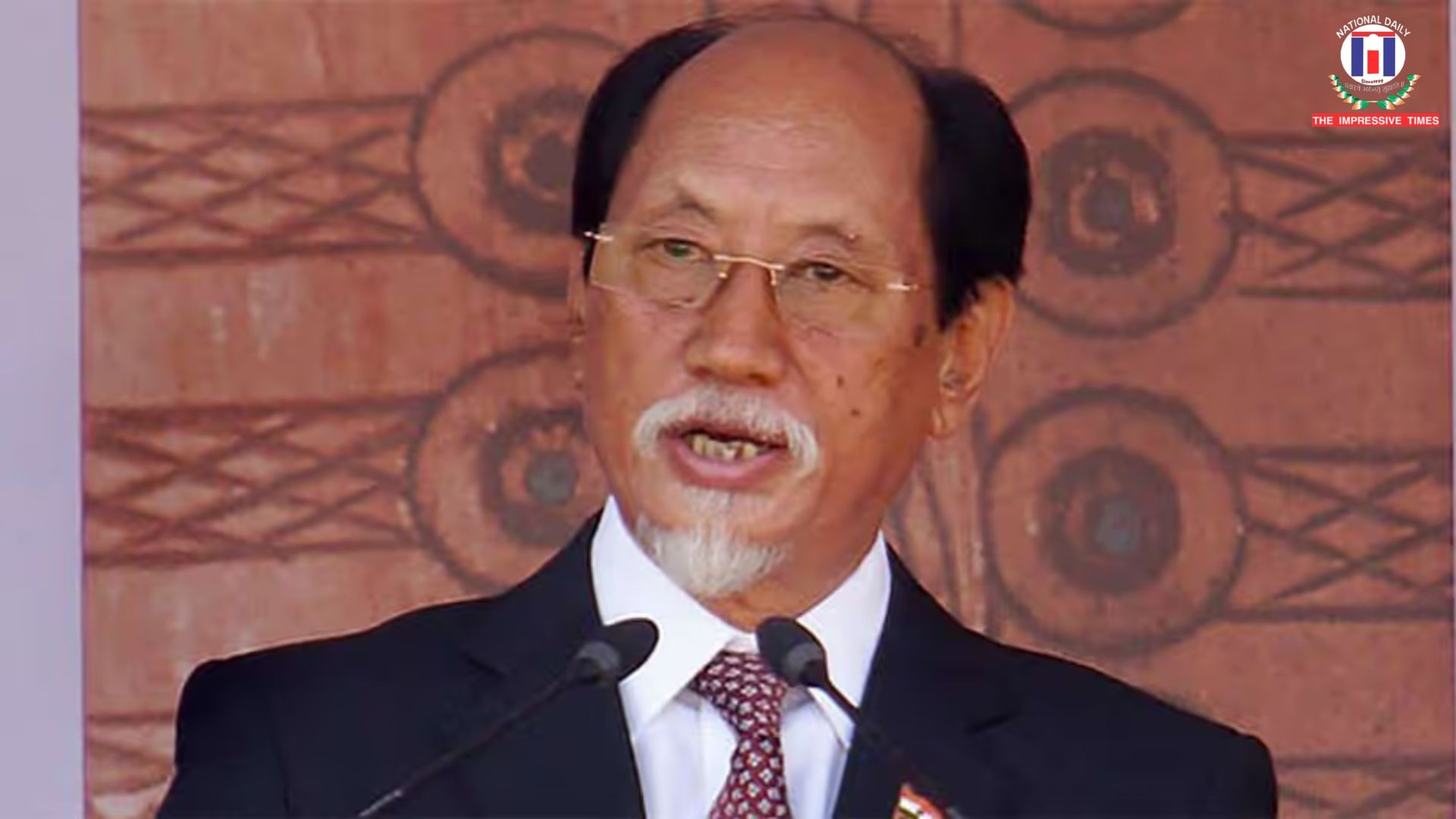
Highlighting the importance of political representation, Modi said that meaningful participation in democracy is essential for social progress. Today, India is led by a tribal woman as President, and several tribal leaders serve as Chief Ministers, Governors, and senior ministers across states and the Union Cabinet. He noted that leaders like Vishnudev Sai, Mohan Charan Majhi, Pema Khandu, Neiphiu Rio, Mangubhai Patel, and Sarbananda Sonowal represent the growing strength and leadership of tribal communities.
As the nation celebrates the 150th birth anniversary of Bhagwan Birsa Munda, the Prime Minister urged citizens to reaffirm their commitment to the mantra of Sabka Saath, Sabka Vikas. Ensuring that no community is left behind, he said, would be the most meaningful tribute to Dharti Aaba. He called upon the country to move forward with renewed determination, rooted in India’s cultural heritage, to achieve the dream of a developed India.













No Comments: