Union IT Minister Ashwini Vaishnaw Meets IBM CEO at Davos to Boost India’s Semiconductor Push
Union IT Minister Ashwini Vaishnaw met IBM CEO Arvind Krishna at WEF Davos to strengthen India’s semiconductor ecosystem, including 7 nm and 2 nm chip technology, and advance talent development in the sector.
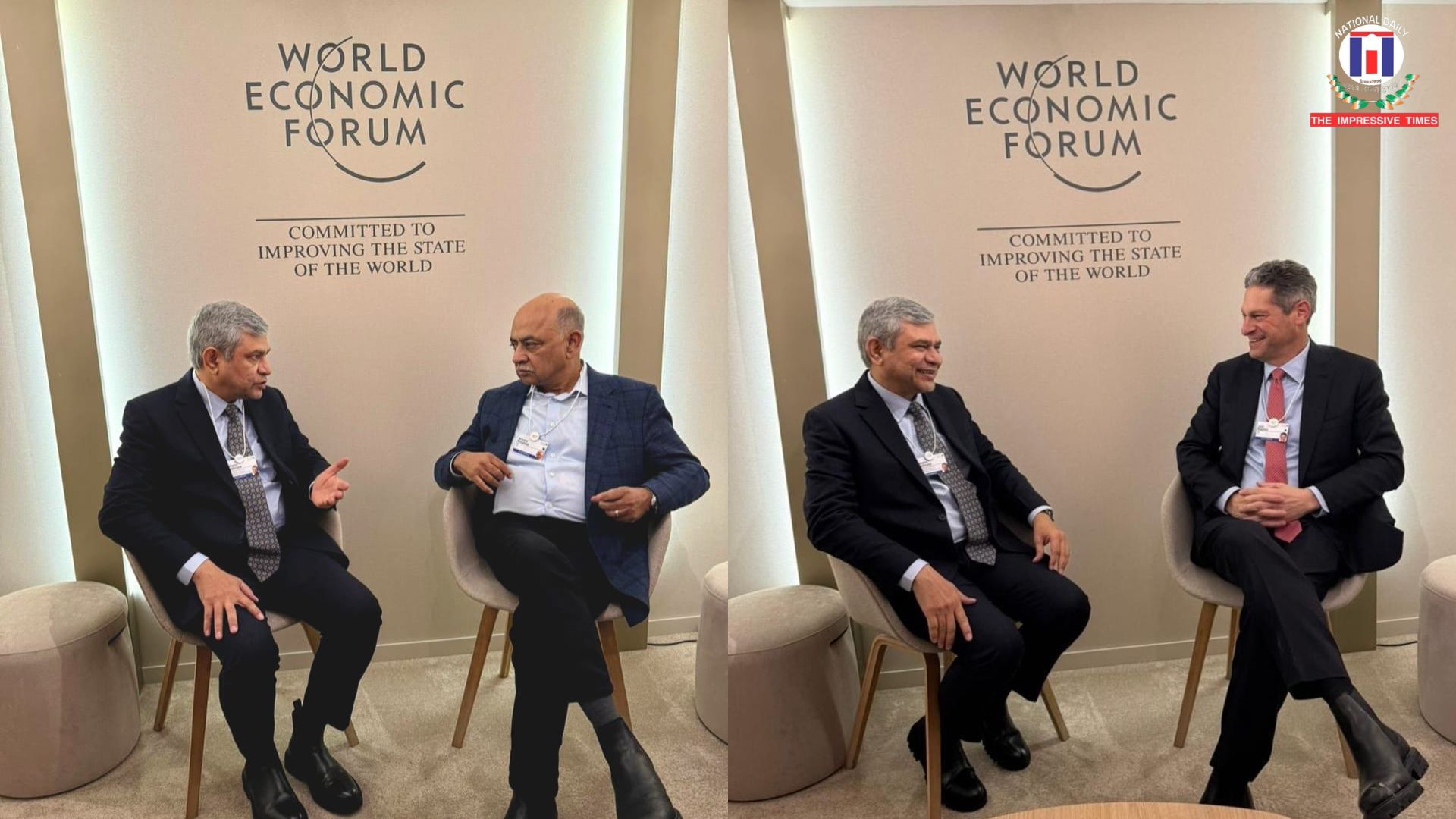
Davos, Switzerland: Union Minister for Electronics and Information Technology, Ashwini Vaishnaw, held a high-level meeting with Mr. Arvind Krishna, Chairman and CEO of IBM, on the sidelines of the World Economic Forum (WEF) in Davos. The discussions focused on strengthening India’s capabilities in advanced semiconductor technologies and fostering talent development in the country’s burgeoning chip ecosystem.
During the interaction, both leaders explored avenues of collaboration to accelerate India’s efforts in cutting-edge chip manufacturing, including technologies at the 7-nanometre (nm) and 2-nanometre nodes. These technologies are critical for next-generation computing, artificial intelligence, and emerging applications in sectors ranging from telecommunications to defense.
Vaishnaw highlighted India’s strategic vision to become a global hub for semiconductor design, research, and development, emphasizing the government’s commitment to providing policy support, infrastructure, and investment incentives for companies that can contribute to the nation’s self-reliance in chip production. Mr. Krishna, in turn, expressed IBM’s interest in partnering with India to leverage its talent pool, expand research collaborations, and explore opportunities in advanced chip design and manufacturing.
The meeting also addressed the importance of developing a skilled workforce capable of supporting India’s ambitions in high-end semiconductor technologies. IBM has a history of contributing to technology research and talent development worldwide, and discussions included potential initiatives for training programs, research partnerships, and mentorship opportunities for Indian engineers and scientists.
Minister Vaishnaw described the collaboration as a “significant step forward” in India’s push to strengthen its semiconductor ecosystem, enhance domestic manufacturing capabilities, and nurture homegrown technological talent. He added that partnerships with global leaders like IBM would help India achieve technological leadership in advanced chip fabrication and innovation, while also supporting its larger vision of digital self-reliance.
This engagement comes at a time when India is actively promoting the development of semiconductor manufacturing under its National Semiconductor Mission, aimed at attracting global investment, boosting domestic design capabilities, and creating thousands of high-tech jobs.
Both sides reaffirmed their commitment to continue dialogue and initiate pilot projects in chip research, design, and innovation, ensuring that India remains at the forefront of next-generation technology development.




































No Comments: