


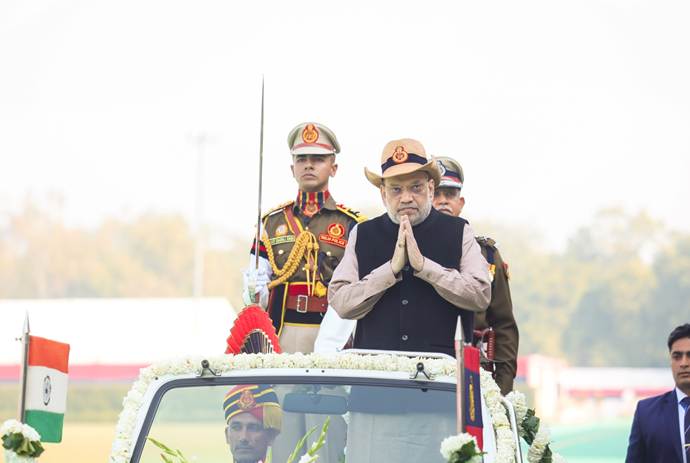
New Delhi, February 16: Union Home Minister and Minister of Cooperation Amit Shah lauded the role of the Delhi Police in safeguarding the national capital, asserting that the force has consistently delivered in tackling terrorism, narcotics networks, counterfeit currency, cybercrime and organised crime.
Addressing the 79th Raising Day ceremony as Chief Guest, Shah said the capital’s police force shoulders a uniquely demanding responsibility given Delhi’s status as the seat of the President, Prime Minister and key constitutional institutions, besides hosting major global events. He noted that maintaining security in such an environment requires world-class standards and constant technological upgradation.
Special Cell Headquarters to Bolster Anti-Terror Capabilities
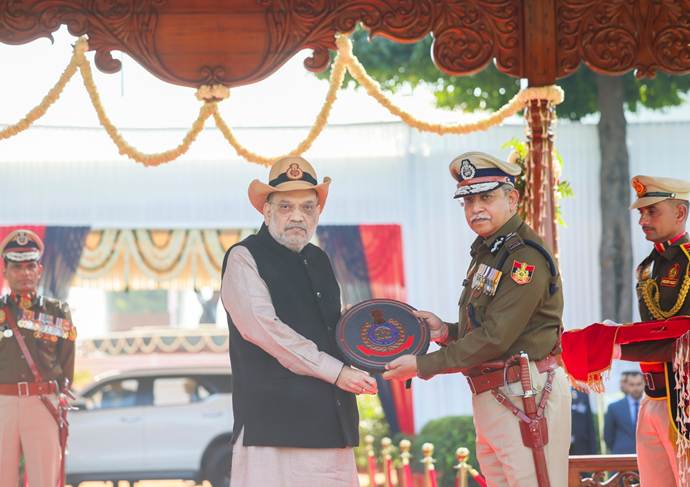
The Home Minister virtually laid the foundation stone for the Delhi Police Special Cell’s new integrated headquarters, to be built at a cost of Rs 368 crore. The upcoming complex will house advanced infrastructure, including a cyber laboratory, indoor firing range, training facilities and a dedicated operations war room.
Shah described the Special Cell as a frontline unit that has made critical breakthroughs in dismantling terror modules, busting drug syndicates and tracking fake currency rackets, not just in Delhi but across the country. The new facility, he said, will significantly enhance investigative precision and response capability.
Safe City Project and C4I Centre Inaugurated
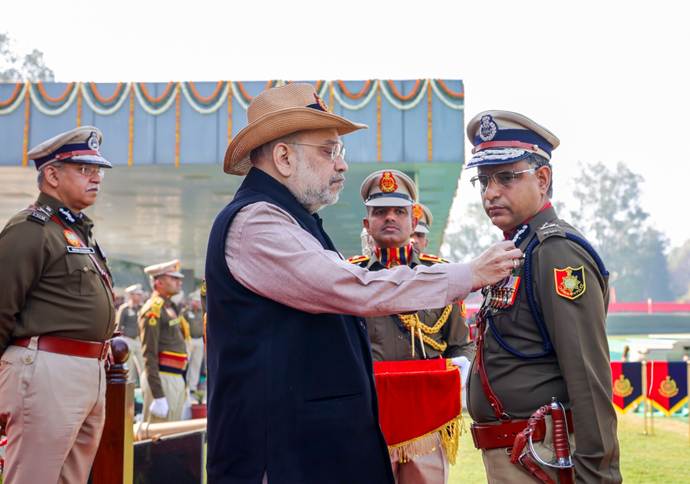
Marking a major step in police modernisation, Shah inaugurated the first phase of the Safe City Project, developed at an outlay of Rs 857 crore. The initiative includes the commissioning of an Integrated Command, Control, Communication and Computer Centre (C4I), aimed at real-time surveillance, coordinated response and data-driven policing.
Under the project, over 2,100 new CCTV cameras have already been activated, while more than 15,000 existing cameras have been integrated into the central monitoring network. Shah said the technology-driven framework would strengthen crime prevention and emergency response mechanisms across the capital.
‘Golden Era’ of Internal Security
The Home Minister asserted that the period from 2014 to 2026 under Prime Minister Narendra Modi would be remembered as a defining phase in India’s internal security history. He pointed to decisive action in Jammu and Kashmir, progress in the Northeast through peace accords, and sustained efforts against Left-wing extremism.
Shah expressed confidence that Naxalism, once spread across multiple states, is nearing its end and declared that the country would be free from Naxal violence before March 31, 2026.
Criminal Justice Reforms to Raise Conviction Rates
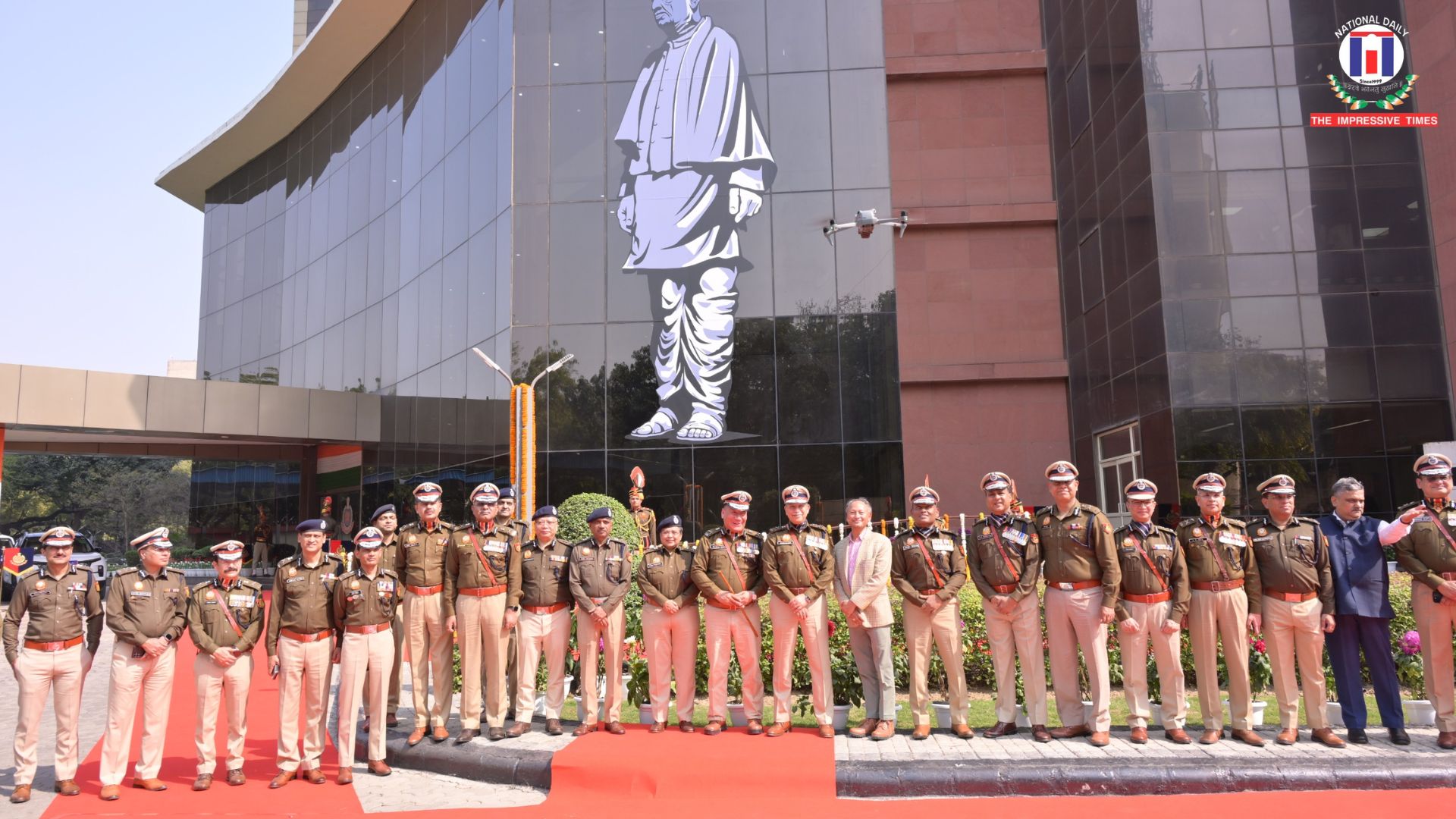
Highlighting sweeping legal reforms, Shah said the full implementation of the three new criminal laws—collectively referred to as the “Nyaya Sanhita” framework—would modernise India’s justice delivery system and significantly raise conviction rates nationwide.
He noted that the new laws introduce provisions such as legal backing for e-FIR and Zero FIR, mandatory forensic investigation in serious offences, expanded recognition of digital evidence, community service as punishment for minor crimes, and trial in absentia for absconding offenders. The Integrated Criminal Justice System (ICJS) has also been strengthened to digitally link police, courts, forensic institutions, prosecution and prisons.
According to Shah, once fully operational, the reforms aim to ensure that criminal cases are resolved in a time-bound manner, potentially within three years from the filing of an FIR to the Supreme Court verdict.
Focus on Border Security and National Surveillance Grid
Looking ahead, the Home Minister said the Ministry of Home Affairs plans to further expand surveillance infrastructure across the country, including an extensive CCTV network and comprehensive border modernisation measures. The objective, he said, is to build a security framework so robust that infiltration attempts are effectively neutralised.
Reiterating the government’s commitment to a secure and technology-enabled policing ecosystem, Shah said the Delhi Police’s ongoing transformation reflects a broader national strategy of strengthening law enforcement through infrastructure, legal reform and digital integration.









































No Comments: