New Delhi/Washington, February 21, 2026: The tariff structure on Indian exports to the United States has shifted once again after the Supreme Court of the United States invalidated a key component of former President Donald Trump’s trade policy.
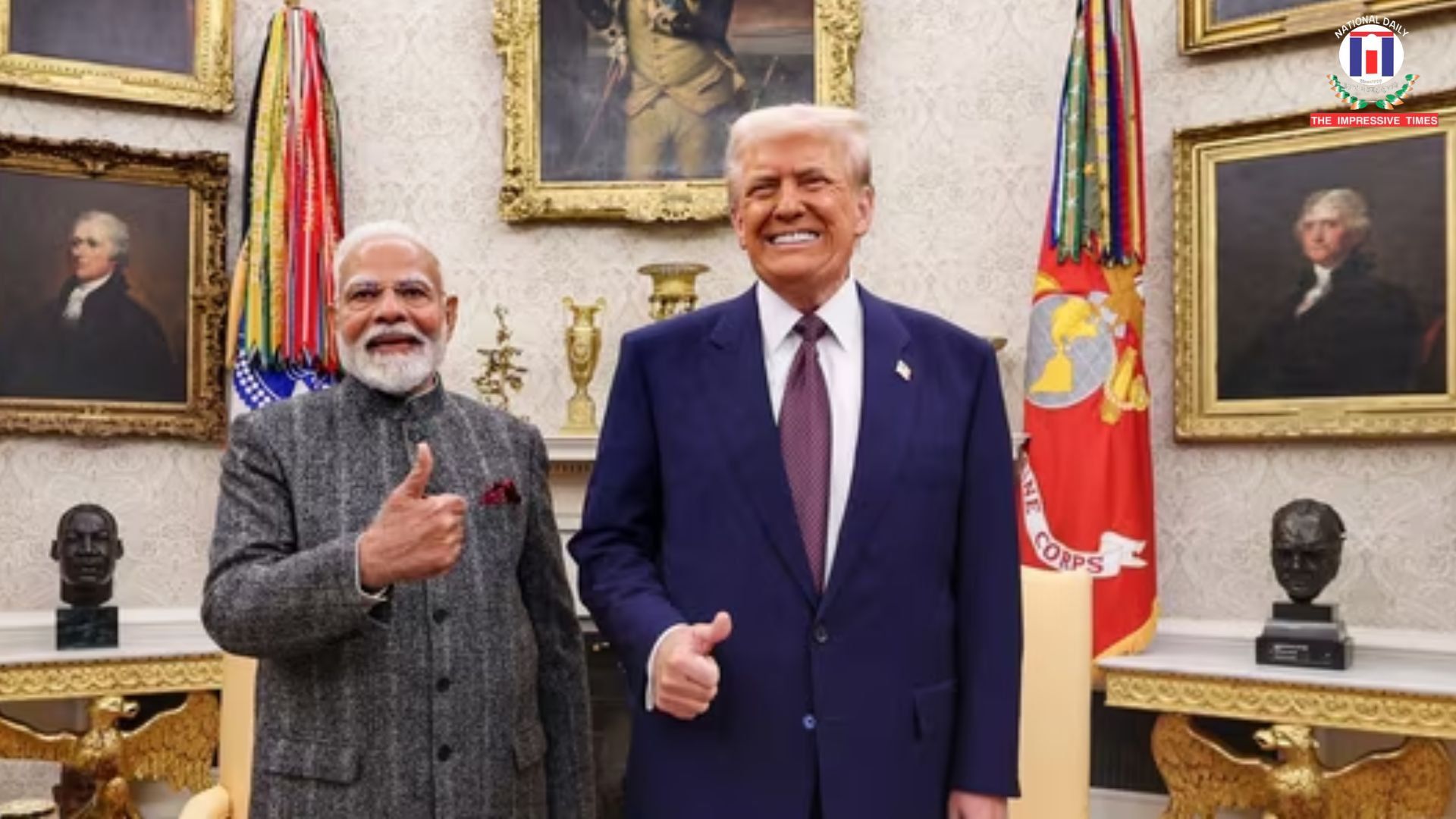
In response to the ruling, Trump signed a fresh executive directive introducing a 10% universal tariff on imports, replacing the previously announced 18% duty on Indian goods.
Earlier this month, Washington had outlined an 18% reciprocal tariff on products from India, a reduction from the initially proposed 50%. However, the Supreme Court ruled that the administration could not rely on emergency economic powers legislation to justify such sweeping trade penalties during peacetime.
The verdict effectively dismantled the legal foundation of the 18% rate, creating immediate uncertainty for exporters and policymakers.
Within hours of the judgment, Trump invoked Section 122 of the Trade Act of 1974, a rarely exercised provision that permits the US President to impose temporary tariffs — up to 15% — for 150 days without Congressional clearance to address trade imbalances.
Under this authority, a 10% tariff on all imports, including those from India, will take effect from February 24. Administration officials clarified that this uniform rate now applies to countries engaged in trade negotiations with the US.
Before the reciprocal tariff framework was introduced, Indian exports to the US carried an average base duty of approximately 3–4%. With the Supreme Court’s intervention removing the 18% levy and the new 10% rate coming into force, India’s total exposure could hover around the low-to-mid teens percentage range, depending on how US authorities structure the final calculation.
Formal clarification from Washington is still awaited.
The development comes at a sensitive time, as India and the US are reportedly close to concluding an interim trade agreement. Analysts believe the court’s decision may provide New Delhi additional negotiating leverage, especially if the US seeks alternative legal routes to reinstate higher tariffs once the 150-day window under Section 122 expires.
For now, Indian exporters will operate under the 10% tariff regime, though the long-term trajectory of bilateral trade duties remains uncertain.

 The Impressive Times

































No Comments: