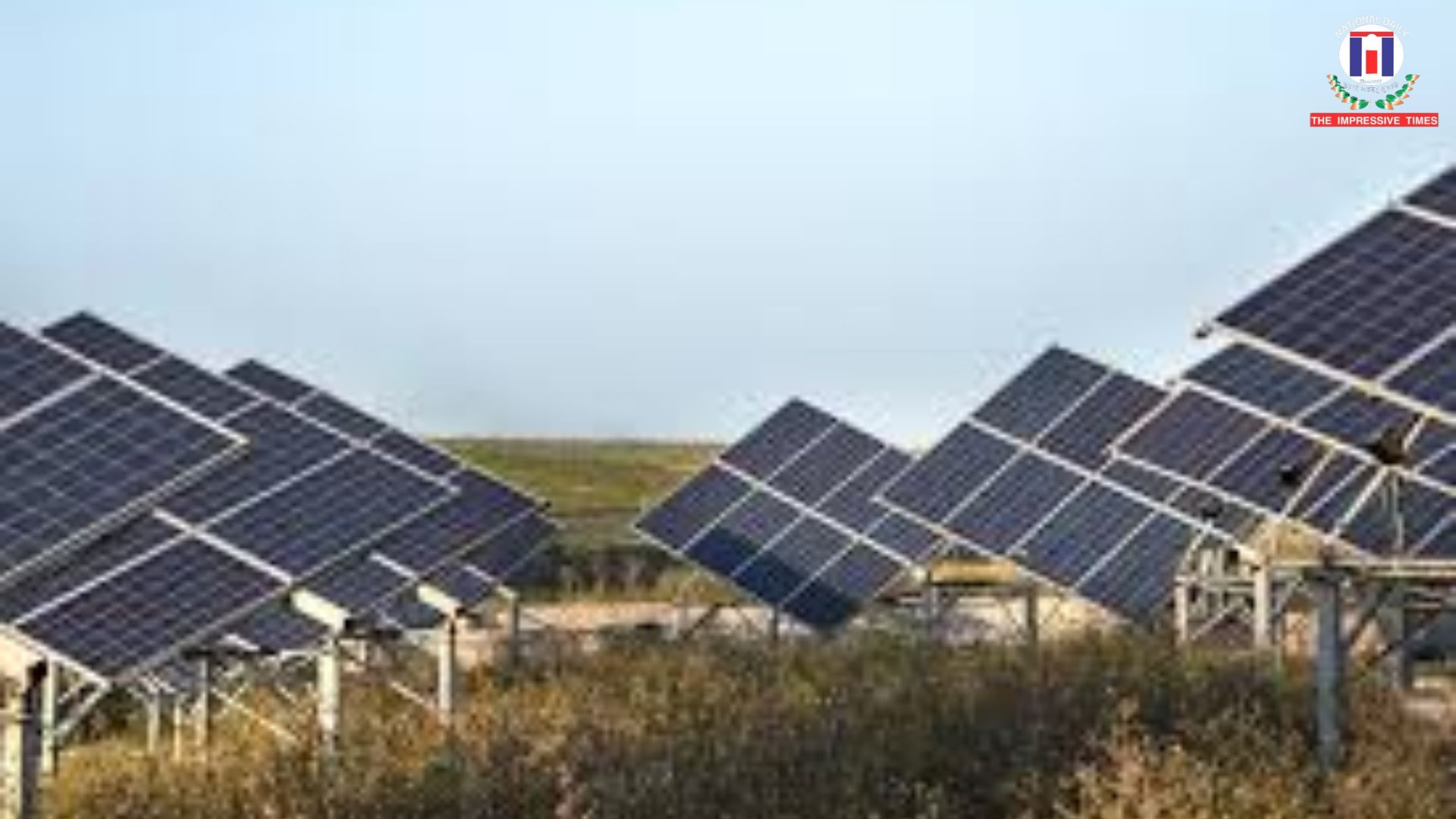
New Delhi : To address the challenge of intermittency in renewable energy and ensure grid stability, the Government of India has undertaken a comprehensive set of policy, regulatory, demand-side and supply-side measures to accelerate the development and deployment of energy storage technologies. These initiatives focus primarily on Battery Energy Storage Systems (BESS) and Pumped Storage Projects (PSPs), positioning energy storage as a cornerstone of India’s clean energy transition.
Drawing upon global best practices from countries with high renewable energy penetration, India is integrating advanced storage solutions and grid management systems to manage variability in solar and wind power. Energy storage systems are being enabled to provide critical ancillary services such as frequency control, voltage regulation, peak shifting, congestion management and black-start support across multiple time scales.
In this direction, the Central Electricity Regulatory Commission (Ancillary Services) Regulations, 2022, allow energy storage systems to provide secondary and tertiary reserve ancillary services, strengthening real-time grid operations. Renewable Energy Management Centres (REMCs) have been established for forecasting and scheduling renewable generation, while Automatic Generation Control (AGC) is being deployed to balance supply and demand.
A robust planning framework has also been put in place. The Central Electricity Authority (CEA) has estimated the need for around 336 GWh of energy storage capacity by 2029–30, rising to about 411 GWh by 2031–32, to support reliable renewable integration. The Resource Adequacy Plan guidelines issued in June 2023 incorporate energy storage as a key element to meet peak demand and maintain system reliability, complementing the National Electricity Plan in providing a clear roadmap for large-scale storage deployment.
On the policy and regulatory front, amendments to the Electricity Rules in December 2022 formally recognised Energy Storage Systems as an integral part of the power sector. Energy storage was included in the Harmonised Master List of Infrastructure in October 2022, enabling access to long-term and lower-cost financing. A National Framework for Promotion of Energy Storage Systems was issued in September 2023, while draft safety and technical standards for BESS were notified in 2025 to enhance reliability and standardisation.
To promote market development, the government has waived Inter-State Transmission System (ISTS) charges for co-located BESS projects and pumped storage projects awarded up to June 2028. Tariff-Based Competitive Bidding guidelines for BESS procurement, participation of storage in ancillary services and high-price day-ahead electricity markets, and mandates for shifting from diesel generators to cleaner storage-based backups further strengthen demand-side adoption. Two Viability Gap Funding schemes launched in 2024 and 2025 aim to support around 43 GWh of BESS capacity during the early stages of deployment.
On the supply and manufacturing side, the Production-Linked Incentive (PLI) scheme with an outlay of ₹18,100 crore supports the establishment of 50 GWh of Advanced Chemistry Cell manufacturing capacity, including 10 GWh for grid-scale storage. Additional measures, such as infrastructure grants for pumped storage projects, simplified approvals for closed-loop PSPs, flexible ownership models for storage systems and advisories on co-locating storage with solar power projects, are expected to accelerate capacity addition.
Together, these coordinated initiatives underscore the government’s commitment to building a resilient, flexible and future-ready power system, enabling large-scale renewable energy integration while ensuring reliable and affordable electricity for the nation.
This information was provided by the Minister of State for Power, Shri Shripad Yesso Naik, in a written reply in the Lok Sabha.








































No Comments: