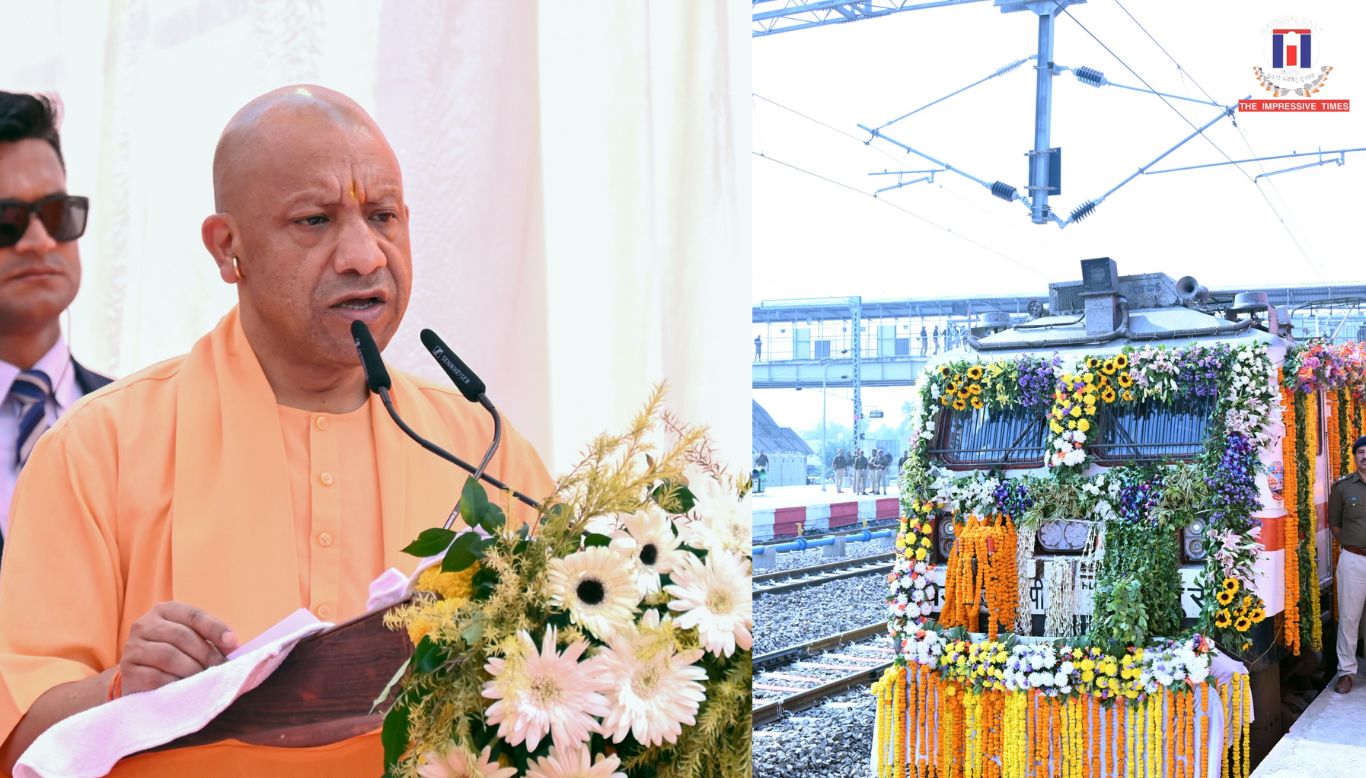
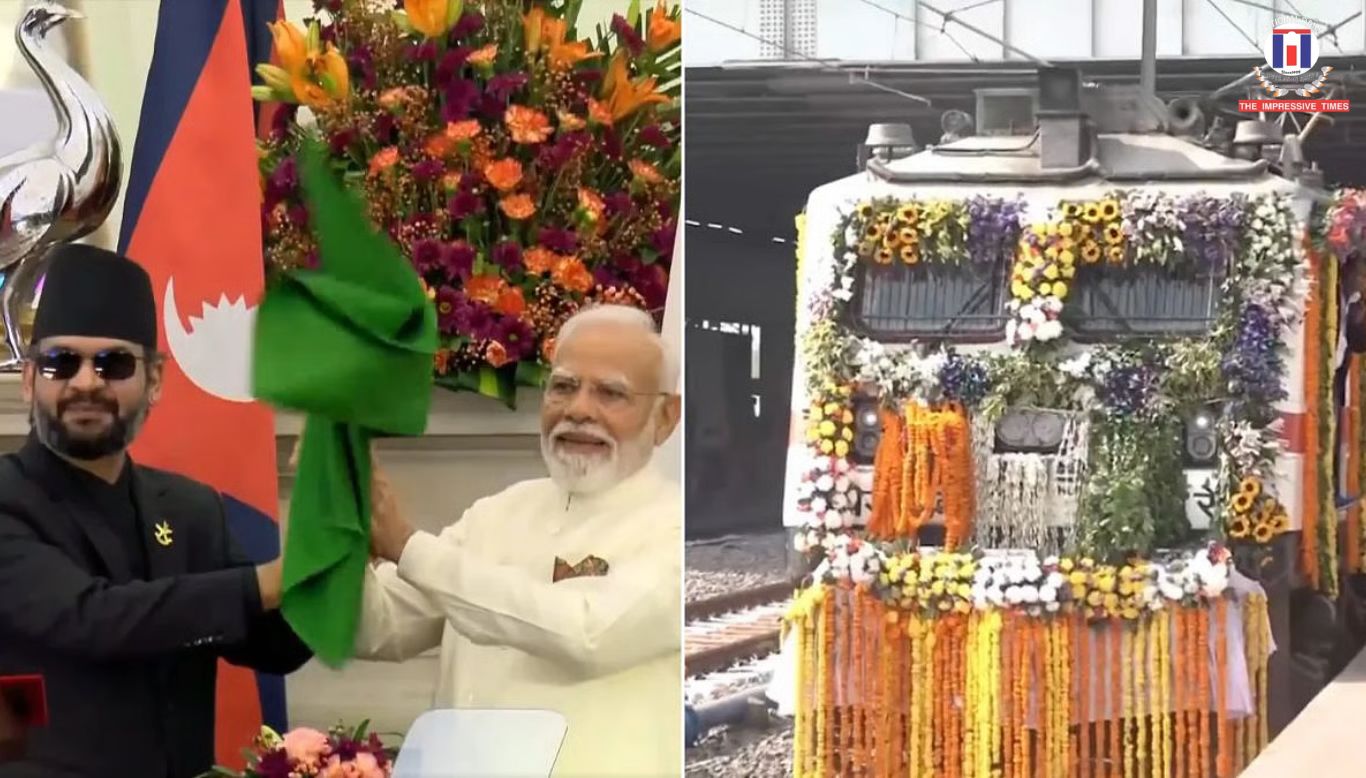
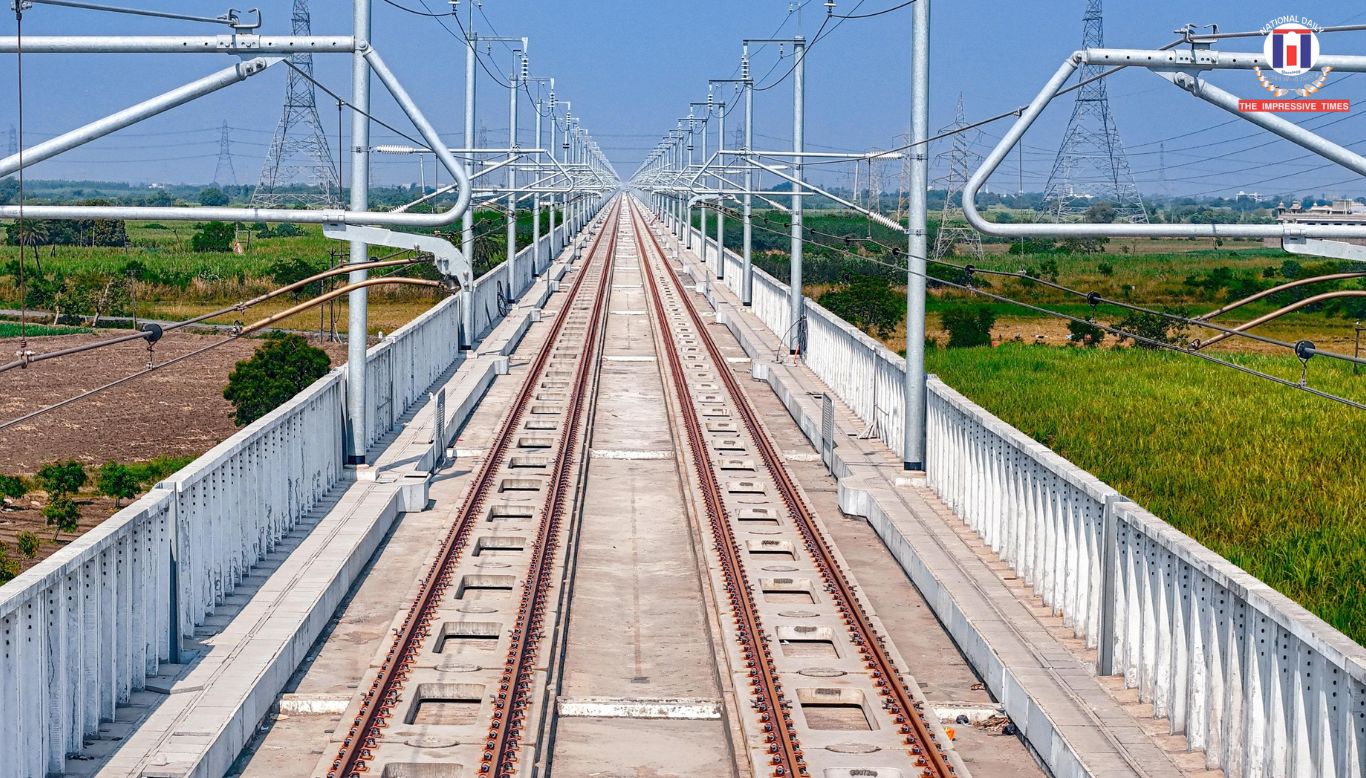
Ayodhya, November 23 : The centuries-old cultural, spiritual and familial heritage of Ayodhya and Mithila is set to receive a new impetus through modern rail connectivity. The Saryu-Kamala Express, launched between Ayodhya Dham and Janakpur Dham, will take the historic relationship between India and Nepal to new heights while facilitating the movement of devotees, traders and ordinary citizens of both countries. This is not merely a rail service connecting two religious cities, but an important link bringing together shared heritage, public faith and economic opportunities. At the launch program of the Saryu-Kamala Express at Ayodhya Cantt Railway Station, Chief Minister Yogi Adityanath described it as an example of Prime Minister Narendra Modi’s vision of ‘Heritage and Development’.
He said, “This connection between Ayodhya, nourished by the sacred waters of Maa Saryu, and Janakpur, the land of Mata Janaki, nourished by the waters of Maa Kamala, would give a new dimension to the thousands-of-years-old relationship between the two countries.”
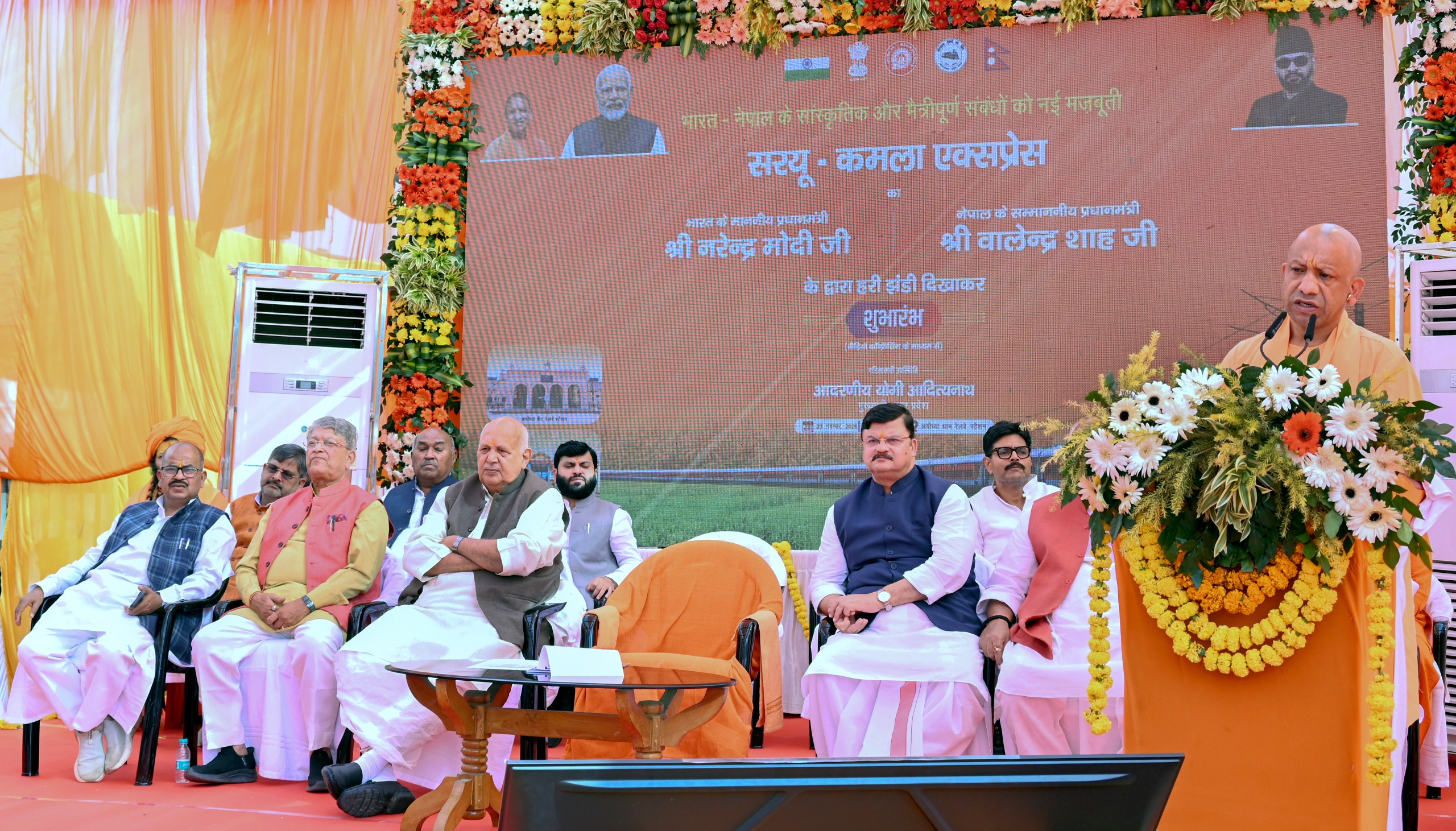
He added, “Through this historic initiative, devotees from Nepal would be able to travel directly to Ayodhya for darshan of Ramlalla, while devotees from India would have the facility to visit Janakpur Dham for darshan of Mata Janaki. This would further strengthen the enduring friendship and mutual trust between the two countries.”
The Chief Minister stated, “The relationship between India and Nepal is not merely a political or geographical relationship between two neighboring countries, but one built on thousands of years of shared faith, affection, culture and familial ties. In the tradition of Ram and Janaki, it is described as a ‘roti-beti ka rishta’ (relationship of food and family ties). The journey of Lord Shri Ram and Lakshman to Mithila with Maharishi Vishwamitra, and the arrival of Maharaja Dasharath’s wedding procession from Ayodhya to Janakpur after the marriage, remain alive in the cultural memories of both regions even today.”
He further added, “This episode is celebrated as a festival during Vivah Panchami and various other traditional events. The people of Ayodhya still regard Janakpur as their matrimonial home. In contrast, in the Mithila region, Lord Shri Ram is regarded as a son-in-law and accorded special affection and respect.”
He said that when the Vivah Panchami celebrations are held at the Ram-Janaki Vivah Mandap in Janakpur, auspicious wedding songs also resonate in Ayodhya. Last year, the Dharma Dhwaja was installed atop the Shri Ram Janmabhoomi Temple on the occasion of Vivah Panchami itself.
Referring to the nearly 500-year-long struggle of the Shri Ram Janmabhoomi movement, the Chief Minister informed, “The sacrifices and contributions of saints, youth, mothers, sisters and ordinary devotees from Nepal throughout this journey would always be remembered. On the occasion of the Pran Pratishtha of Ramlalla, hundreds of devotees from Janakpur Dham, the maternal home of Mata Janaki, had lovingly arrived in Ayodhya carrying auspicious gifts.”
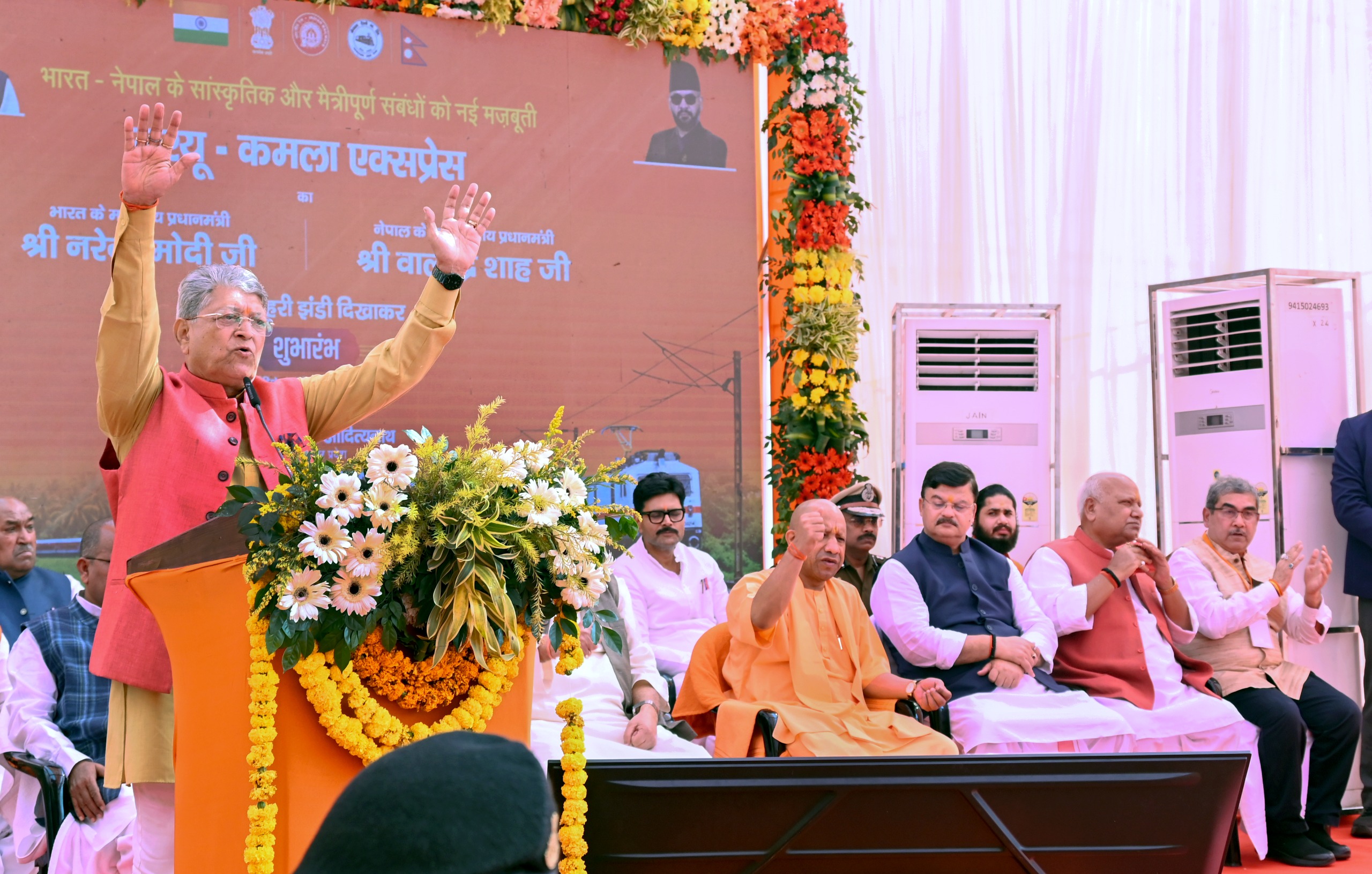
Referring to the religious and spiritual ties between India and Nepal, the Chief Minister said, “The Pashupatinath Temple in Nepal and Baba Vishwanath Dham in Kashi have shared a spiritual connection for centuries. Devotees from Uttar Pradesh have been undertaking pilgrimages to Muktinath and Pashupatinath for generations. The tradition of offering khichdi sent from Nepal at Gorakhnath Temple on Makar Sankranti, and the pilgrimage of devotees from Nepal to the Devipatan Shaktipeeth during Chaitra Navratri, reflect this bond of faith between the two countries.”
Referring to the shared heritage of Lord Buddha, he stated, “Lord Buddha was born in Lumbini in Nepal, while several important milestones in his life, spiritual practice, and journey of Dhamma are associated with Uttar Pradesh. Kapilvastu, Piprahwa, Shravasti, Sarnath, and Kushinagar continue to keep this heritage alive even today. In July 2025, the sacred Piprahwa relics of Lord Buddha were brought back to India from Hong Kong after a 127-year gap, which is a matter of pride. Piprahwa is located in Siddharthnagar district of Uttar Pradesh, near the India-Nepal border.
The Chief Minister also highlighted the natural and cultural ties between the two countries through their rivers. He said that rivers such as the Karnali, Gandaki, Rapti and Mahakali, originating in Nepal’s Himalayan region, flow into Uttar Pradesh as the Ghaghara, also known as the Saryu, Gandak, Rapti and Sharda, enriching the fields and lives of people here. The waves of the Saryu and the auspicious sounds of Janakpur reflect the shared cultural spirit of both regions.
He further added, “The open border between India and Nepal is a unique example of mutual trust in the world. Thousands of people travel between the two countries every day for trade, employment, education, healthcare, and family ties. India and Nepal stand by each other in every moment of happiness and sorrow.”
He said that the policies of the Central and State governments are aligned with the spirit of ‘Neighborhood First’. He informed that seven districts of Uttar Pradesh, namely Pilibhit, Lakhimpur Kheri, Bahraich, Shravasti, Balrampur, Siddharthnagar and Maharajganj, share an approximately 600-kilometer-long border with Nepal. Prime Minister Narendra Modi has envisioned expanding road, digital, energy, information and rail connectivity through highways, i-ways and trans-ways to strengthen India-Nepal relations. The Saryu-Kamala Express is an important step in this direction of rail connectivity.
The Chief Minister referred to the flagging off of the Janakpur-Ayodhya bus service by Prime Minister Narendra Modi in 2018 from the premises of Mata Janaki Temple in Janakpur. He said, “He had the opportunity to welcome the first bus in Ayodhya at that time. Now, rail connectivity is further expanding the relationship between the two sacred destinations.”
Providing details of the infrastructure being developed in the areas of Uttar Pradesh adjoining the Nepal border, the Chief Minister said, “The state’s first land port at the Nepal border in Rupaidiha is ready. A major share of exports from India to Nepal passes through this route. A plan is also being developed to establish an industrial and logistics corridor around the Rupaidiha border.”
He informed that the construction of the Barabanki-Bahraich four-lane highway under the Lucknow-Rupaidiha Corridor would reduce travel time from Rupaidiha to Nepalgunj by nearly half. The Rupaidiha-Nepalgunj Road area along the Bahraich border is connected to the broad-gauge, electrified rail network through Nanpara-Bahraich. This will accelerate public connectivity and economic activities in the border region. Construction of the Sonauli-Bhairahawa Integrated Check Post is also progressing rapidly. Facilities such as a public terminal building, a cargo terminal building, and a warehouse are being developed here.
The Chief Minister informed that last week, the 80-kilometer-long Gorakhpur-Sonauli road, constructed at a cost of ₹1,450 crore, was inaugurated. Work is also underway on a plan to develop a four-lane corridor from the Nepal border to Prayagraj via Siddharthnagar and Basti.
Referring to the proposed 750-kilometer-long, six-lane Gorakhpur-Shamli Greenfield Expressway, he said, “It would strengthen connectivity between western Uttar Pradesh, eastern Uttar Pradesh and the Nepal border. Meanwhile, the Shri Ram-Janki Marg, connecting Ayodhya to Janakpur via Sitamarhi, is also taking shape. These projects will create new opportunities for trade, tourism and social interaction between India and Nepal.”
The Chief Minister stated, “Ayodhya, which once faced neglect, is now being developed with modern and world-class infrastructure. The city of Lord Shri Ram has been connected with the rest of the country and the world through the Maharishi Valmiki International Airport. Earlier, Ayodhya had connectivity through a single railway line, whereas now a double railway line is operational, along with modern trains such as Vande Bharat and Amrit Bharat.”
He said that from the perspective of religious tourism, the Saryu-Kamala Express would also provide fresh momentum to the Ramayana Circuit and Buddhist Circuit. The train will pass through Sitamarhi, the birthplace of Maa Janaki, where a grand Maa Janaki Temple dedicated to Mata Sita and a spiritual city are being developed at Punaura Dham.
The Chief Minister informed that stops of the Saryu-Kamala Express at 10 important intermediate stations in Uttar Pradesh, Bihar and Nepal are expected to create thousands of new employment opportunities in religious tourism, trade, the hotel industry, local crafts and transportation in the border regions. This rail service will also strengthen people-to-people connections and mutual trust between citizens of the two countries.
He made a special mention of the women associated with Mithila painting in Janakpur and said that this rail service would also become a means of their economic empowerment. Improved connectivity will help local handicrafts reach new markets and expand economic opportunities for women artisans.
The Chief Minister said, “Uttar Pradesh is the center of both the Ramayana Circuit and the Buddhist Circuit, and its reach extends to Nepal as well. In this context, the Saryu-Kamala Express will not merely provide transportation facilities. Still, it will become an important means of connecting the cultural heritage, religious tourism and economic activities of the two countries.”
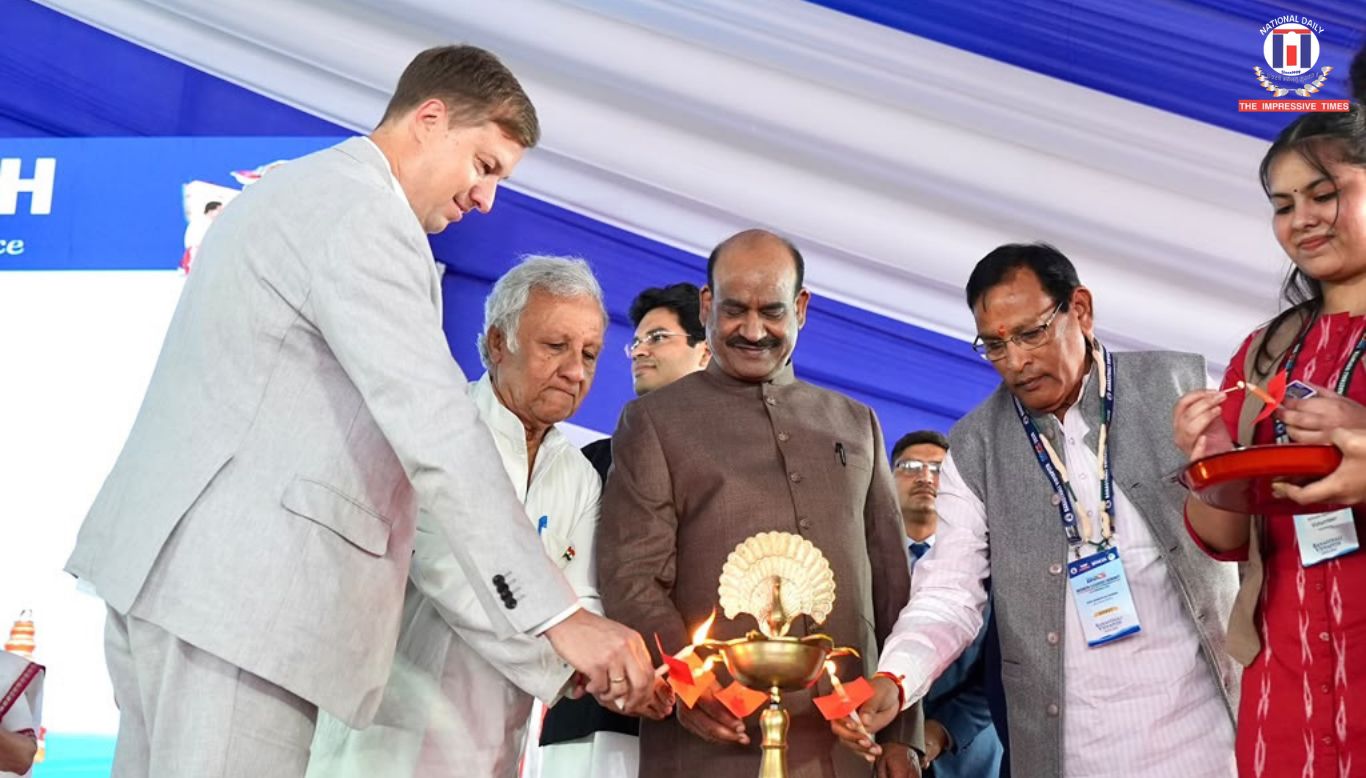
Prime Minister Narendra Modi, Nepal’s Prime Minister Balendra Shah KP, and Union Railway Minister Ashwini Vaishnaw were present at the program from Delhi, while from Ayodhya Dham, Minister-in-Charge Surya Pratap Shahi, Mayor of Ayodhya Dham Girish Pati Tripathi, MLA Ved Prakash Gupta, District Panchayat Chairperson Roli Singh, Member of the Legislative Council Hariom Pandey, MLAs Ramchandra Yadav, Amit Singh Chauhan and Abhay Singh, former MP Lallu Singh, General Manager, Northern Railway, Rajesh Pandey, and Divisional Railway Manager Sunil Kumar Verma were present.









No Comments: