Research with the system, shaped by communities: Building stronger maternal healthcare
SHRiSTI project introduces improved maternal monitoring, referral tracking and counselling support to strengthen pregnancy outcomes in Palwal.

 The Impressive Times
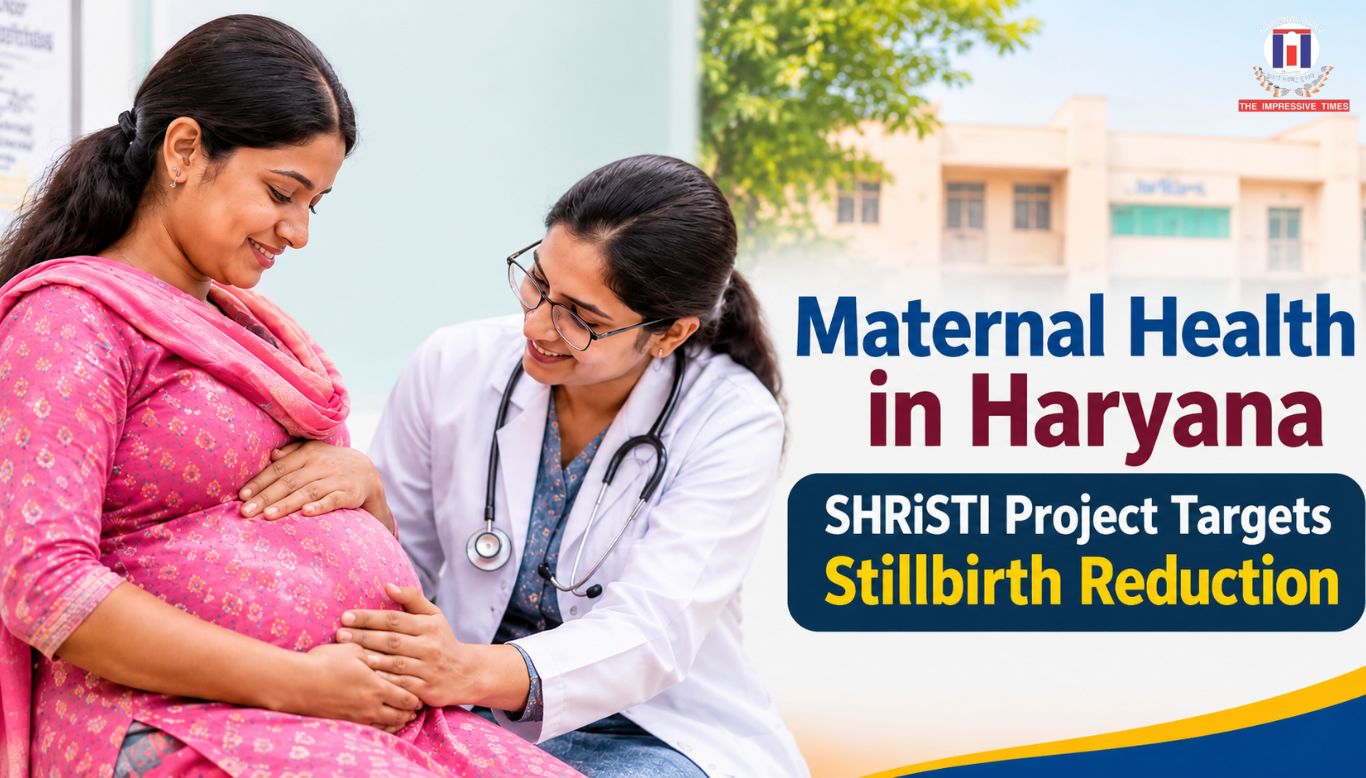
Palwal, November 21, 2026: In Haryana’s Palwal district, a maternal-health initiative is demonstrating how implementation research can bring practical improvements to the public healthcare system, with a focus on better pregnancy outcomes and reducing stillbirths.
The Indian Council of Medical Research (ICMR)-supported SHRiSTI project (Strategies to Help in Optimal Pregnancy Outcomes and Reduce Stillbirths in India), led by the Society for Applied Studies (SAS), New Delhi, is working closely with Palwal district health authorities, with support from the State health authorities of the National Health Mission, Haryana.
The initiative aims to identify gaps across antenatal and intrapartum care and co-design solutions that can be implemented through existing government healthcare systems.
A defining feature of the collaboration is the government’s active engagement with implementation research as an ongoing process of learning and adaptation. State and district teams are working alongside researchers to identify implementation challenges, interpret evidence and develop locally workable responses.
The collaboration has supported several health-system strengthening measures, including the introduction of wireless cardiotocography (CTG) devices at the District Hospital and other high-caseload facilities in Palwal.
Another important intervention is the Maternal Referral Tracking System (MRTS), designed to improve referral coordination through real-time communication between referring healthcare facilities and the District Hospital.
Key Healthcare Interventions
• Wireless CTG devices to strengthen maternal monitoring
• Maternal Referral Tracking System for better coordination
• Improved healthcare documentation and IEC materials
• Ongoing training of healthcare personnel
The tracking system allows incoming cases to be monitored in real time, enabling receiving medical teams to prepare in advance. The research is also supporting better documentation, Information, Education and Communication (IEC) materials, and continuous training of healthcare staff.
SHRiSTI has also highlighted that improving maternal healthcare requires an understanding of circumstances beyond hospital facilities. Interviews with women and their families found that healthcare-seeking decisions are influenced by family involvement, traditional beliefs, previous healthcare experiences, transport barriers and perceptions of pregnancy-related risks.
The research also identified an often-overlooked challenge faced by women following pregnancy loss. Some women reported experiencing blame, social avoidance and pressure to resume their normal responsibilities, while structured support after pregnancy loss was largely absent.
Focus on Women’s Emotional Well-being
Research findings have informed C-COMPASS, a structured postpartum counselling package for women experiencing stillbirth. The initiative is currently being piloted and formally evaluated in Palwal.
The initiative seeks to address the need for structured counselling and support for women following pregnancy loss, recognising the emotional and social challenges they may experience.
The Maternal and Child Health Department, National Health Mission, Panchkula, Haryana, has provided sustained support and intellectual inputs throughout the co-design process. Palwal district health authorities have also played an important role in translating research findings into locally feasible healthcare interventions.
“For this project, the principle has been simple: design with the system, not for the system, and listen to the community before designing solutions. Women’s voices, frontline realities and government priorities must come together if change is to be practical, acceptable and sustainable.”
— Dr Barsha Gadapani Pathak
Society for Applied Studies, New Delhi, and Co-Principal Investigator of SHRiSTI, Palwal
The SHRiSTI initiative highlights the importance of bringing together scientific evidence, government participation and community experiences to strengthen maternal healthcare delivery and improve pregnancy outcomes.

































No Comments: