
 The Impressive Times
Panic says AI cannot be controlled; hype says it already is. Both blur the picture. Two filed Arché Inventions, the 0→1 Doctrine and Band-Based Archive Triage (BBAT), sort AI fears into three plain groups: what can be stopped before AI acts, what can be seen early and repaired, and what no safeguard can honestly promise.
| FIRST TIME HERE?
The 0→1 Doctrine is a filed invention to place any measurable need or capability, in any field and at any scale, as a band on one line from 0 to 1. AI may act only where bands overlap, and each decision is sealed in a receipt. BBAT, a second filing, sorts stored records, new, archived or long dormant, on the same line: retain, purge or promote. Only promoted records go on, and their bands, never the raw data, are derived inside the holder’s secure vault. These bands can help AI train beyond today’s data walls, ease model collapse and earn income where permitted. |
PANIC AND HYPE BOTH MISLEAD
Each week brings two kinds of headline. One says AI will soon slip out of human hands. The other says guardrails already have it covered. A calmer question helps: for any fear, what can be stopped, what can be seen and fixed, and what cannot be promised at all?
A FEAR BECOMES A BAND
The 0→1 Doctrine places each measurable concern on one line from 0 to 1: a dose, a price swing, a robot’s speed, a data share, a power draw, each against its own agreed range. People with recognised authority mark the safe stretch of that line, and its edge is the red line AI may not cross. A vague worry becomes a band that can be checked, and the check comes before the act, not after the harm.
WHERE THE LINE SITS
Many guardrails today live inside the AI model or arrive as reviews after harm. A model checking itself shares its own blind spots, and a review after harm can only explain it. By design, the 0→1 gate sits outside the AI and before the act. It reads bands, not the model’s confidence or reasoning, so a persuasive answer does not widen the band.
GROUP ONE: STOPPED BEFORE AI ACTS
When an AI proposal reaches the gate, the Manufacturing Authorization Token (MAT) compares its bands with the red lines. There are three outcomes only: approve, reject or hold. Inside the band, work goes ahead. Outside it, the step is rejected or held for a person, and judgment calls always go to a human. At every scale the logic is the same: a dose beyond one patient’s safe range, a price change too steep for a market, a robot arm too close to people, a data share without consent. Each can be stopped before it happens, and an Actuation Compliance Receipt (ACR) records why.
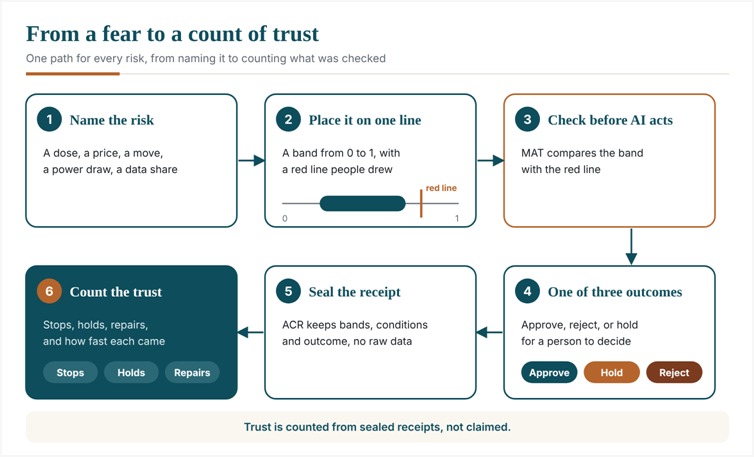
Figure 1. From a fear to a count of trust.
GROUP TWO: SEEN EARLY, REPAIRED, PROVEN
Some risks build slowly. The Predictive Risk Advisory Token (PRAT) flags likely faults before work begins. While work runs, the Orchestration and Compliance Token (OCT) can pause or redirect a step that drifts. The Emergent Meta-Environmental Response and Governance Envelope (EMERGE) watches patterns across many decisions, so a run of near misses can be noticed before it becomes a failure. If harm still occurs, the Post-ACR Remediation and Resolution Framework (PARR) starts repair, reassignment or, where possible, rollback, tied to the ACR that sealed the decision. Under Delete-Before-Share, raw data stays with its owner, so raw data does not travel; only bands do.
GROUP THREE: WHAT NO SAFEGUARD CAN PROMISE
A gate can stop only what passes through it. No design, from this inventor or anyone else, can promise to stop an AI that never meets the gate. What the design aims for is narrower: warning signs noticed earlier, damage contained, a sealed record built to expose any alteration, and a route to repair.
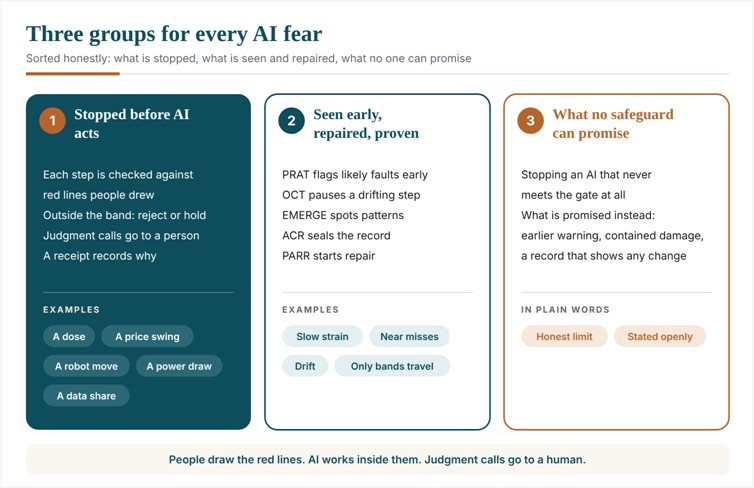
Figure 2. Three groups for every AI fear.
RECORDS THAT SHOULD NOT LINGER
Stored records carry their own fears: leaks, misuse and AI trained on what it should never see. BBAT reads only a record’s labels, such as age, consent and legal hold, and marks it retain, purge or promote. Legal holds go to a person. The Metadata Inconsistency Check Module (MICA) catches contradictory labels, and Verified Omission of Invalid Data (VOID) sets unusable records aside before any AI learns from them.
MARKET SHOCKS, SORTED THE SAME WAY
Markets fear what they cannot see: bottlenecks in power, chips and data, sudden outages and recalls, and swings in confidence after a bad headline. A purchase, dispatch or price move that breaks a red line can be stopped. Strain building across suppliers or regions can be flagged early, and a sealed record shows investors and insurers what was actually checked. A shock that starts outside any connected gate stays outside it, though the record still shows what was checked inside, and when.
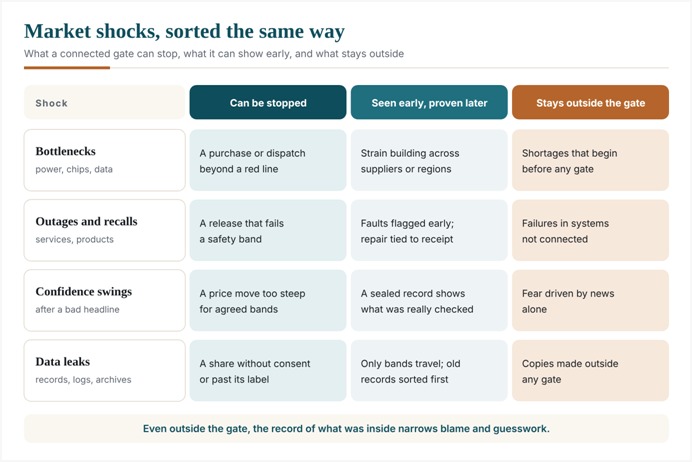
Figure 3. Market shocks, sorted the same way.
TRUST YOU CAN COUNT
Trust can be counted instead of claimed: how many steps were stopped, how many were held for a person, how many repairs followed and how quickly. Each count comes from sealed receipts, not from anyone’s word. The Fair & Transparent Waste Estimator (FTWE) adds what each decision is likely to waste in time, energy and material.
PEOPLE SET THE LINES
Recognised authorities and domain experts decide where each red line falls, using published sources, and review it as knowledge changes. The invention draws that line on one scale and checks every proposal against it. AI works inside the line; a smarter model may propose better, but it may not move the line on its own.
BEFORE SUPERINTELLIGENCE
Superintelligence has not arrived. What can be tested now is whether these safeguards depend on how capable AI becomes. By design they do not: the lines sit outside the AI, the check comes before the act, and judgment calls go to a human.
| Does the gate slow AI down? By design, the check runs as part of the step; only cases outside the band wait for a person. |
What if a red line is wrong? People can review and redraw it as evidence changes. |
| Will receipts survive quantum computers? That is the aim of the inventor’s quantum-resilient cryptography, designed to resist specified quantum-era attacks. |
Can anyone see what was checked? The receipt shows bands, conditions and outcome, without raw data. |
THE INVENTOR
Systems theorist, inventor, and serial entrepreneur Vatsal Soin holds grants in the US, Japan, India and more; filings span six continents; latest grant, AI footwear, August 2026. Inventions: footwear, apparel fit, Sharable Size Cards, digital twins, robotics, global governed data, archive triage, quantum-resilient cryptography, AI governance. SIM–RMIT and NTU alumnus. Every prior invention was a step; 0→1 is the aim.
SELECTED REFERENCES
Granted: US Patent 12,446,652 B2 · Japan Patent 7560909 · India Patents 454081 and 599317. Pending: PCT/IN2025/051943 · US 19/489,595 · India 202511115781 · Australia AU2022450649 · India 202611113867 (23 September 2026) · PCT/IN2026/052042 (1 October 2026).
DISCLAIMER
Informational only. Not certified. No endorsement implied. Not investment advice. Examples are illustrative, not field results. Vatsal Soin · © 2026 All Rights Reserved.





































No Comments: