Jodhpur, October 10: Defence Minister Rajnath Singh on Saturday emphasised the importance of self-reliance in defence manufacturing, technological innovation and international cooperation while addressing participants of the second edition of Exercise Tarang Shakti 2026 at Air Force Station Jodhpur.
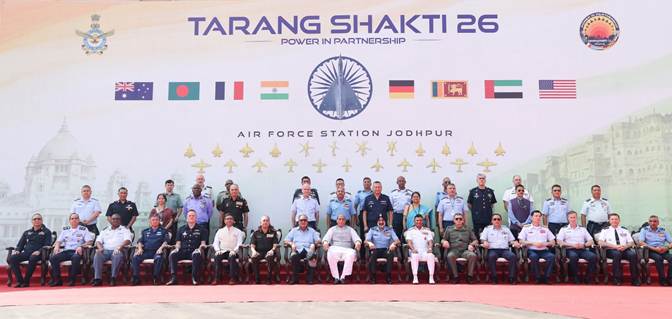
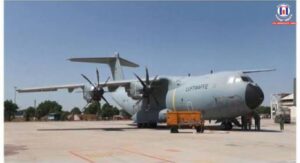
Hosted by the Indian Air Force (IAF) from September 26 to October 12, the multinational air exercise brought together air forces from seven friendly foreign countries, including Australia, Bangladesh, France, Germany, Sri Lanka, the United Arab Emirates and the United States, along with representatives from 32 observer nations.
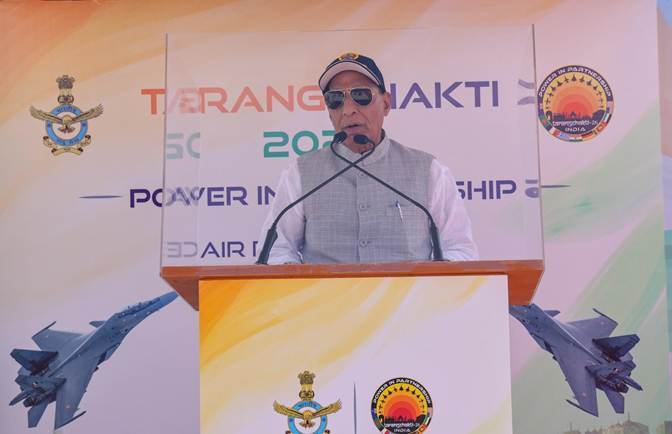
Congratulating the IAF and other organisations involved in the exercise, Singh said the participation of international contingents had strengthened professional understanding and operational cooperation among the participating air forces.
Modern warfare demands speed and technological integration
Addressing the gathering, Singh said modern warfare was expanding beyond the traditional domains of land, sea and air to include space, cyberspace, the electromagnetic spectrum and the information domain.
He highlighted the growing role of unmanned systems, drones, artificial intelligence, electronic warfare and long-range precision weapons in shaping contemporary military operations.
“Future military power will be defined less by the number of platforms we possess. It will be determined by the speed of sensing, understanding, deciding, and acting,” he said.
The Defence Minister stressed that speed, precision, information and integration had become critical elements of military capability. He also called for continuous vigilance amid changing geopolitical conditions and rapid technological developments.
Atmanirbharta at the centre of defence policy
Singh said India had adopted self-reliance in defence, or Atmanirbharta, as a national policy to strengthen its resilience against emerging security challenges.
He emphasised that countries must develop the capacity to manufacture their own weapons and critical technologies to remain prepared during prolonged conflicts and periods of uncertainty.
Highlighting the transformation of the Indian Air Force since Independence, Singh noted its evolution into a modern aerospace force equipped with advanced aircraft, precision weapons, sophisticated sensors, integrated networks and increasingly capable indigenous technologies.
He clarified that Atmanirbhar Bharat did not mean isolation from the world, but developing domestic capabilities to design, manufacture, maintain, upgrade and support critical defence systems while cooperating with trusted international partners.
Indigenous aerospace programmes gain prominence
The Defence Minister highlighted India’s growing aerospace and defence manufacturing ecosystem, citing indigenous programmes and systems such as the Tejas fighter aircraft, Dhruv, Rudra, Prachand and Light Utility Helicopter, along with the Akash air defence system, active electronically scanned array (AESA) radars and emerging unmanned technologies.
He also referred to the Advanced Medium Combat Aircraft (AMCA) programme as an important step towards developing fifth-generation stealth fighter capabilities.
Singh underlined the need to advance aero-engine development and co-production, while exploring international cooperation in research, co-development, manufacturing, maintenance, training and innovation.
“The defence relationships of the future will be about technology and trust, not just about platforms,” he said, highlighting the importance of reliable partnerships and resilient supply chains.
He added that India must be capable of acting independently when required while also working effectively with partner nations when their interests and responsibilities converge.
Tarang Shakti strengthens interoperability
Singh described Exercise Tarang Shakti as an important platform for translating defence capabilities, technological cooperation and mutual trust into practical operational experience.
The exercise enabled participating air forces to operate alongside one another, exchange professional knowledge, assess procedures and understand different aircraft platforms, operational doctrines and mission-planning approaches.
He said multinational exercises allowed aircrews and commanders to learn from one another, review existing practices and identify opportunities to improve operational systems and processes.
Describing the spirit of the exercise, Singh said, “Different nations. Different aircraft. Different experiences. But one sky. That is the message of Tarang Shakti.”
He urged the Indian Air Force to incorporate lessons from the exercise into its training, tactics, technology, doctrine and future capability development.
Indigenous platforms and operational preparedness
The second edition of Exercise Tarang Shakti builds on the inaugural edition held in 2024 and reinforces India’s commitment to international defence engagement.
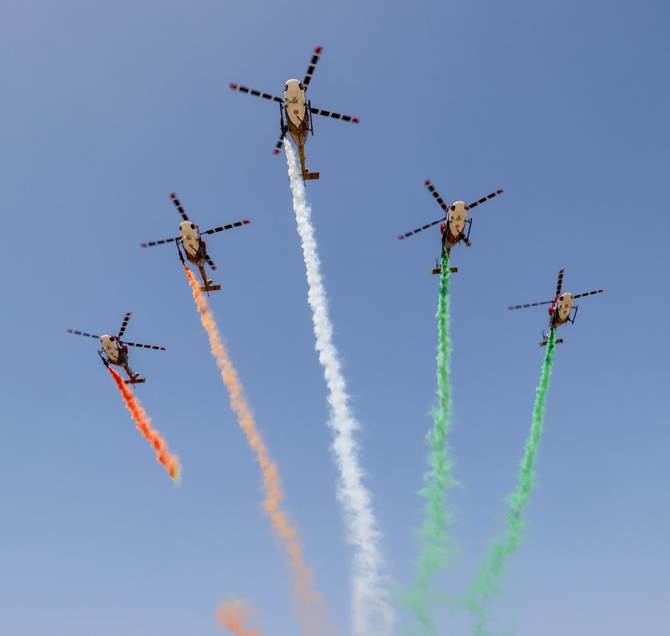
The exercise brought together combat, transport, surveillance and air-to-air refuelling capabilities, offering opportunities for joint mission planning, operational learning and improved interoperability. The participation of indigenous platforms, including the Light Combat Aircraft Tejas and Light Combat Helicopter Prachand, highlighted India’s progress in aerospace design, engineering and manufacturing.
The Ministry of Defence also highlighted the relevance of operational preparedness and integrated planning in light of the role of air power in Operation Sindoor. The operation underscored the importance of precision, calibrated action, credible deterrence and the effective use of air power in pursuing national security objectives.
Cultural exchanges complement flying operations
Beyond flying operations, Exercise Tarang Shakti featured professional engagements, industrial visits and cultural programmes designed to strengthen ties among participating nations.
Activities included yoga sessions, heritage visits and an International Night celebrating the traditions of the participating countries.
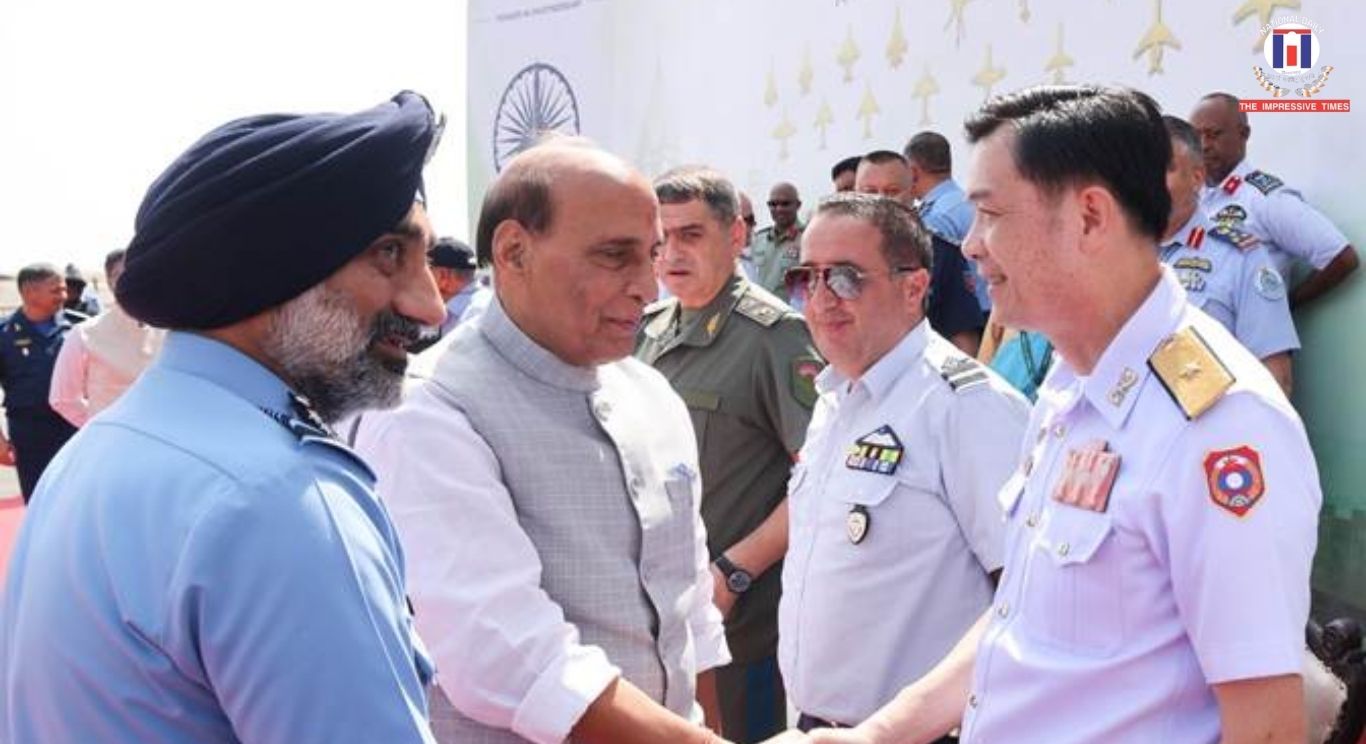
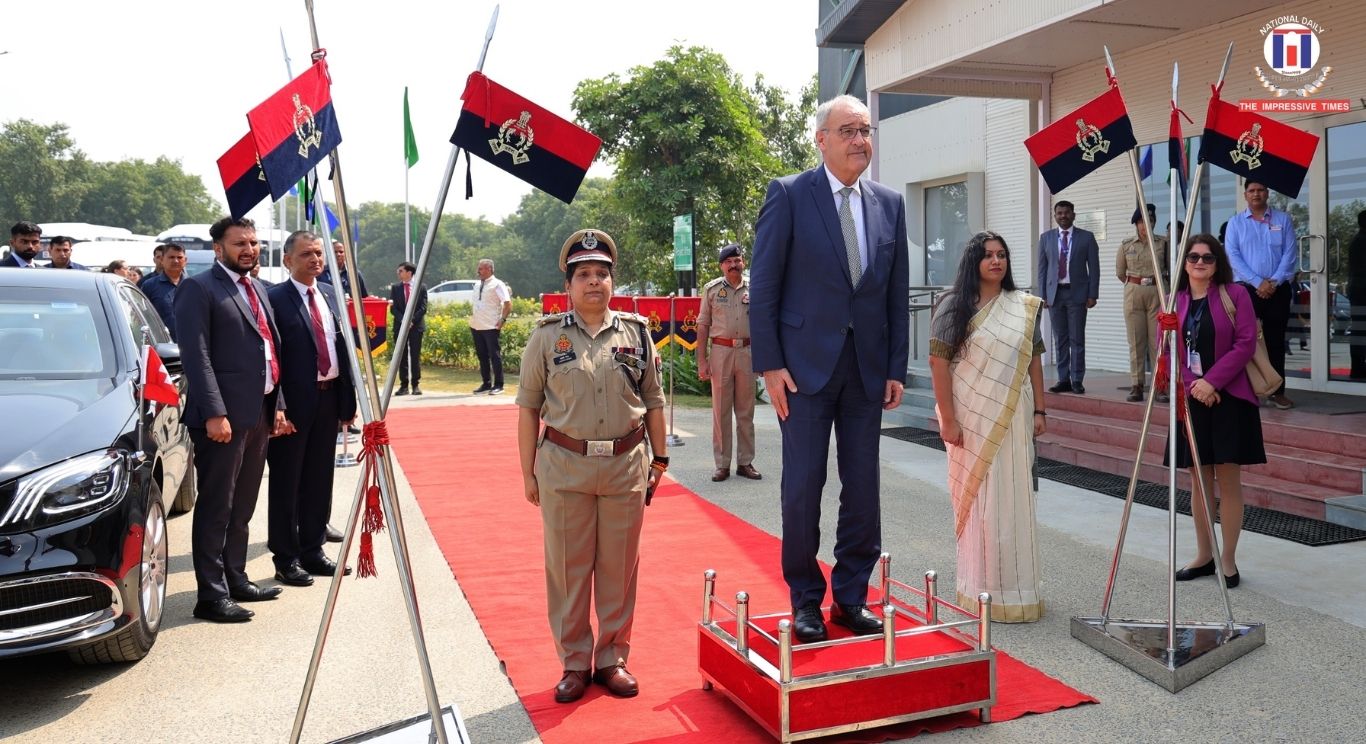
The event was attended by Chief of Defence Staff General N. S. Raja Subramani, Chief of the Air Staff Air Chief Marshal A. P. Singh, Chief of the Naval Staff Admiral Krishna Swaminathan, senior Ministry of Defence officials and representatives of the participating countries.
The exercise reaffirmed India’s focus on strengthening indigenous defence capabilities while expanding international cooperation to address the changing technological and operational demands of modern warfare.



















No Comments: