
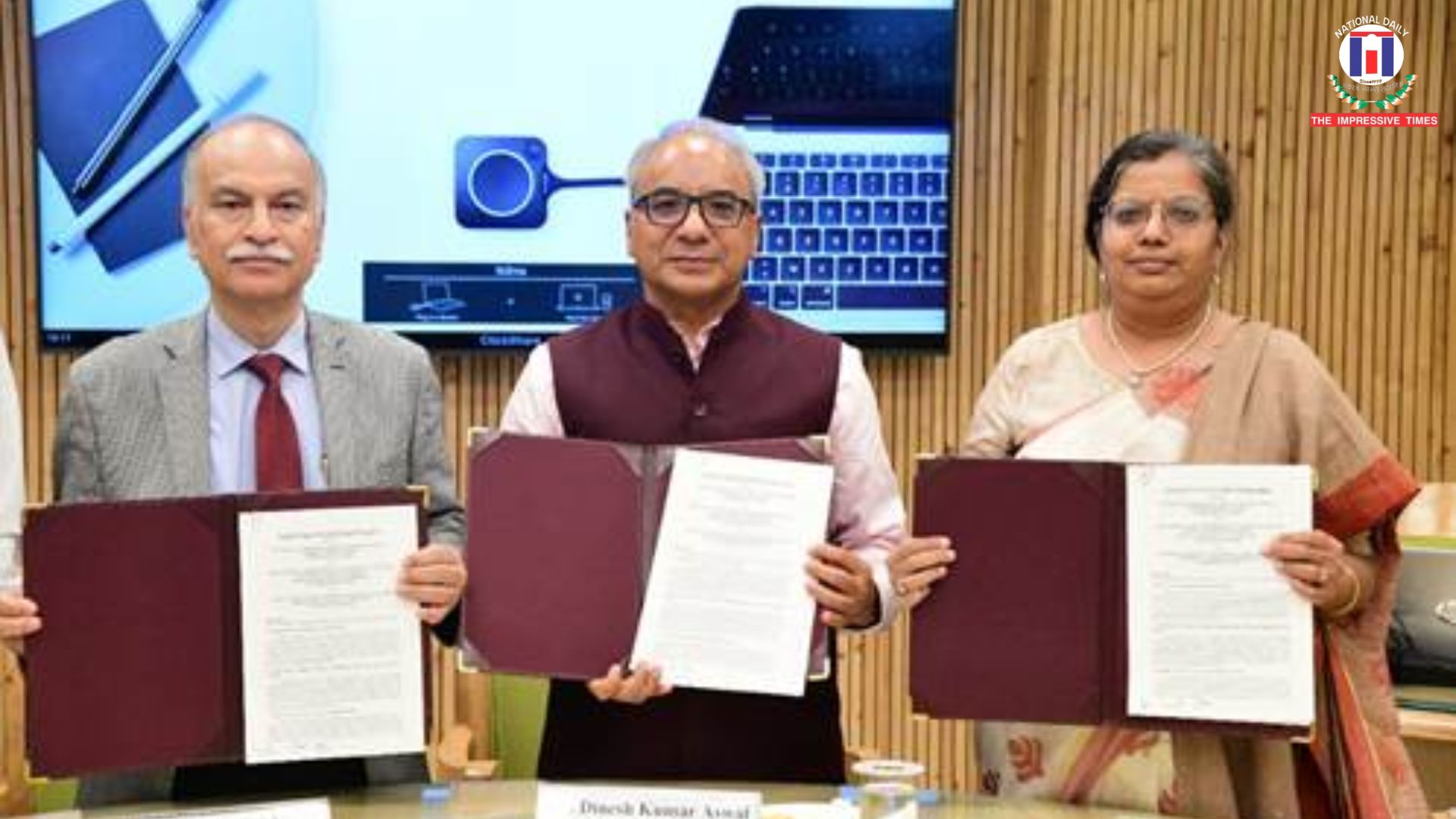

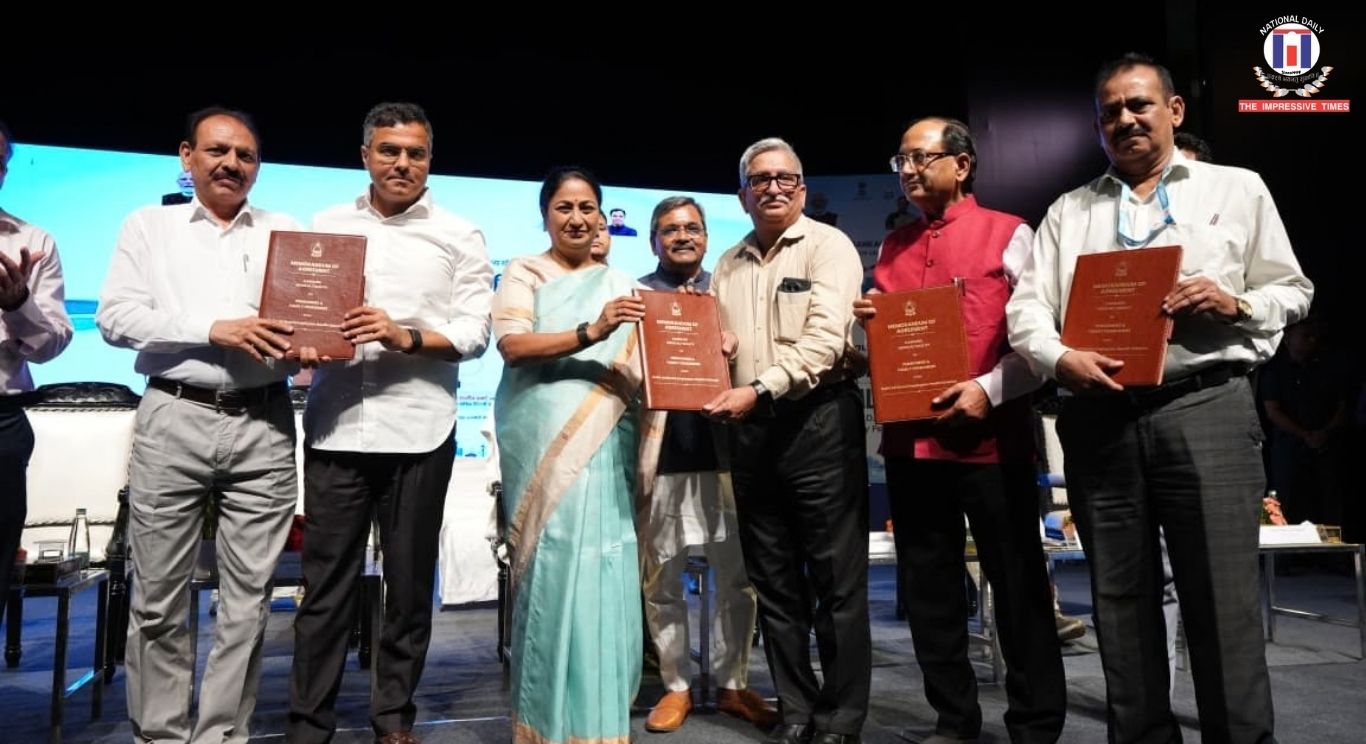
New Delhi, February 21, 2026: In a significant move aimed at reinforcing India’s disaster preparedness architecture, the National Disaster Management Authority (NDMA) has entered into a tripartite agreement with the Academy of Scientific and Innovative Research (AcSIR) and the CSIR–National Institute of Science Communication and Policy Research (CSIR–NIScPR). The collaboration seeks to advance academic programmes, strengthen research initiatives, and deepen policy engagement in the field of Disaster Management and Risk Reduction (DMRR).
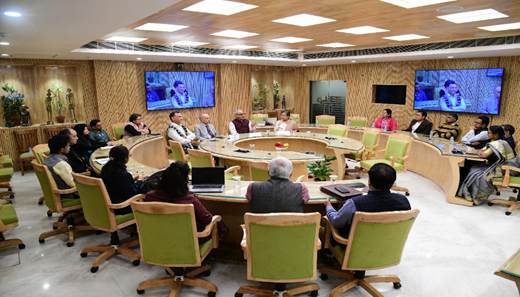
The Memorandum of Understanding (MoU) lays the groundwork for integrating scientific innovation, policy analysis, and communication strategies to create a more resilient national disaster management framework.
Focus on Doctoral Studies and Research Integration
A key outcome of the agreement is the introduction of a specialised PhD programme in Disaster Management. The doctoral initiative will be offered by AcSIR and hosted at CSIR–NIScPR, with technical guidance and strategic inputs from NDMA. The programme is designed to cultivate high-level expertise and foster interdisciplinary research addressing emerging disaster-related challenges.
In addition to academic programmes, the partnership will facilitate joint research projects, policy studies, and structured capacity-building efforts. Special emphasis will be placed on improving science communication, enhancing early warning dissemination, and strengthening community awareness initiatives.
Science, Policy and Preparedness: A Unified Vision
Dr. Dinesh Kumar Aswal, Member of NDMA, underscored the importance of aligning scientific research with national disaster risk reduction priorities. Referring to the Prime Minister’s Nine-Point Agenda on Disaster Risk Reduction, he stressed the need to build a collaborative network of academic and research institutions dedicated to disaster studies. He highlighted the critical role of systematic post-disaster assessments and knowledge documentation in refining preparedness strategies and response mechanisms.
Prof. Manoj Kumar Dhar, Director of AcSIR, described the MoU as an opportunity to expand interdisciplinary research opportunities for scholars across domains. With thousands of enrolled research scholars and a wide academic footprint, AcSIR aims to encourage innovative, research-driven solutions that can support India’s long-term disaster resilience goals and contribute to the vision of Viksit Bharat 2047.
Strengthening Science Communication and Policy Linkages
Dr. Geetha Vani Rayasam, Director of CSIR–NIScPR, emphasised the institute’s role in bridging scientific inquiry with policymaking. She noted that the collaboration will strengthen evidence-based policy research while enhancing public communication strategies related to disaster preparedness and risk mitigation. Through its academic hosting responsibilities and communication initiatives, CSIR–NIScPR will work to translate research insights into actionable policy frameworks and public outreach programmes.
Institutional Roles and Long-Term Impact
As the apex disaster management body under the Ministry of Home Affairs, NDMA will provide strategic oversight and domain expertise. AcSIR will lead academic design and research execution, while CSIR–NIScPR will serve as the institutional hub for programme delivery and policy-focused engagement.
The partnership marks a coordinated effort to embed scientific research, academic training, and policy-oriented communication into India’s disaster management ecosystem—aiming to build a more informed, responsive, and resilient nation.





















No Comments: