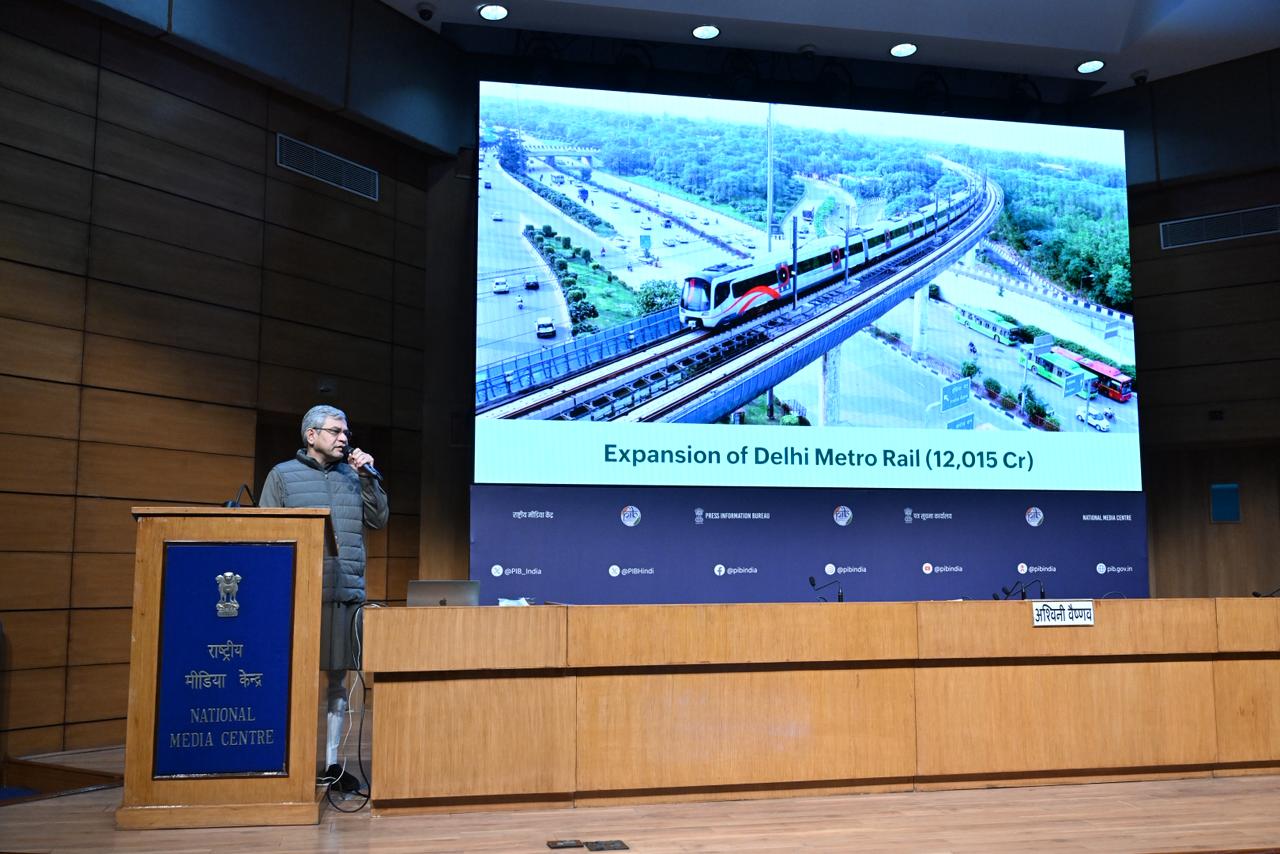
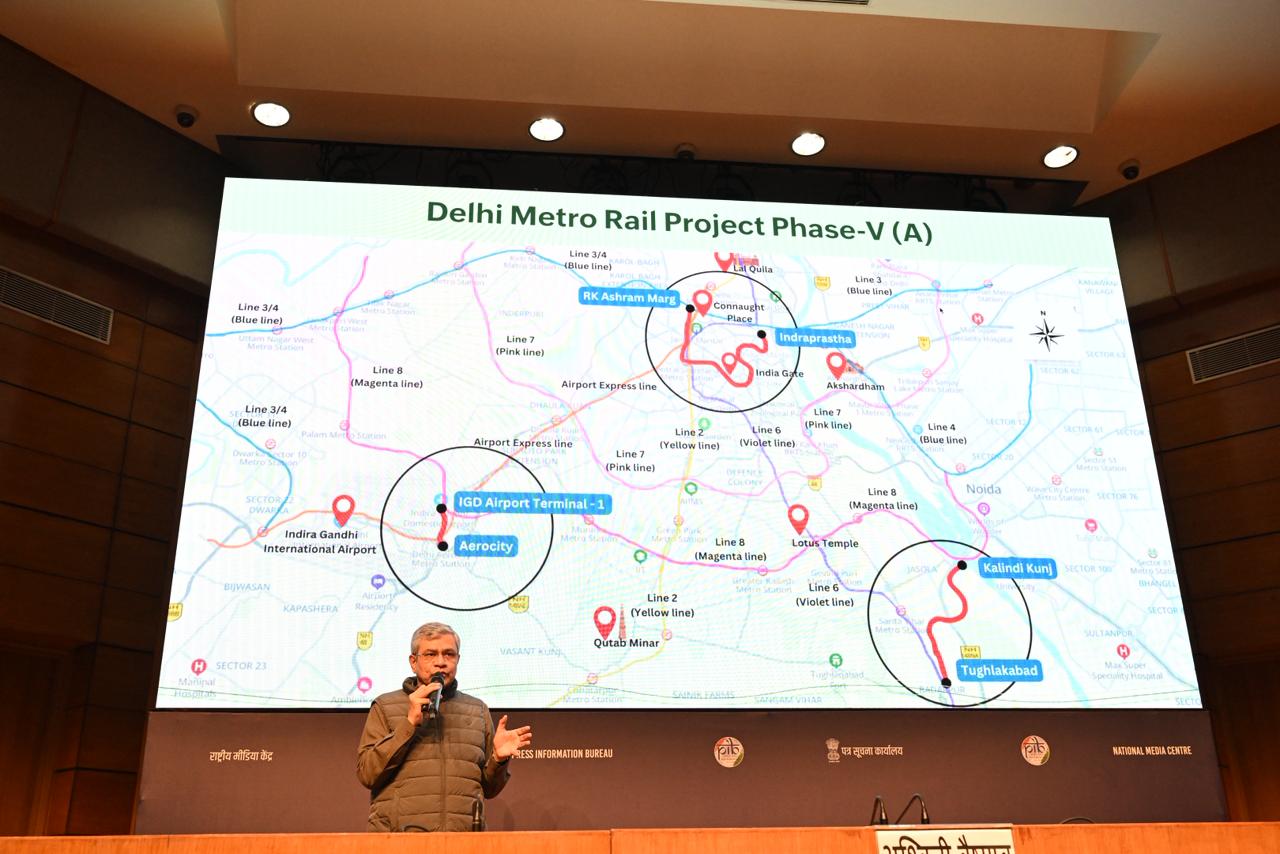
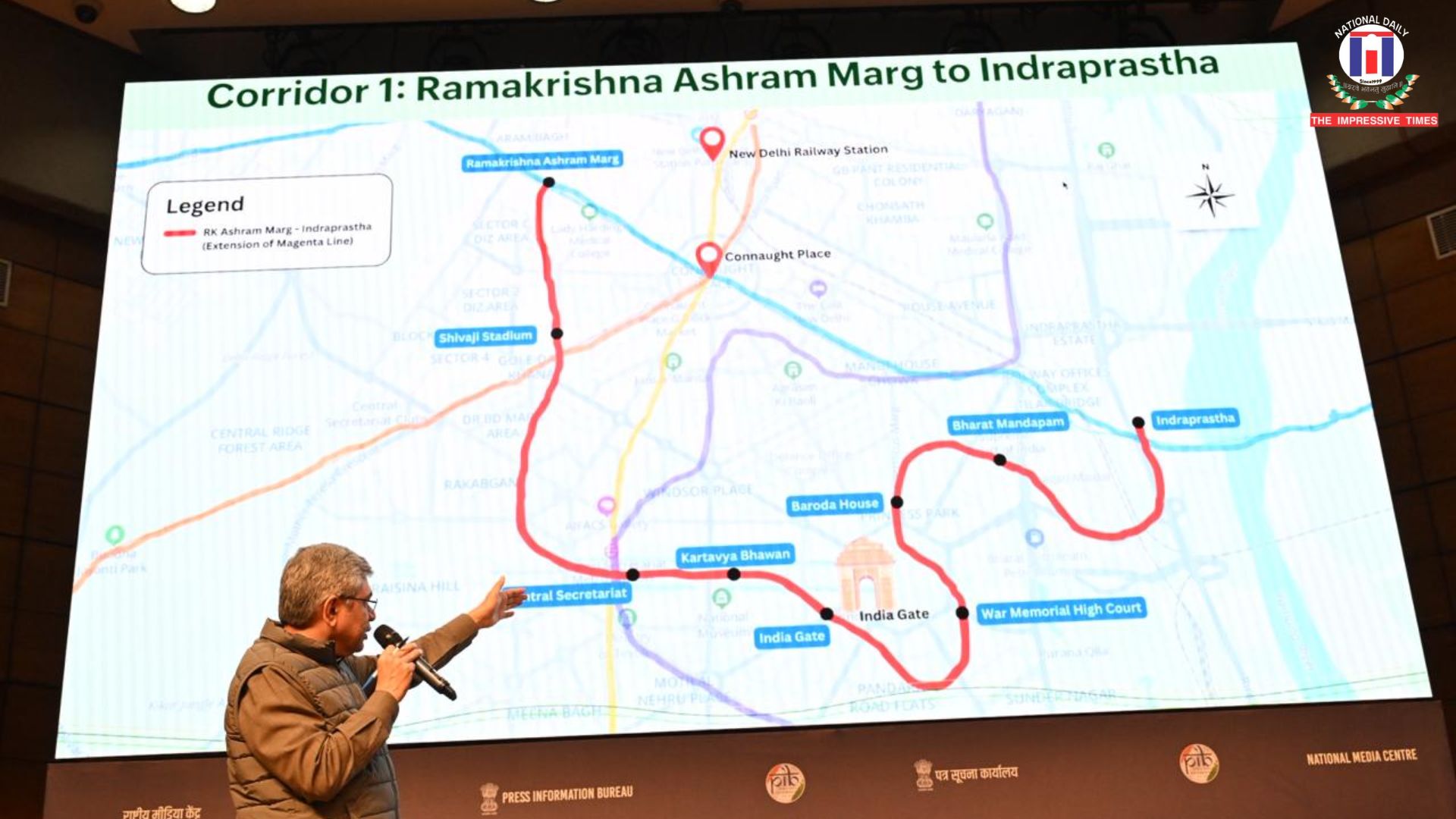
New Delhi : The Union Cabinet, chaired by Prime Minister Narendra Modi, has approved three new corridors as part of the Delhi Metro’s Phase V (A) project, marking a significant step towards strengthening urban mobility in the national capital. The approved corridors include R.K. Ashram Marg to Indraprastha (9.913 km), Aerocity to IGD Airport Terminal-1 (2.263 km), and Tughlakabad to Kalindi Kunj (3.9 km), together spanning a total length of 16.076 km.

The total project cost of Delhi Metro Phase V (A) has been estimated at ₹12,014.91 crore, to be funded by the Government of India, the Government of Delhi and international funding agencies. The project aims to further enhance connectivity within Delhi, reduce traffic congestion, lower pollution levels and promote the use of public transport.
A key highlight of the project is the Central Vista corridor, which will provide seamless metro connectivity to Kartavya Bhawans and surrounding areas. This is expected to benefit around 60,000 office-goers and nearly two lakh visitors daily, offering doorstep connectivity and significantly improving ease of travel in Central Delhi.
The R.K. Ashram Marg–Indraprastha corridor will be an extension of the Botanical Garden–R.K. Ashram Marg line and will connect West, North and Old Delhi with Central Delhi. The Aerocity–IGD Airport Terminal-1 and Tughlakabad–Kalindi Kunj corridors will extend the Aerocity–Tughlakabad line, enhancing airport connectivity with South Delhi areas such as Saket, Chhattarpur and Kalindi Kunj. These extensions will comprise 13 stations, of which 10 will be underground and three elevated.
The new corridors will expand the reach of the Magenta Line and the Golden Line, improve last-mile connectivity to the domestic airport and Central Delhi, and provide a major boost to economic activity. By reducing dependence on private vehicles, the project is expected to help cut vehicular congestion and fossil fuel consumption, contributing to cleaner air and sustainable urban development.
At present, construction of Phase IV of the Delhi Metro, covering 111 km and 83 stations, is underway, with over 80% of civil work on priority corridors already completed. These corridors are likely to be commissioned in stages by December 2026.
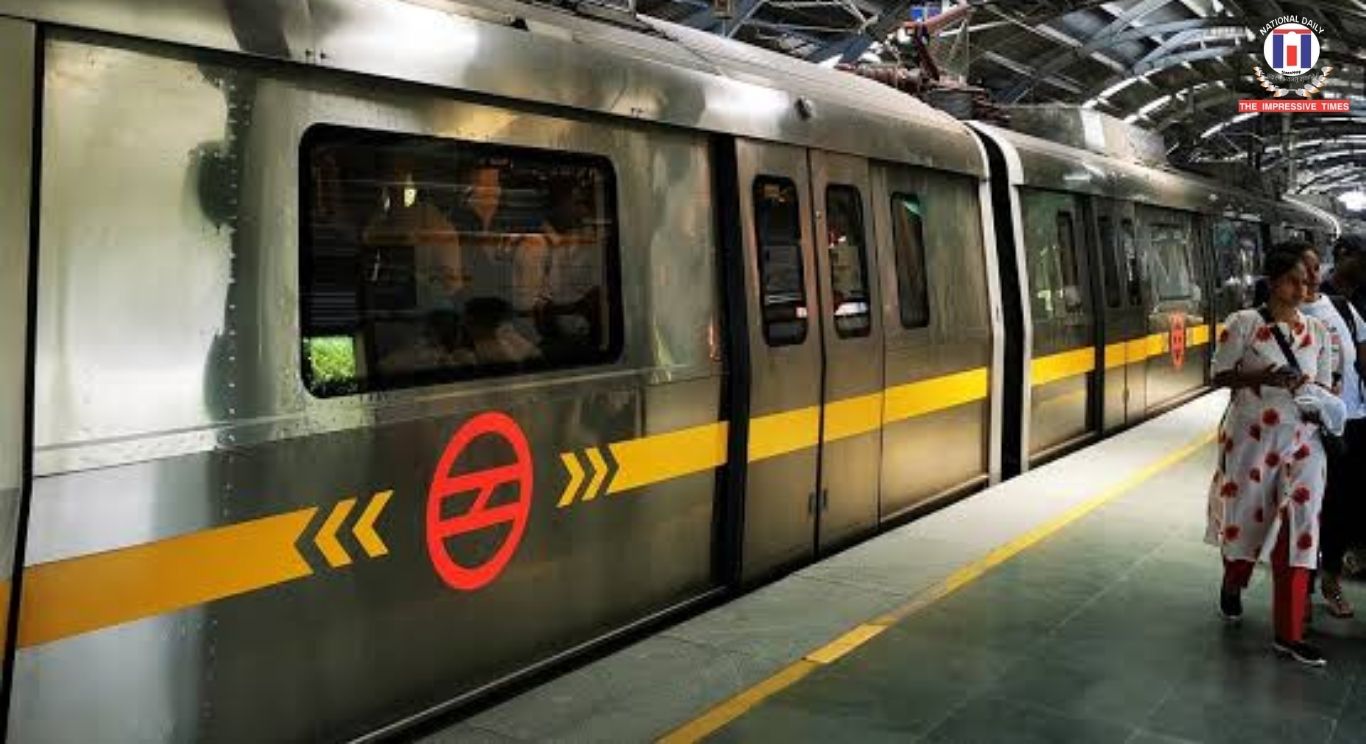
With an existing network of about 395 km and 289 stations across Delhi and NCR, the Delhi Metro today serves an average of 65 lakh passenger journeys daily, making it the lifeline of the city and one of the largest metro systems in the world.








































No Comments: