

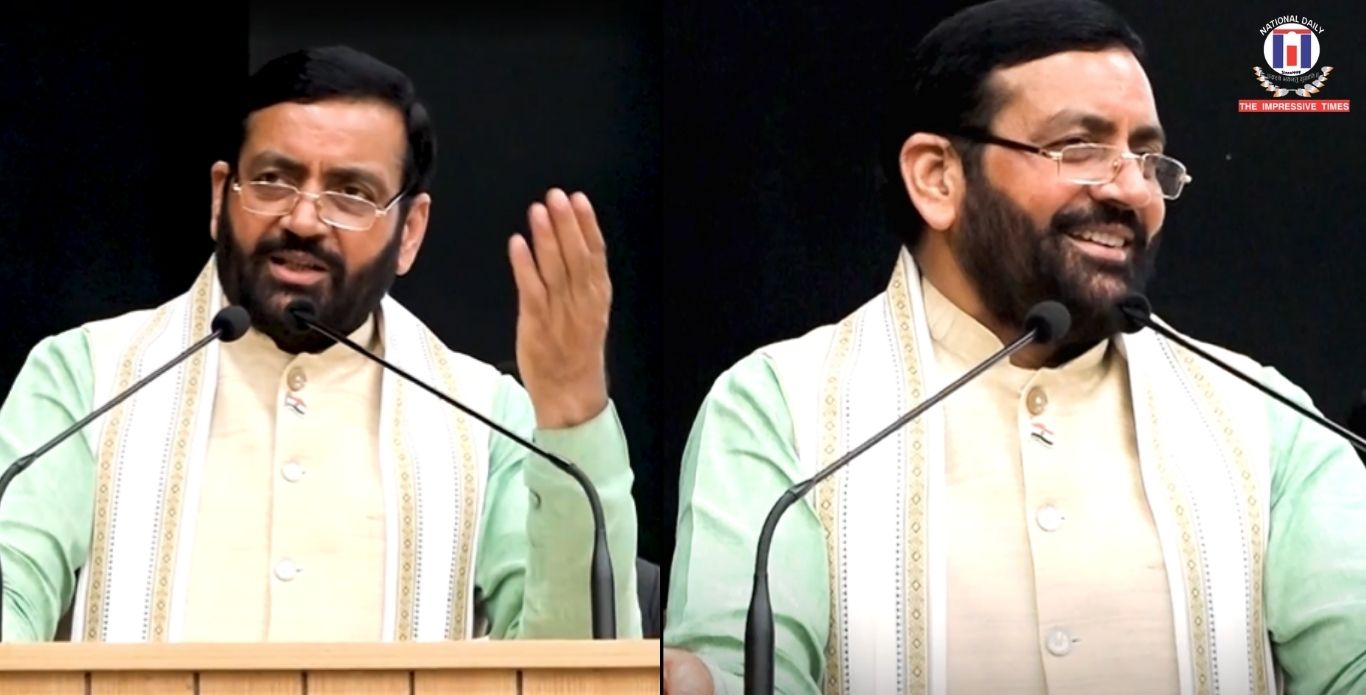
New Delhi :The Ministry of Housing and Urban Affairs (MoHUA) on Saturday launched the 10th edition of Swachh Survekshan, the world’s largest urban cleanliness survey, marking a decade of India’s flagship cleanliness assessment under the Swachh Bharat Mission–Urban (SBM-U). Union Minister for Housing and Urban Affairs Shri Manohar Lal released the Swachh Survekshan 2025–26 toolkit at a national event held in Bhopal, Madhya Pradesh.
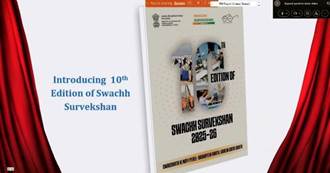
The theme for this landmark edition—“Swacchata Ki Nayi Pehel – Badhayein Haath, Karein Safai Saath” (A New Initiative for Cleanliness – Join Hands, Clean Together)—underscores collective responsibility and citizen participation as the driving forces behind urban sanitation and waste management reforms.
Over the past ten years, Swachh Survekshan has evolved from a city-ranking exercise into a powerful governance and management tool. What began in 2016 with the assessment of just 73 Urban Local Bodies (ULBs) has expanded to cover nearly 4,900 ULBs by 2024, significantly raising sanitation benchmarks and service delivery standards across cities and towns. The initiative has played a crucial role in promoting the vision of Garbage Free Cities (GFC) and embedding cleanliness as a behavioural norm—Swabhav Swachhata, Sanskaar Swachhata.
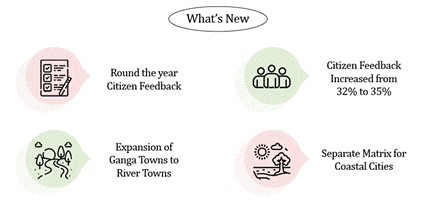
A major highlight of Swachh Survekshan 2025–26 is the strengthened role of citizens. Recognising public perception as a cornerstone of cleanliness assessment, MoHUA has significantly increased the weightage of citizen feedback. For the first time, citizens will be able to provide inputs throughout the year using multiple digital platforms, including the Vote For My City app and portal, MyGov app, Swachhata App, and QR code-based interfaces. This round-the-year engagement is aimed at making citizens equal stakeholders in urban governance and sanitation outcomes.
The scope of Swachh Survekshan has also been expanded geographically and environmentally. While Ganga towns were earlier assessed under the cleanliness framework, the new edition will now include river towns across the country. In addition, a separate assessment matrix has been introduced for coastal areas, bringing their unique waste management and sanitation challenges within the Swachh Survekshan ambit.
To further promote peer learning and institutional capacity-building, MoHUA highlighted the Swachh Shehar Jodi (SSJ) initiative, launched in September 2025. Under this structured mentorship programme, 72 mentor cities and 200 mentee cities have signed Memoranda of Understanding to facilitate knowledge sharing and replication of best practices in urban waste management. A new award category has been introduced in Swachh Survekshan 2025–26 to recognise outstanding Swachh Shehar Jodis, based on their combined performance across population categories.
The assessment framework for this edition has been made more rigorous, transparent, and technology-driven. A national oversight team will anchor the process, supported for the first time by a dedicated single-point-of-contact officer for each State and Union Territory. More than 3,000 trained field assessors will conduct a 45-day on-ground survey covering all ULBs, using real-time, GPS-enabled digital monitoring systems. The entire assessment process—from evidence submission to verification—will be fully digital and subject to strict quality checks.
Field assessments are expected to commence between mid-February and March 2026, alongside the evaluation for Garbage Free City (GFC) and Open Defecation Free (ODF) certifications.
As Swachh Survekshan completes ten years, it stands as a global example of a successful people’s movement. By amplifying citizen voices, strengthening accountability mechanisms, and fostering healthy competition among cities, the initiative continues to transform cleanliness into a shared national aspiration and a source of collective pride for urban India.



























No Comments: