SHANTI Bill Retains Strong Safety and Liability Safeguards, Says Dr. Jitendra Singh in Lok Sabha
Minister highlights statutory status for nuclear regulator, updated liability framework, and need for private participation to meet India’s 2047 clean energy goals
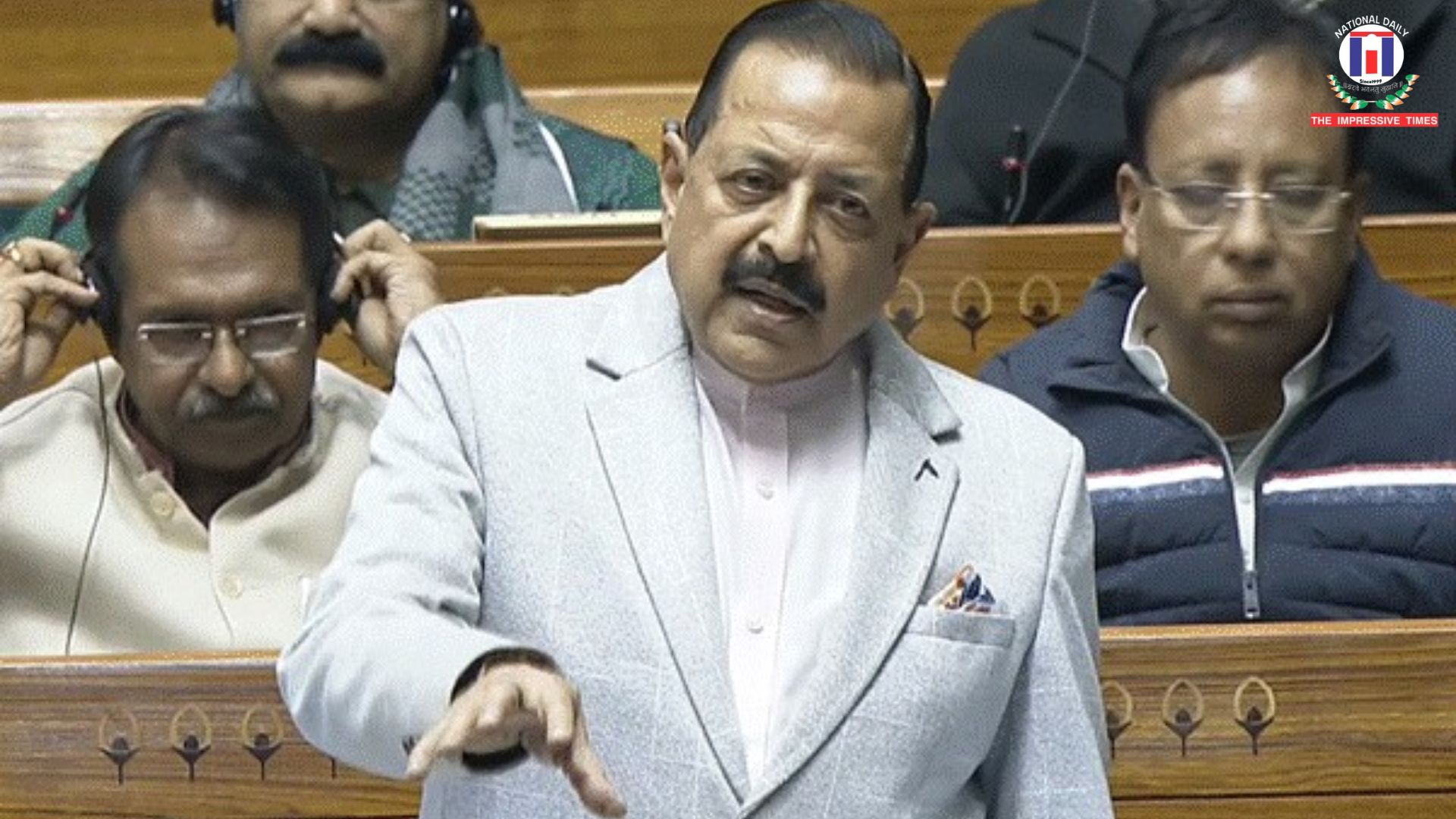
New Delhi : Union Minister of Science and Technology Dr. Jitendra Singh on Tuesday replied to the debate in the Lok Sabha on the Sustainable Harnessing and Advancement of Nuclear Energy for Transforming India Bill, 2025, addressing concerns raised by Members and outlining the government’s rationale for introducing a comprehensive new nuclear law. Responding to points cutting across party lines, the Minister said the Bill seeks to modernise India’s nuclear framework in line with contemporary technological, economic and energy realities, while retaining and strengthening core safety, security and regulatory safeguards that have been in place since the Atomic Energy Act of 1962 .
Dr. Jitendra Singh underlined that the proposed legislation consolidates existing laws and upgrades the regulatory architecture by giving statutory status to the Atomic Energy Regulatory Board, which until now functioned through an executive order. He stressed that safety norms, security controls over fissile material, spent fuel and heavy water, and periodic inspections remain firmly under government oversight, regardless of private participation. The Minister clarified that private entities will not have control over sensitive materials, and that spent fuel management will continue to be handled by the government, as has been the practice for decades .
On liability, a central theme of the debate, the Minister said the Bill does not dilute compensation to victims. He explained that operator liability has been rationalised through graded caps linked to reactor size to encourage newer technologies such as small modular reactors, while ensuring that full compensation is available to affected persons through a multi-layered mechanism. This includes operator liability, a proposed Nuclear Liability Fund backed by the government, and additional international compensation through India’s participation in the Convention on Supplementary Compensation. He maintained that supplier liability was removed after detailed consideration of global practices and advances in reactor safety, while negligence and penal provisions remain enforceable under the law
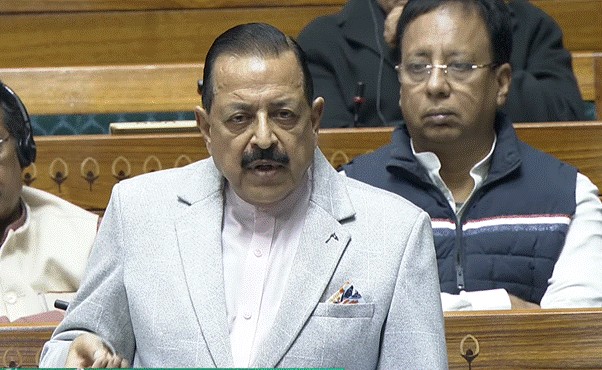
Dr. Jitendra Singh also rejected the view that the Bill signals a retreat from public sector capability, pointing to a nearly 170 per cent increase in the Department of Atomic Energy’s budget over the past decade and a doubling of installed nuclear capacity since 2014. He said India’s nuclear contribution to the energy mix remains modest compared to global peers, and scaling it up is essential to meet rising demand from sectors such as data processing, healthcare and industry, alongside renewables. The Bill, he added, enables responsible private and joint venture participation to bridge resource constraints, shorten gestation periods and support the national goal of 100 GW nuclear capacity by 2047, without compromising national security or public interest .
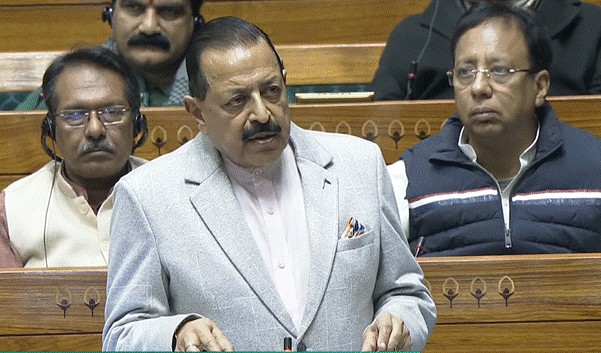
Placing the legislation in a broader context, the Minister said nuclear energy has applications beyond power generation, including cancer care, agriculture and industry, and the Bill for the first time explicitly recognises environmental and economic damage within the definition of nuclear harm. With dedicated investments announced for small modular reactors and research and innovation, Dr. Jitendra Singh said the proposed law aims to create an enabling ecosystem for clean, reliable energy as India approaches the centenary of Independence, while upholding the long-standing commitment to peaceful use of atomic energy.


































No Comments: