Why Did the Supreme Court Stop the UGC 2026 Rules? Here’s What It Means
The Supreme Court has stayed the UGC Regulations 2026 amid protests, restoring the UGC 2012 anti-discrimination rules. Here’s what the court order means for colleges and students across India.
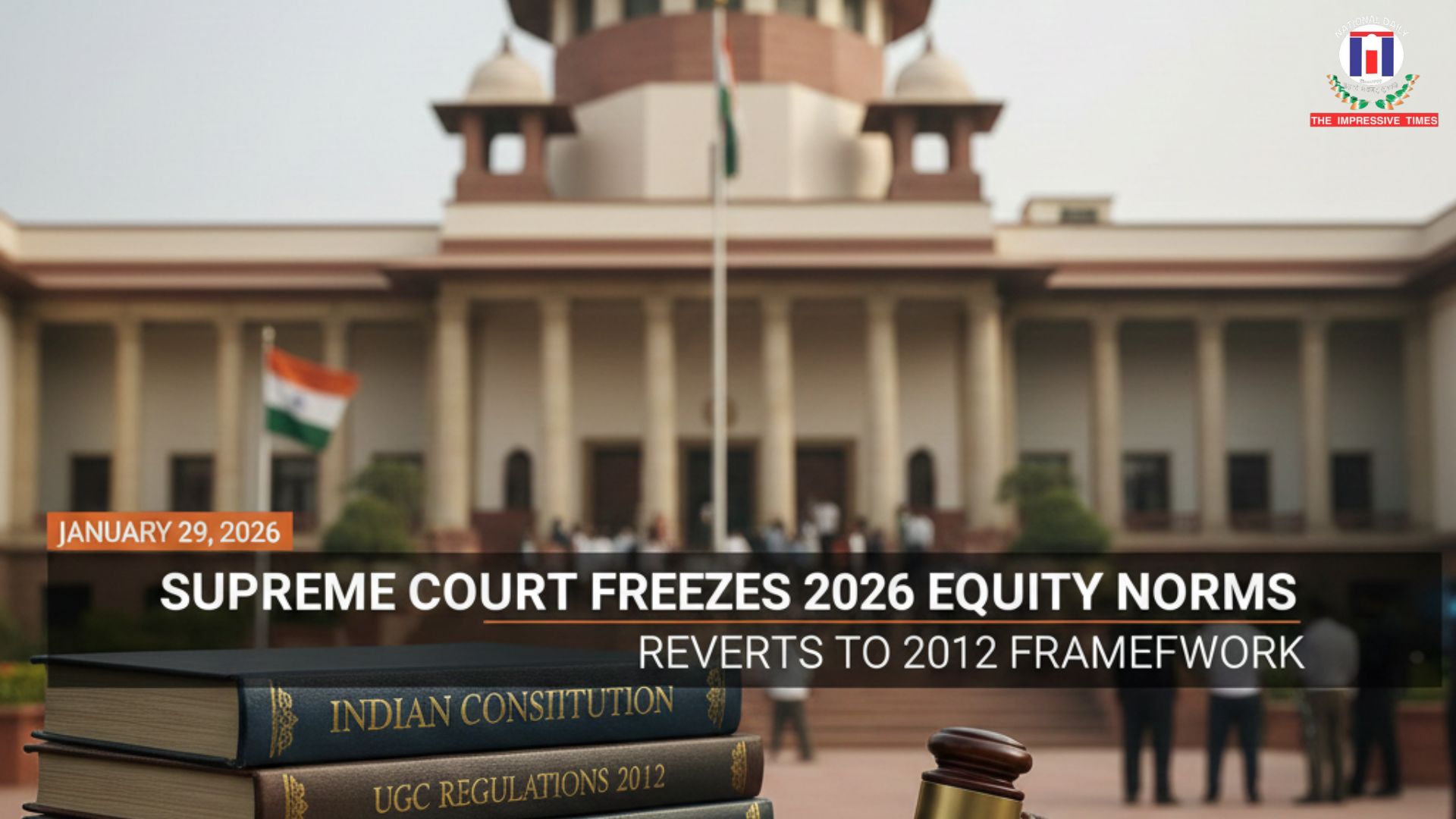
New Delhi, January 29, 2026 — In response to widespread opposition and a batch of legal challenges, the Supreme Court has temporarily halted the implementation of the University Grants Commission’s (UGC) newly introduced 2026 regulations designed to strengthen equity and anti-discrimination mechanisms in higher education. The court has ordered that the UGC’s anti-discrimination rules of 2012 remain effective until further directions.
A Constitution Bench led by the Chief Justice of India, along with Justice Joymalya Bagchi, stayed the 2026 rules while issuing notice to both the UGC and the central government. The matter is now slated for a more detailed hearing on March 19.
During preliminary hearings, the bench observed that certain clauses in the fresh regulations appeared unclear and could potentially be misapplied. The petitioners argued that the definition of “caste-based discrimination” under Clause 3(c) of the 2026 rules was overly narrow and might leave individuals from non-reserved categories without recourse even when they face caste-related bias in educational settings.
Senior counsel Indira Jaising and the Solicitor General presented arguments before the court, which noted that the regulations seemed premised on the assumption that caste discrimination is always one-way — a stance the petitioners contest as flawed. The interim order was passed using powers under Article 142 of the Constitution.
The contested UGC 2026 Regulations mandated the establishment of institutional “Equity Committees” in all universities and colleges. These panels were to handle complaints of discrimination and devise institutional strategies to promote fairness. The composition was to be inclusive of members from Other Backward Classes (OBC), Scheduled Castes (SC), Scheduled Tribes (ST), persons with disabilities, and women.
However, the proposed framework triggered protests across campuses and civil society, with critics claiming it sidelined students and staff belonging to the general category who might also experience caste-related inequities.
With the 2026 rules on hold, all higher educational institutions must continue following the UGC’s 2012 anti-discrimination regulations. Instituted as the first comprehensive effort to curb caste and other forms of bias in universities and colleges nationwide, the 2012 framework aimed to ensure equal opportunity irrespective of caste, religion, gender, or language.
Key elements of the 2012 rules included:
-
Designation of an Anti-Discrimination Officer: Each institution was required to appoint a responsible officer to address complaints of bias and harassment.
-
Equal Opportunity Cell: Colleges and universities needed to set up dedicated cells tasked with promoting inclusivity and supporting affected students.
-
60-Day Resolution Target: Complaints were to be investigated and resolved within a prescribed 60-day period.
Under these provisions, students alleging discrimination were to file written complaints with the Anti-Discrimination Officer, who would investigate and forward findings to the institution’s administration for appropriate disciplinary action.
Until the next hearing in March, higher education institutions must operate under the longstanding 2012 regulations. The Supreme Court’s decision has put on pause the controversial equity committee model — a setback for a policy that had sought to overhaul campus grievance redressal systems but instead ignited debate over fairness and inclusivity.







































No Comments: