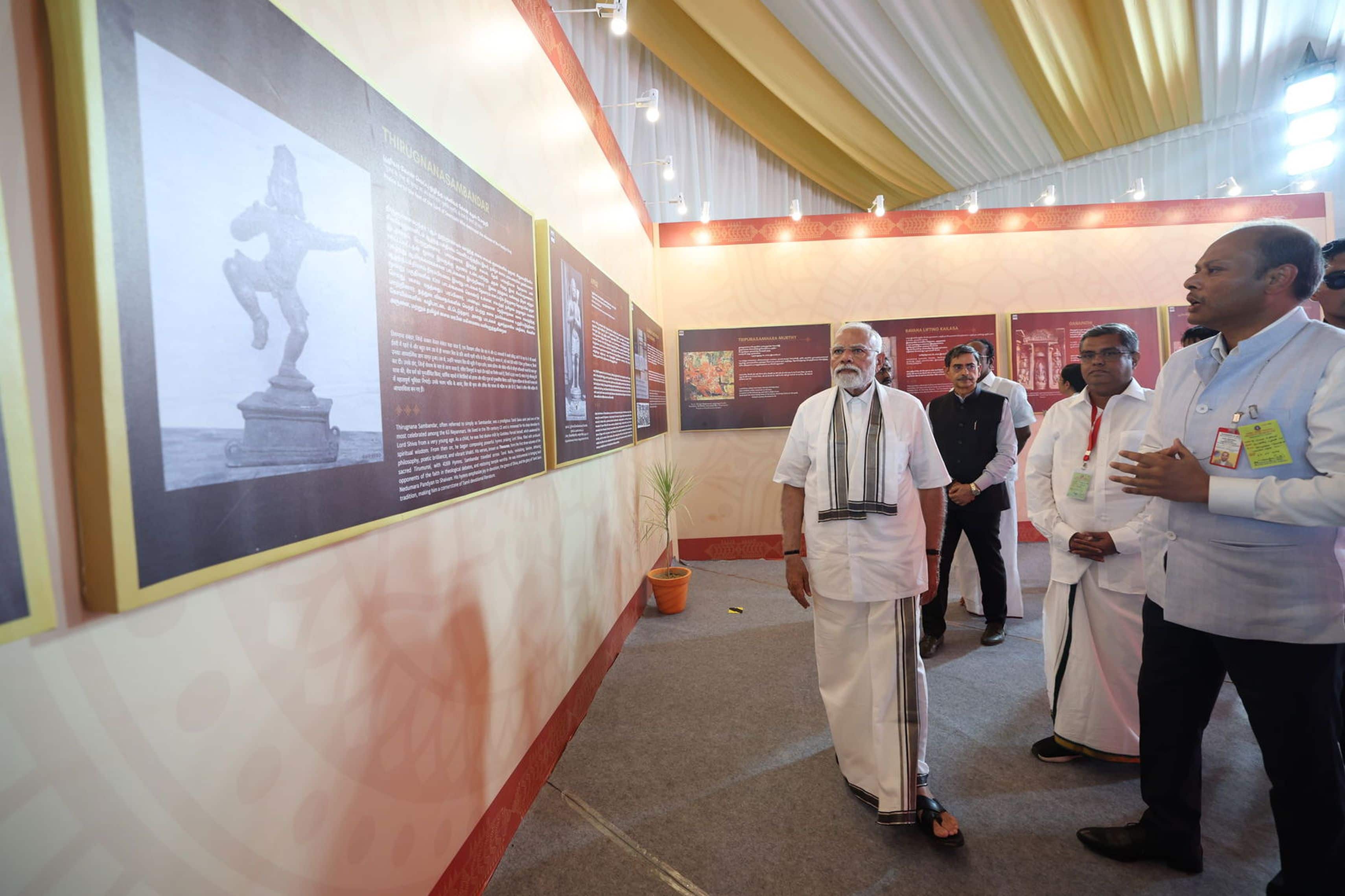
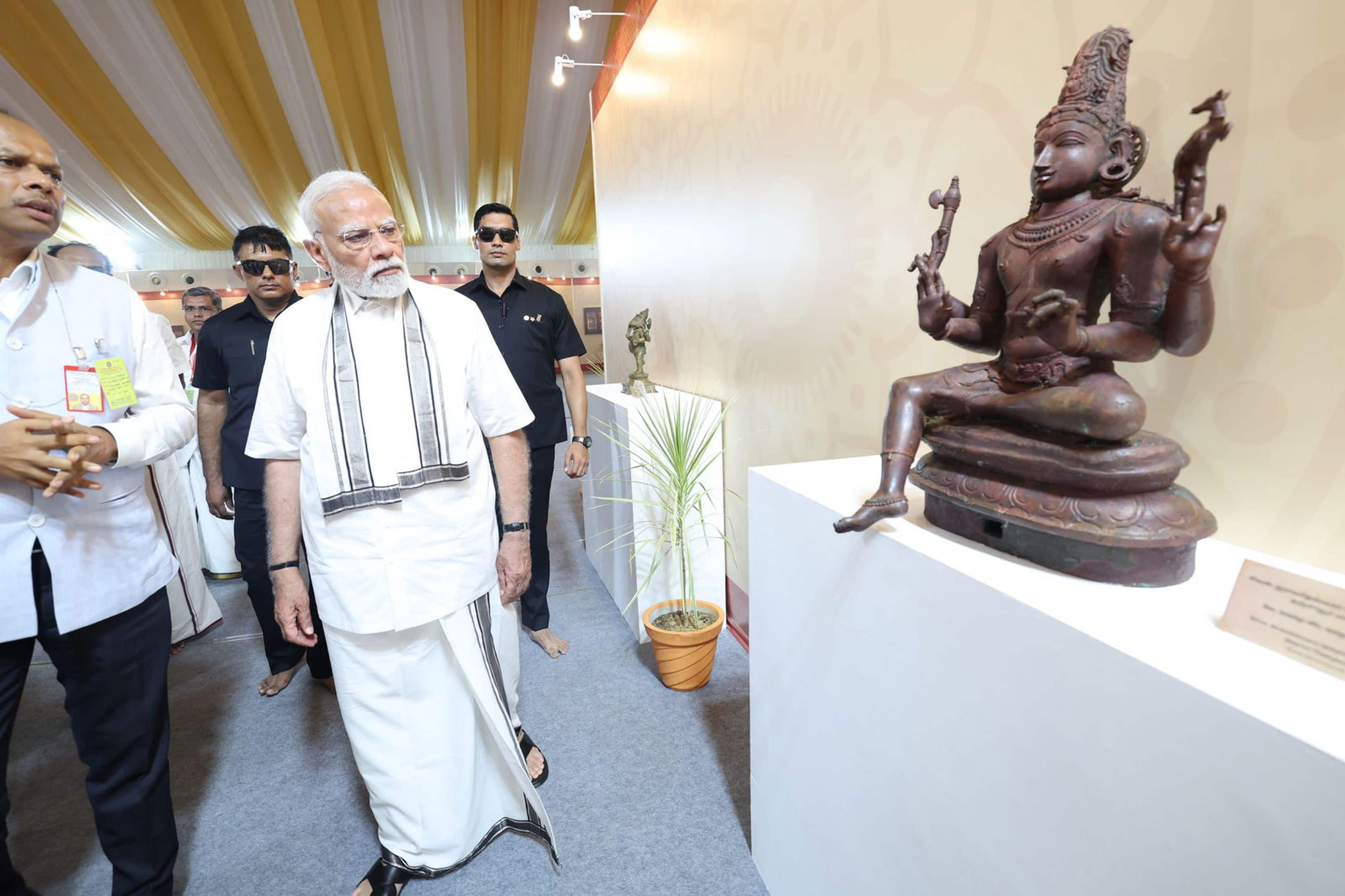
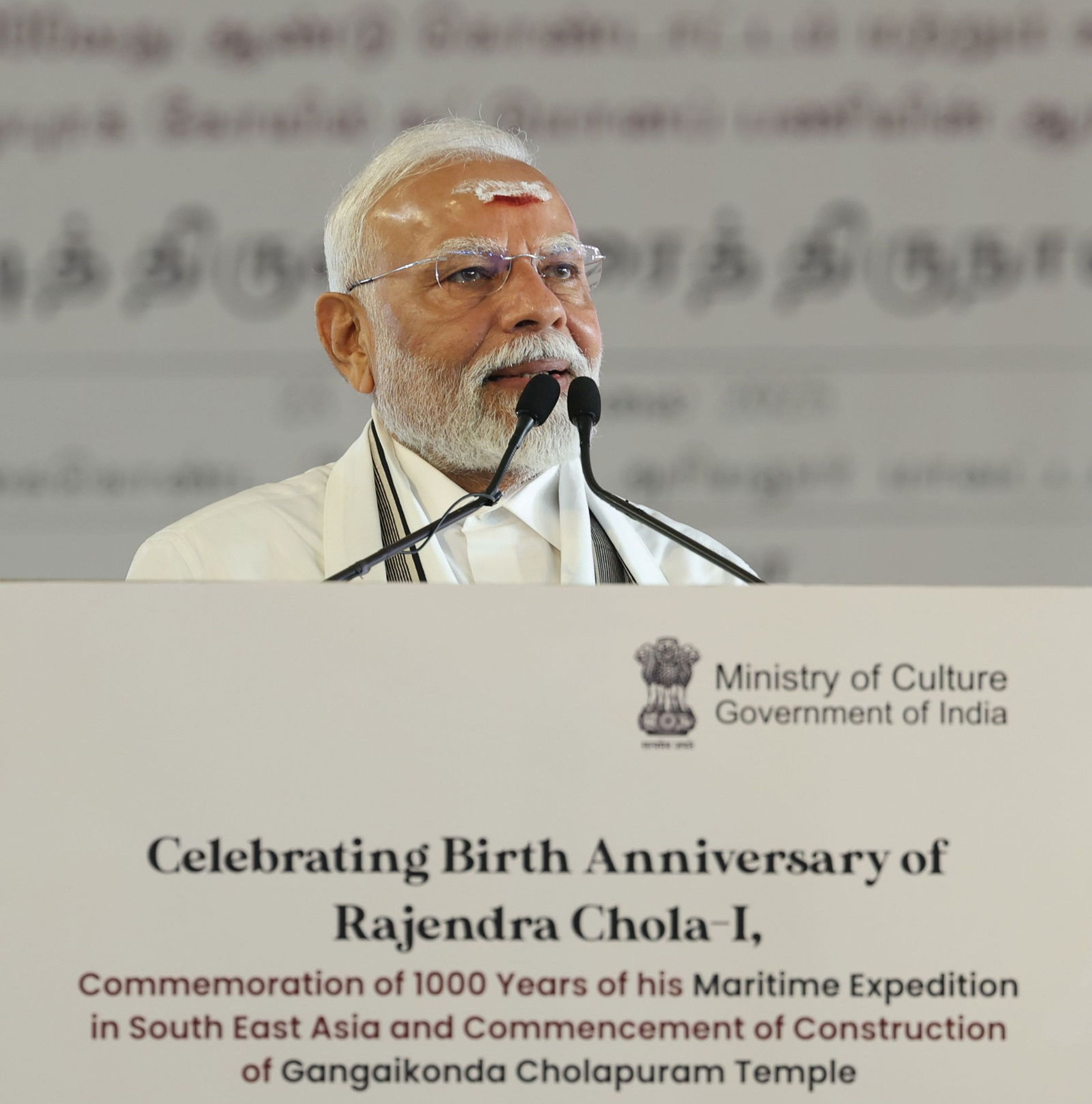
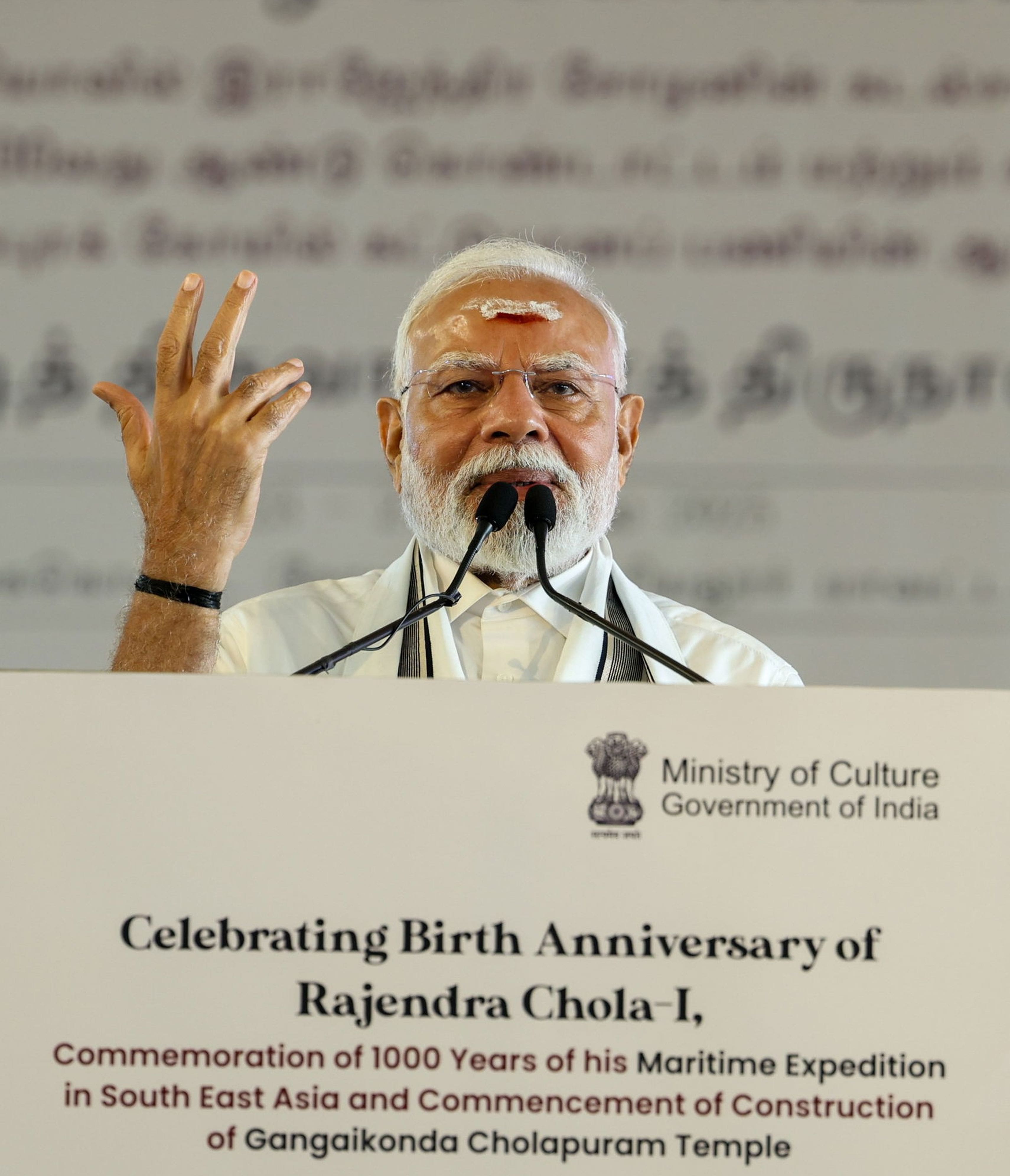
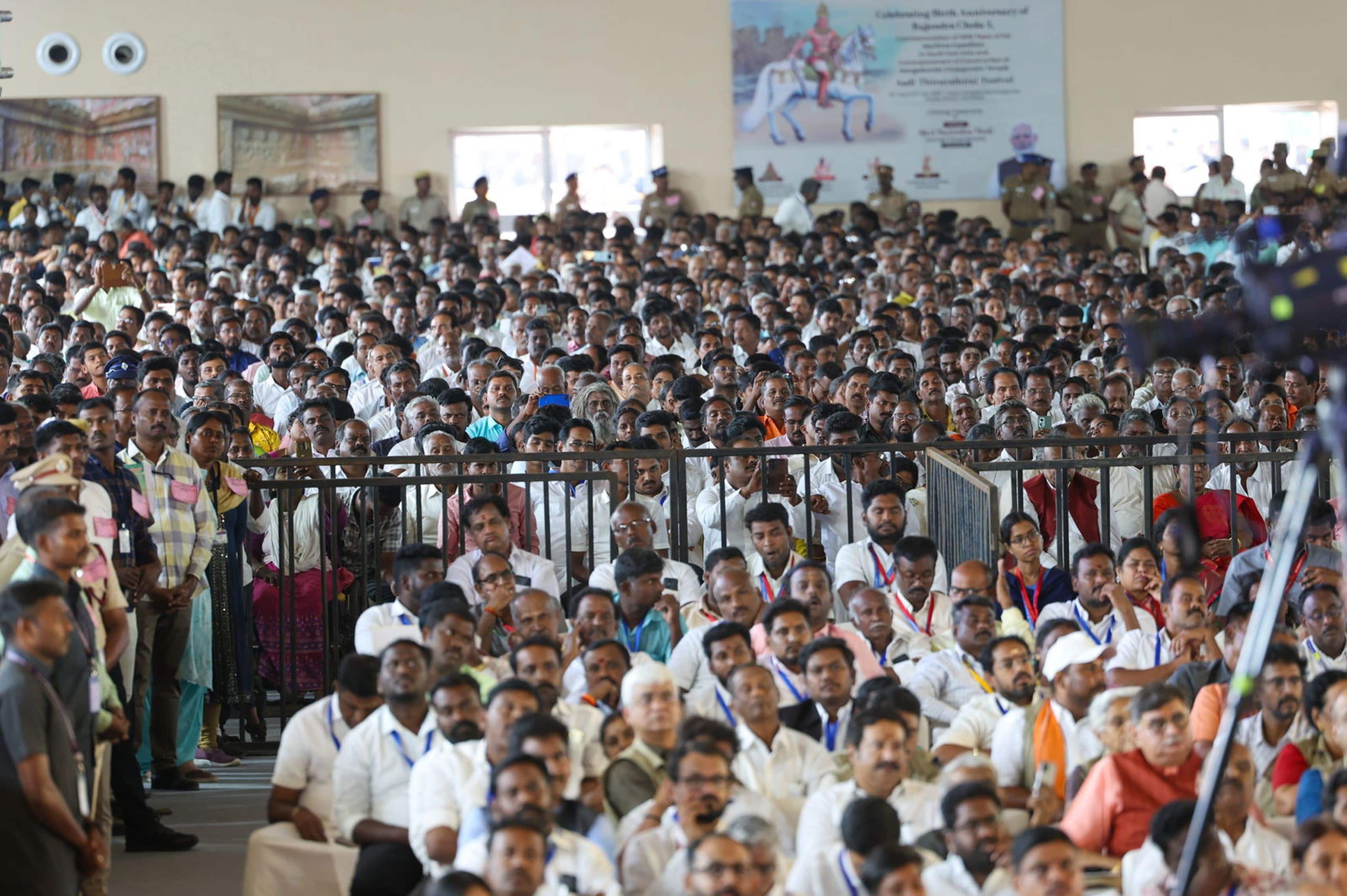
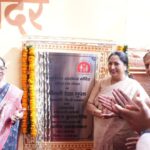
Gangaikonda Cholapuram, Tamil Nadu- Prime Minister Narendra Modi visited the iconic Gangaikonda Cholapuram temple in Tamil Nadu to attend the grand celebrations of the Aadi Thiruvathirai Festival. The event, steeped in Shaivite spirituality and Tamil heritage, served as a vibrant reminder of India’s ancient civilizational strength, cultural unity, and the lasting contributions of the Chola dynasty. On this momentous occasion, PM Modi unveiled a commemorative coin in honour of Emperor Rajendra Chola I—one of India’s most revered historical figures, whose legacy continues to inspire modern India’s strategic, maritime, and cultural ambitions.

Gangaikonda Cholapuram, constructed by Rajendra Chola around 1025 AD, marked its 1000th anniversary this year. The festival coincided with the historical milestone, and the temple premises were illuminated with spiritual fervour, Vedic chanting, music by legendary composer Ilaiyaraaja, and the holy hymns of the Odhuvars. The Prime Minister began his address by bowing to Lord Shiva, expressing that the divine Shiva darshan in the land of Raja Raja Chola deeply stirred his soul and spiritual consciousness.
Speaking during the holy month of Sawan, PM Modi said it was a rare privilege to worship at the revered Brihadeeswarar Shiva Temple and be part of the 1000-year commemoration of the Chola Empire’s monumental contributions. He offered prayers for the welfare of 140 crore Indians and the continued prosperity of the nation. The Prime Minister urged people across India to visit the Union Ministry of Culture’s exhibition on “1000 Years of Chola History and Vision for Human Welfare,” emphasizing how our ancestors had already charted a roadmap for sustainable prosperity and global engagement.
The Prime Minister also inaugurated the Tamil Gita album by the Chinmaya Mission, calling it a significant cultural contribution that will help preserve, celebrate, and pass on Tamil spiritual wisdom to future generations. He congratulated all the artists, spiritual leaders, and cultural custodians involved in the project. “This initiative energizes our resolve to safeguard India’s invaluable heritage,” he noted.
PM Modi’s visit carried symbolic and strategic weight. The commemorative coin dedicated to Rajendra Chola I not only celebrates the emperor’s conquests and diplomatic outreach across South and Southeast Asia but also highlights India’s continued aspirations to be a maritime superpower. “Just yesterday I returned from the Maldives, and today I stand here in Tamil Nadu celebrating Rajendra Chola’s enduring ties with Sri Lanka, the Maldives, and Southeast Asia,” Modi said, drawing a historical parallel between the Chola naval expeditions and India’s modern-day foreign policy outreach.
The Prime Minister stated that India’s Chola heritage—marked by its devotion to Lord Shiva, visionary administration, democratic ethos, and international trade—is immortal and still relevant today. “The legacy of Rajaraja Chola and Rajendra Chola is synonymous with India’s identity and pride,” he declared. He credited the Chola rulers for shaping a legacy that symbolizes India’s potential, unity, and cultural grandeur.
Recounting India’s history from a civilizational lens, the Prime Minister said that the Chola period is widely considered a golden age. The Chola Empire was known not only for its military strength but also for its democratic traditions—far ahead of its time. “While Western historians speak of Britain’s Magna Carta as the origin of democracy, the Cholas had already implemented village-level electoral practices through the Kudavolai Amaippu system,” Modi emphasized. He said such overlooked historical facts must be brought into the mainstream to empower Indians with pride in their own heritage.
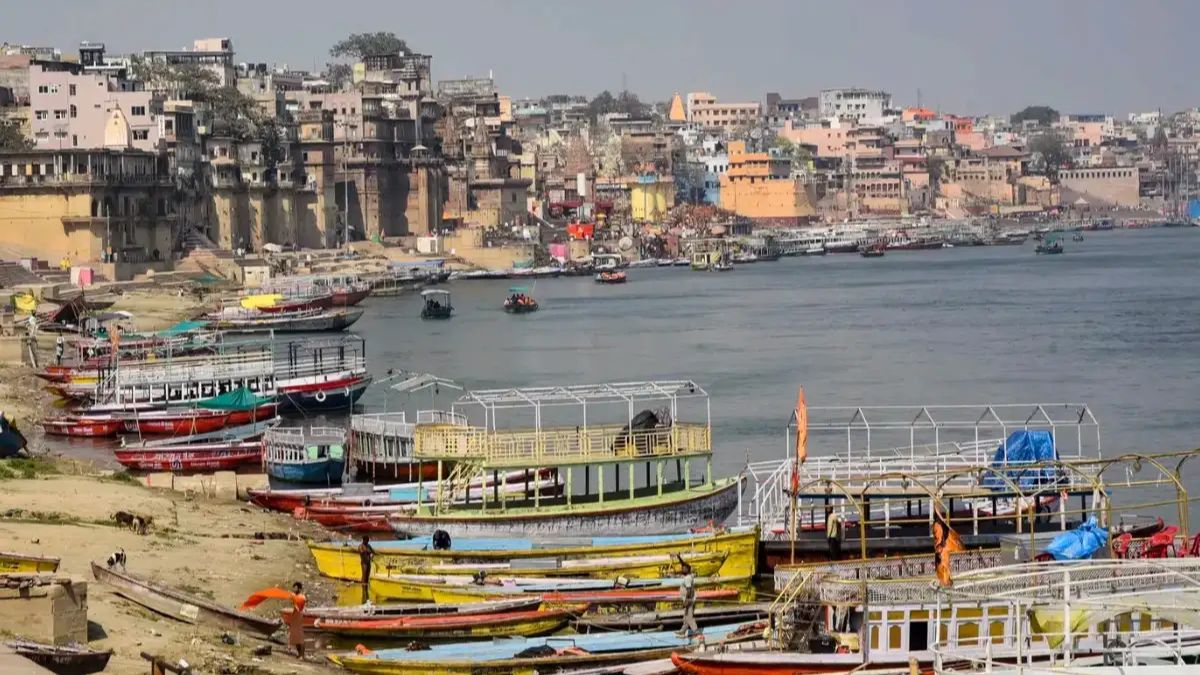
Discussing the Chola Empire’s pioneering role in water management and environmental sustainability, PM Modi pointed to Rajendra Chola’s decision to bring Ganga water from North India to South India. He cited the symbolic importance of the phrase “Ganga Jalamayam Jayastambham,” referring to the ritual installation of sacred Ganga water at Ponneri Lake, formerly known as Chola Ganga Lake. Modi shared that this year, Ganga water has once again been brought from Kashi to Tamil Nadu in tribute to this historical act, reinforcing the civilizational link between North and South India.
As the elected Member of Parliament from Varanasi (Kashi), PM Modi said the spiritual resonance of the Ganga is deeply embedded in his identity. “This union of Ganga and Kaveri through sacred rituals is not just symbolic—it is a testimony to India’s eternal unity,” he said. “The land of Mother Kaveri celebrates the water of Mother Ganga—this is cultural integration at its finest.”
PM Modi emphasized that his government is committed to cultural renaissance through projects such as the Kashi-Tamil Sangamam and Saurashtra-Tamil Sangamam, which aim to revive ancient cultural bonds across geographies and languages. He stated that temples like Gangaikonda Cholapuram are not just places of worship, but also bastions of cultural heritage that the Archaeological Survey of India is actively preserving.
Recalling the inauguration of India’s new Parliament building, PM Modi shared the story of how saints from Tamil Nadu’s Shaiva Adheenams spiritually led the ceremony and how the sacred Sengol, a symbol of dharmic governance, was installed at the Lok Sabha chamber. “This Sengol represents a continuous cultural lineage between Tamil Nadu and India’s democratic institutions,” he added.
The Prime Minister also spoke of his meeting with the Dikshitars from the Nataraja Temple in Chidambaram, who presented him with sacred offerings. He described Lord Shiva’s Nataraja form as the embodiment of India’s philosophical depth and scientific curiosity. PM Modi noted that a statue of Lord Nataraja has also been installed at Bharat Mandapam in Delhi, where global leaders gathered during the G20 summit in 2023. “Our culture is now being showcased on the world stage with pride,” he said.
PM Modi highlighted the Chola dynasty’s deep connection with Shaivism and its instrumental role in shaping Tamil Nadu’s spiritual traditions. He paid tribute to the 63 Nayanmars, revered Shaivite poet-saints who inspired spiritual and social reform through devotional Tamil literature. “The Adheenams, the literary tradition, and the temples have catalyzed a new era in India’s spiritual and social evolution,” he said.
As the world faces increasing instability, climate crises, and moral uncertainty, PM Modi turned to Shaivite philosophy as a guiding light. Citing the famous verse by Tirumular, “Anbe Sivam”—meaning “Love is Shiva”—he urged the global community to embrace compassion, unity, and universal brotherhood. “Our philosophy of ‘One World, One Family, One Future’ stems from these spiritual roots,” he declared.
The Prime Minister took the opportunity to highlight the government’s decade-long effort to bring back stolen cultural treasures. Since 2014, over 600 ancient artifacts and idols have been repatriated from various countries, including 36 from Tamil Nadu. These include icons of Nataraja, Lingodbhavar, Dakshinamurthy, Ardhanarishwara, Nandikeswara, Uma Parameshwari, and Sambandar. “These sacred idols are once again gracing the temples and lands they rightfully belong to,” Modi affirmed, adding that India is now taking pride in its history rather than apologizing for it.
He also reminded the audience that India’s civilizational depth is no longer confined to geographical borders. When the country became the first to land on the Moon’s South Pole, the site was named Shiv-Shakti Point, showcasing how India’s spiritual culture is now part of global recognition and space exploration.
PM Modi drew a sharp parallel between Rajendra Chola’s maritime strength and modern India’s strategic capability. Citing Operation Sindoor, he asserted that India today responds firmly to any threat against its sovereignty. “The world has seen that there is no safe haven for terrorists,” he said, reinforcing India’s growing global stature in matters of security.
Rajendra Chola’s humility was also highlighted. Despite building a monumental temple in Gangaikonda Cholapuram, he deliberately made its gopuram (tower) lower than his father Rajaraja Chola’s Brihadeeswarar Temple in Thanjavur, as a mark of respect. “This is the value system of ancient India—power with humility,” Modi said, comparing it with today’s India that seeks global leadership while being rooted in civilizational values.
To mark this historic moment and preserve the memory of these extraordinary rulers, PM Modi announced that grand statues of Rajaraja Chola and Rajendra Chola would soon be installed in Tamil Nadu. These statues, he said, would serve as towering symbols of India’s historical consciousness and national pride, inspiring generations to come.
The Prime Minister also observed that the day marked the death anniversary of Dr. A.P.J. Abdul Kalam, calling him the “People’s President” and an icon of scientific, spiritual, and nationalistic thought. “To build a developed India, we need millions of youth like Dr. Kalam and Rajendra Chola—strong in mind and spirit, rooted in values,” he concluded.
In his concluding remarks, PM Modi extended greetings to all citizens, especially the people of Tamil Nadu, on the occasion of the Aadi Thiruvathirai Festival. He reiterated that the values and achievements of the Chola Empire continue to inspire India’s roadmap toward becoming a developed, secure, and culturally awakened nation
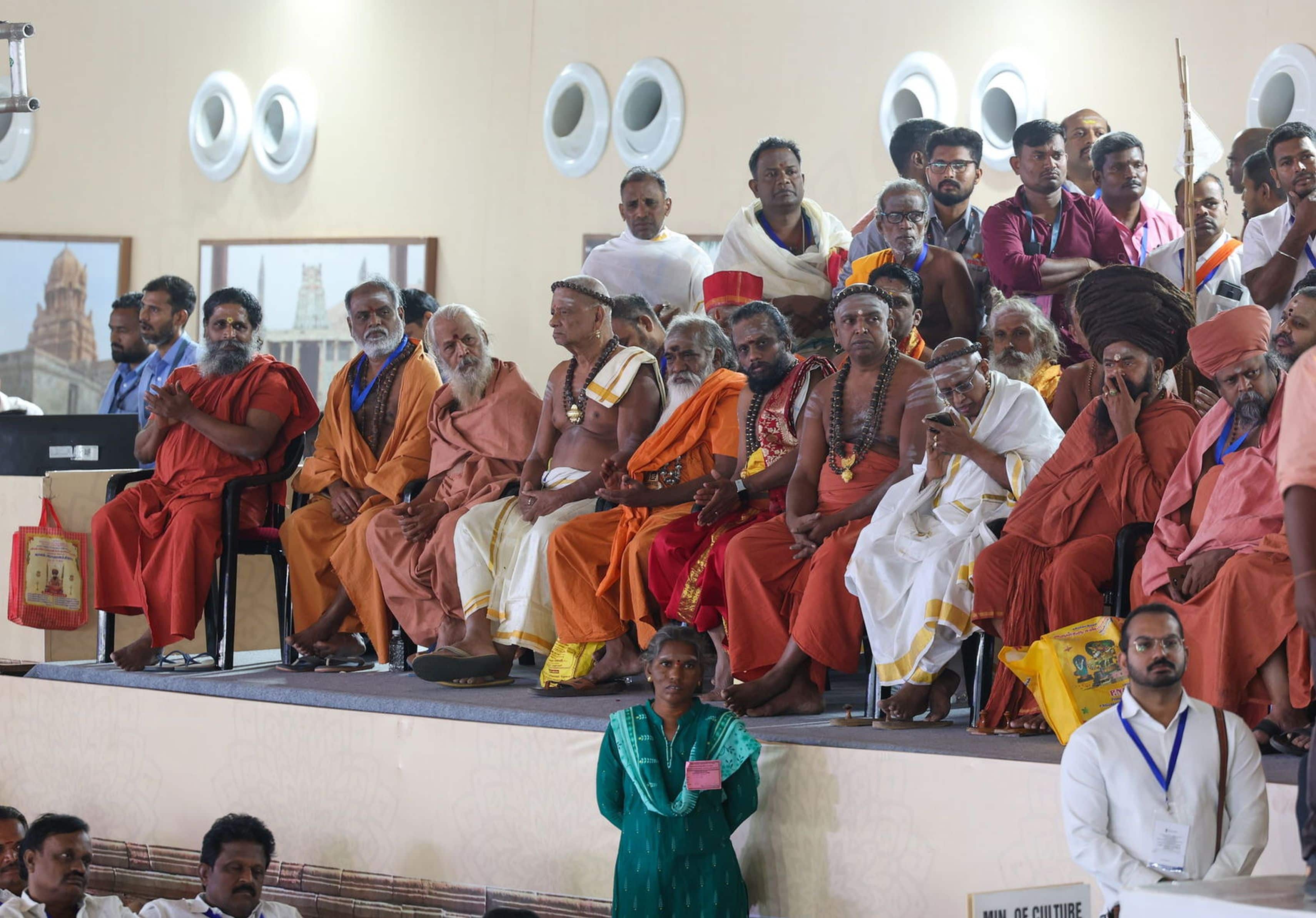
The grand event witnessed the presence of Tamil Nadu Governor R.N. Ravi, Union Minister Dr. L. Murugan, revered saints from Shaiva Adheenams, and cultural delegates from across India.


No Comments: