Non-Fossil Fuels Surpass 50% Share as India’s Installed Power Capacity Reaches 505 GW
India achieves key climate milestone ahead of schedule, accelerates push towards 500 GW non-fossil energy capacity by 2030

 The Impressive Times
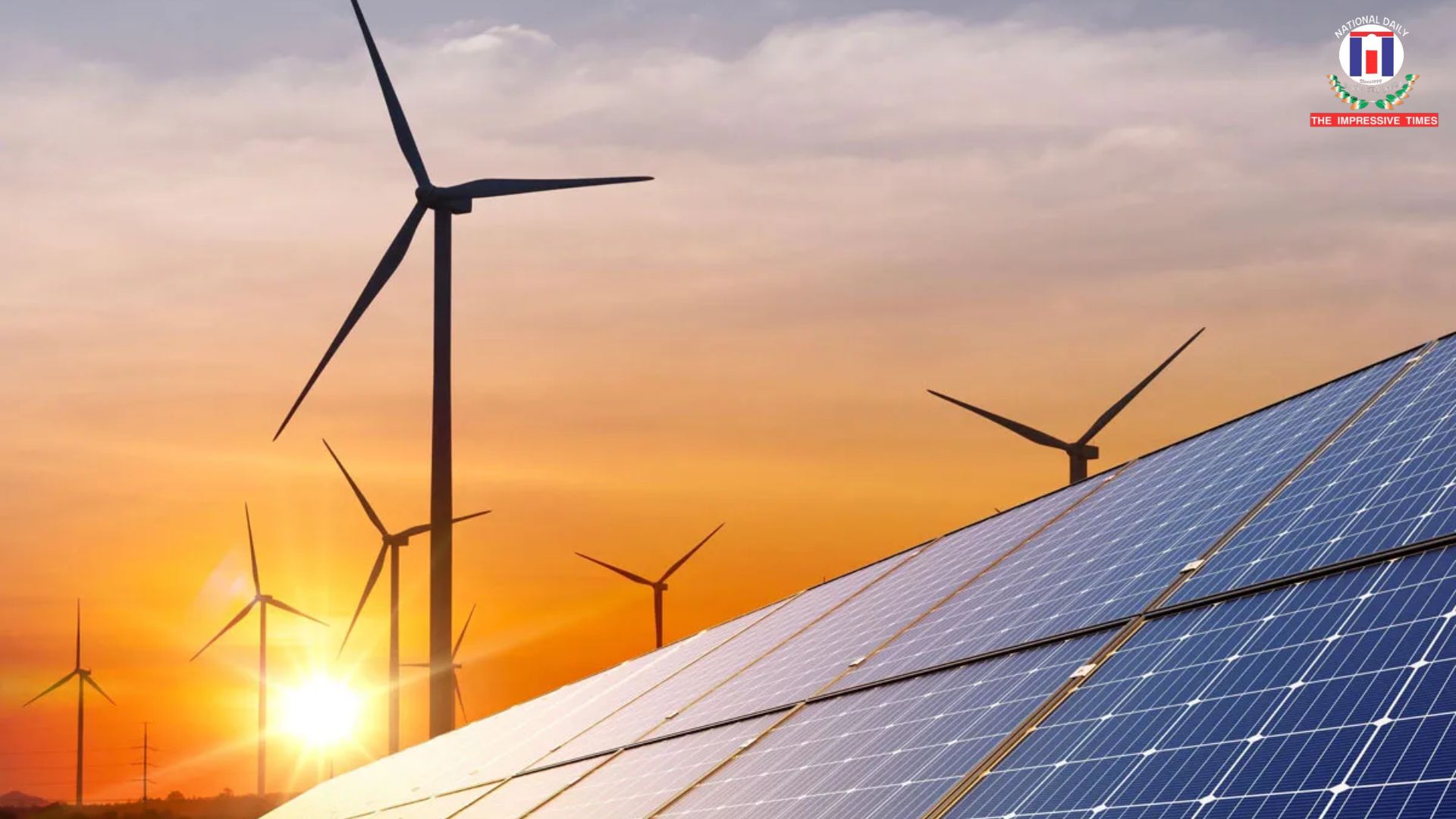
India has achieved a major milestone in its clean energy transition, with non-fossil fuel sources now contributing more than half of the country’s total installed power generation capacity. As on 31 October 2025, India’s total installed electricity capacity stands at 5,05,023 MW, of which 2,59,423 MW—over 51%—comes from non-fossil fuel sources, including renewable energy, hydro and nuclear power.
Of the total capacity, fossil-fuel-based sources account for 2,45,600 MW (48.6%), while renewable energy alone contributes 2,50,643 MW, representing nearly half of the country’s total installed capacity. This achievement marks a historic moment, as India reached 50% non-fossil installed capacity in June 2025—more than five years ahead of its Nationally Determined Contribution (NDC) target under the Paris Agreement.
The Government of India has taken a wide range of policy, regulatory and financial initiatives to realise its ambitious goal of achieving 500 GW of non-fossil fuel energy capacity by 2030. Key measures include the waiver of Inter-State Transmission System (ISTS) charges for solar and wind projects, green hydrogen projects and offshore wind developments, enabling cost-effective transmission of clean power across states.
To ensure transparent and large-scale renewable procurement, standard bidding guidelines have been issued for solar, wind, wind-solar hybrid and Firm & Dispatchable Renewable Energy (FDRE) projects. The Ministry of New and Renewable Energy (MNRE) has also laid out a bidding trajectory of 50 GW per annum from FY 2023–24 to FY 2027–28, providing long-term visibility to investors and developers. Additionally, 100% Foreign Direct Investment (FDI) is permitted under the automatic route to attract global capital.
Significant investments are being made to strengthen transmission infrastructure through the Green Energy Corridor Scheme, alongside long-term transmission planning up to 2032 to support the steep growth in renewable capacity. Large-scale deployment is further supported through solar parks, ultra-mega solar projects and flagship schemes such as PM-KUSUM, PM Surya Ghar Muft Bijli Yojana, the National Green Hydrogen Mission, offshore wind VGF schemes and targeted programmes for tribal and remote habitations.
To boost renewable energy consumption, the government has notified a Renewable Consumption Obligation (RCO) trajectory up to 2029–30, applicable to all designated consumers under the Energy Conservation Act, 2001, with penalties for non-compliance. The RCO also mandates a defined share from decentralised renewable energy sources, strengthening distributed clean energy adoption.
India’s clean energy strategy also places strong emphasis on nuclear power as a reliable, low-carbon baseload source. The government has set a target of achieving 100 GW of nuclear capacity by 2047. A dedicated Nuclear Energy Mission with an outlay of ₹20,000 crore has been launched to develop indigenously designed Small Modular Reactors (SMRs). The SHANTI Bill, 2025, introduced in Parliament, aims to unlock the full potential of nuclear energy through greater public-private participation. Bharat Small Reactors and advanced fuel-cycle technologies are also being developed to enhance long-term fuel security.
Energy storage is emerging as another critical pillar of India’s transition. Viability Gap Funding schemes are supporting over 43 GWh of Battery Energy Storage Systems (BESS), while pumped storage projects totaling nearly 11,870 MW are currently under construction to improve grid stability and renewable integration.
Complementing these efforts, offshore wind, green hydrogen and advanced manufacturing initiatives such as the Production Linked Incentive (PLI) scheme for high-efficiency solar PV modules are strengthening India’s clean energy ecosystem and domestic manufacturing base.
This landmark achievement of crossing the 50% non-fossil capacity threshold reinforces India’s commitment to climate action while balancing energy security, affordability and accessibility. It sets a strong foundation for the country’s long-term roadmap towards net-zero emissions by 2070, ensuring sustainable growth alongside a resilient and future-ready power sector.




































No Comments: