Union Home Minister Amit Shah Marks 50 Years of Emergency: “A Dark Chapter That India Must Never Forget”
“Emergency was not a compulsion, but the outcome of one person’s hunger for power,” says Shah at ‘Samvidhan Hatya Diwas’ commemoration


 The Impressive Times
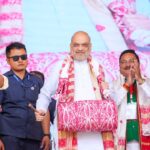
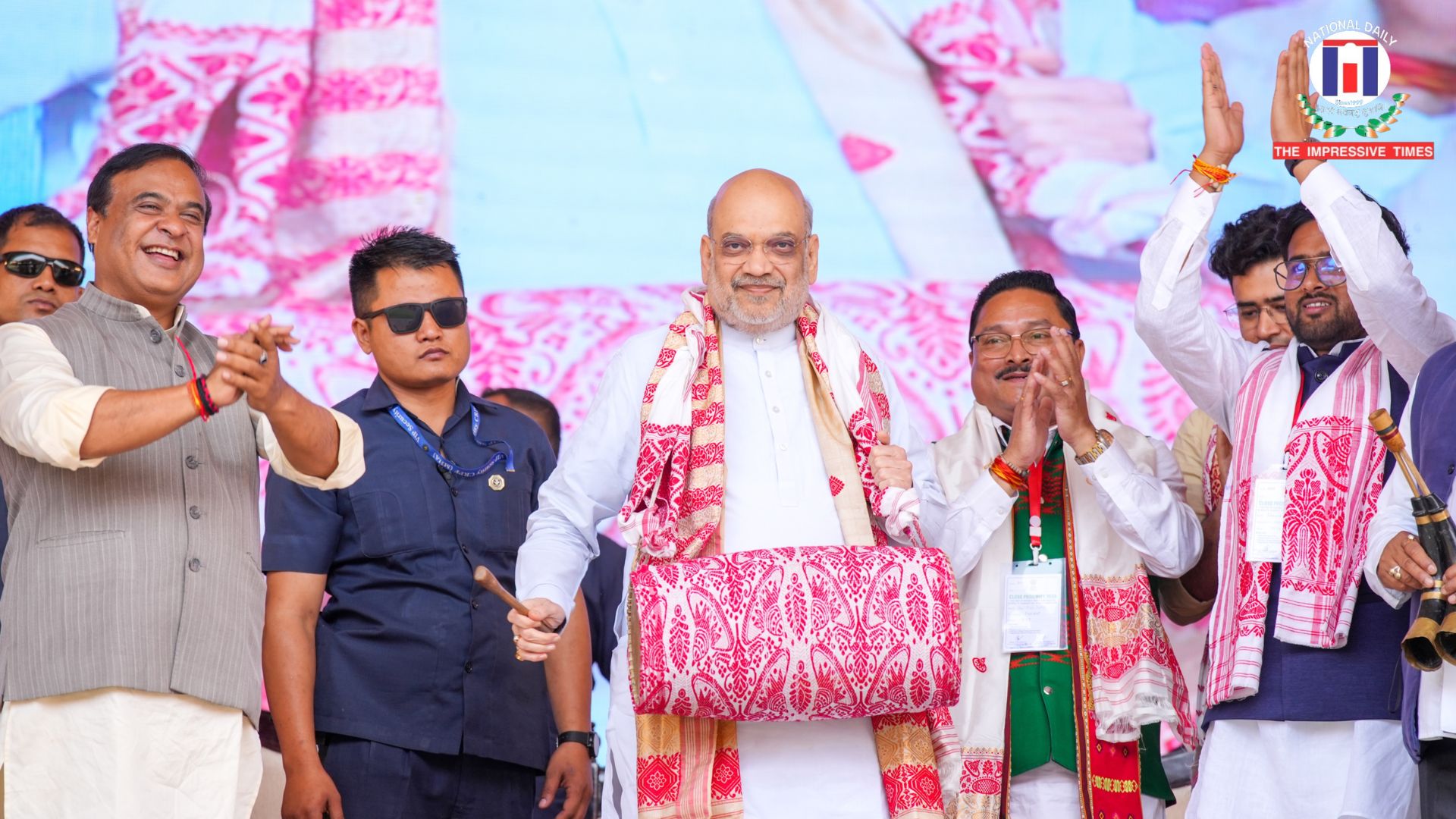
New Delhi | June 24, 2025 – Union Home Minister and Minister of Cooperation Amit Shah addressed the “50 Years of Emergency” programme in New Delhi today, organised by the Shyama Prasad Mukherjee Trust. The event was attended by dignitaries and political leaders from across the country.
During his speech, Amit Shah said Prime Minister Narendra Modi decided on July 11, 2024, to observe June 25 every year as Samvidhan Hatya Diwas (Constitution Assassination Day). The aim, he said, is to remind future generations of how dangerous it is when democratic power is replaced by dictatorship.
He noted that forgetting the Emergency weakens public awareness. Democracy and dictatorship, he stressed, are not about individuals—they are states of mind, and their re-emergence is always a threat if society remains unaware.
Amit Shah firmly stated that the Emergency was not a response to any external or internal threat, but simply an act to protect political power. The only threat at the time, he said, was to the chair of the then Prime Minister.
He described the Emergency as an attempt to turn a multi-party democracy into a one-party dictatorship, calling it “Anyayakaal”—a time of injustice.
Highlighting the gravity of the night of June 24, 1975, he said that while the Constitution had taken 2 years, 11 months, and 18 days to draft—through 13 committees, 11 sessions, and over 1100 hours of discussion—it was dismissed in a single order from a “kitchen cabinet.”
That night, he said, became the longest night in independent India, as it led to 21 months of suspended democracy.
Amit Shah noted that more than 1.10 lakh political opponents were imprisoned. Journalists, student leaders, independent editors, artists, and even social workers were arrested without due process.
He emphasized that:
Freedom of expression was destroyed
The judiciary was manipulated
New laws were passed to silence dissent
42nd Amendment changed 40 clauses, altered 7 schedules, and even amended the preamble
Article 14 and the basic structure of the Constitution were compromised
Even cultural voices weren’t spared. Kishore Kumar’s songs were banned from All India Radio. Citizens lived in fear. Young students were subjected to forced sterilizations, and protests were violently suppressed.
According to Amit Shah, India became a country where dissent was criminalized, and the public became slaves to a dictatorial regime.
Calling it a pre-planned conspiracy, Amit Shah said the Emergency was not a response to national threat, but a direct attack on India’s democratic foundation.
He questioned those who now claim to protect the Constitution, reminding them that it was their party that once destroyed it for power. There was no cabinet meeting, no parliamentary debate, and no effort to seek the people’s consent.
Amit Shah praised India’s democratic strength, saying it is deeply rooted in the nation’s character. He said that India is the mother of democracy, where different ideas and ideologies have always coexisted peacefully.
He urged the youth to read the Shah Commission Report, which exposed the horrors of the Emergency. It is a reminder that dictatorship cannot survive in India, and that those who try will only destroy their own future.
He ended by stating that the Emergency should be remembered not just as a historic mistake but as a living warning. It is up to today’s generation to carry the torch of democracy forward, to stand firm against any future attempt to silence the Constitution, and to defend the spirit of liberty at all costs.




















No Comments: