
 The Impressive Times
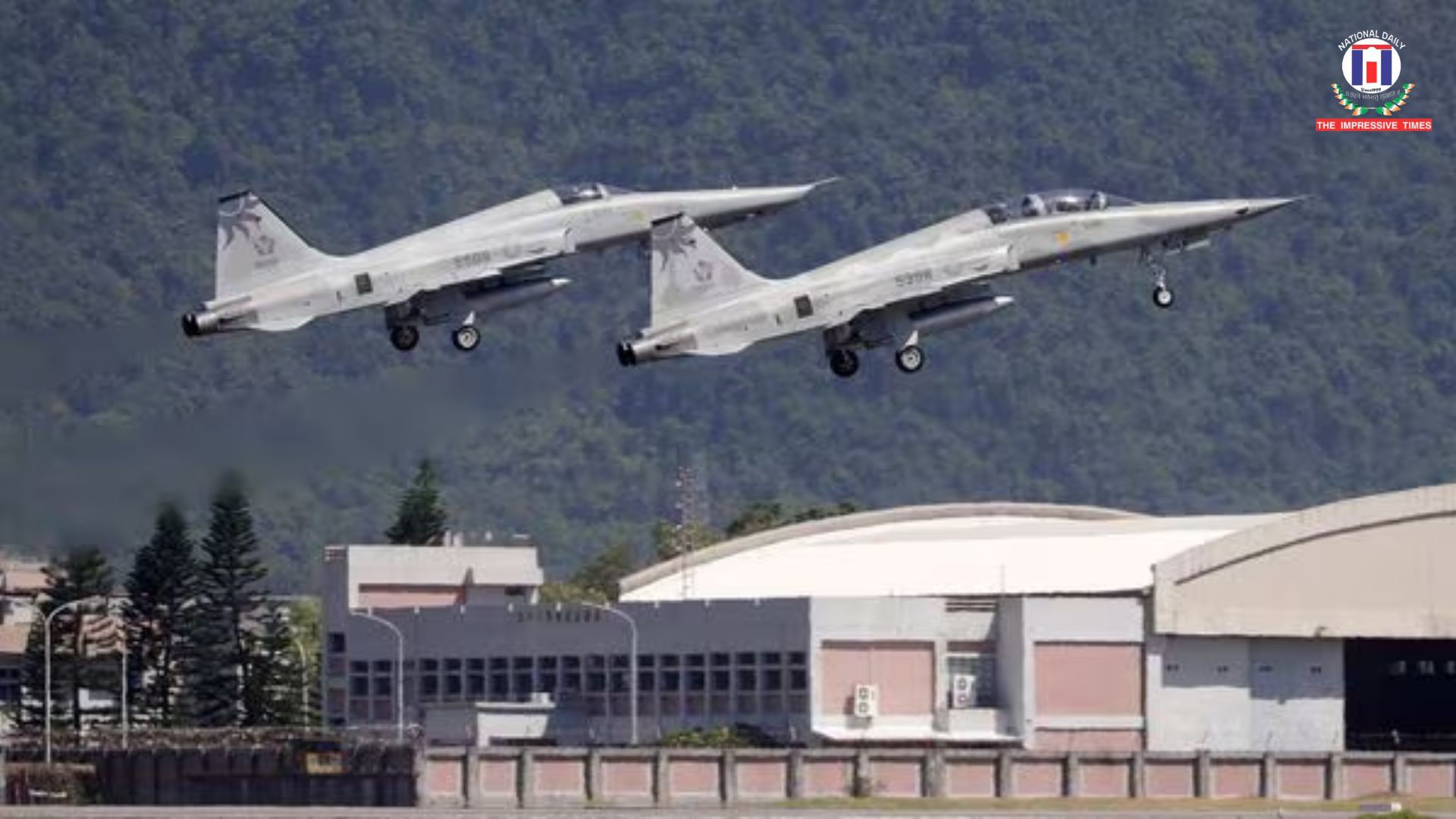
Taipei, July 13, 2025:In a fresh display of rising regional tensions, Taiwan’s Ministry of National Defence (MND) on Sunday confirmed the detection of 11 Chinese military aircraft, seven naval vessels, and one official ship operating near its territory, triggering immediate defensive measures from the island nation.
According to the MND’s early morning update, nine out of the eleven aircraft had crossed the sensitive median line of the Taiwan Strait and entered Taiwan’s Air Defence Identification Zone (ADIZ), particularly the southwestern and eastern sectors. These incursions, which occurred up to 6 a.m. local time, were met with rapid deployment of Taiwan’s air and naval assets, alongside coastal missile defense systems, to closely track and deter the activity.
“Our armed forces have monitored the situation and responded appropriately,” Taiwan’s defense ministry stated via its official X (formerly Twitter) handle.
This incident is part of a broader pattern of military posturing by Beijing, which has intensified in recent years amid worsening cross-strait relations. The incursions follow Taiwan’s largest-ever military drills last month and come amid growing concerns of a potential Chinese attempt to coerce or annex Taiwan under the pretext of “national reunification.”
The latest development follows strong remarks from Taiwanese President Lai Ching-te, who recently criticized Beijing’s use of “influence warfare and military intimidation.” Addressing the Democratic Progressive Party (DPP) national congress on June 28, President Lai accused China of pursuing expansionist policies in the western Pacific and attempting to undermine Taiwan’s sovereignty under its “great rejuvenation of the Chinese nation” vision.
He also warned that the threat from China would remain constant regardless of which political party is in power in Taiwan. In his address, Lai criticized the opposition-controlled legislature for passing legislation that he said contradicted constitutional norms and significantly weakened central government functions.
Reaffirming his party’s commitment to democracy, Lai invoked Taiwan’s history of civic movements, including the Wild Lily student movement in 1990 and the 2014 Sunflower Movement, as examples of the nation’s resilience and public commitment to maintaining sovereignty.
The frequent incursions into Taiwan’s ADIZ have become a near-daily occurrence over the past year, reflecting China’s strategy of maintaining pressure on the island. Taiwan, a self-governed democracy, continues to reject Beijing’s claims of sovereignty, while the international community remains divided on how to respond to escalating tensions in the Taiwan Strait.
As Taiwan continues to bolster its defenses and deepen ties with global democracies, the situation remains a potential flashpoint in the Indo-Pacific region.











































No Comments: