Republic Day 2026: Bihar Showcases “Makhana: From Local to Global” at Bharat Parv
Bihar’s tableau highlights the journey of the GI-tagged superfood, celebrating traditional skills, women’s empowerment, and global entrepreneurship, while reflecting the state’s cultural heritage and economic progress.
New Delhi : As part of the Republic Day 2026 celebrations, selected tableaux from States and Union Territories will be showcased at Bharat Parv, organised by the Ministry of Defence, at the Red Fort, New Delhi. The festival will be held from 23 to 31 January, presenting India’s rich cultural, economic, and social diversity through tableaux, handicrafts, cuisine, and traditional practices.
Bharat Parv serves as a national platform that embodies the spirit of “Ek Bharat, Shreshtha Bharat”, connecting each State’s unique identity, traditional knowledge systems, livelihoods, and modern development journey with the people.
Bihar’s Tableau: Makhana — A Story of Tradition, Toil, and Progress
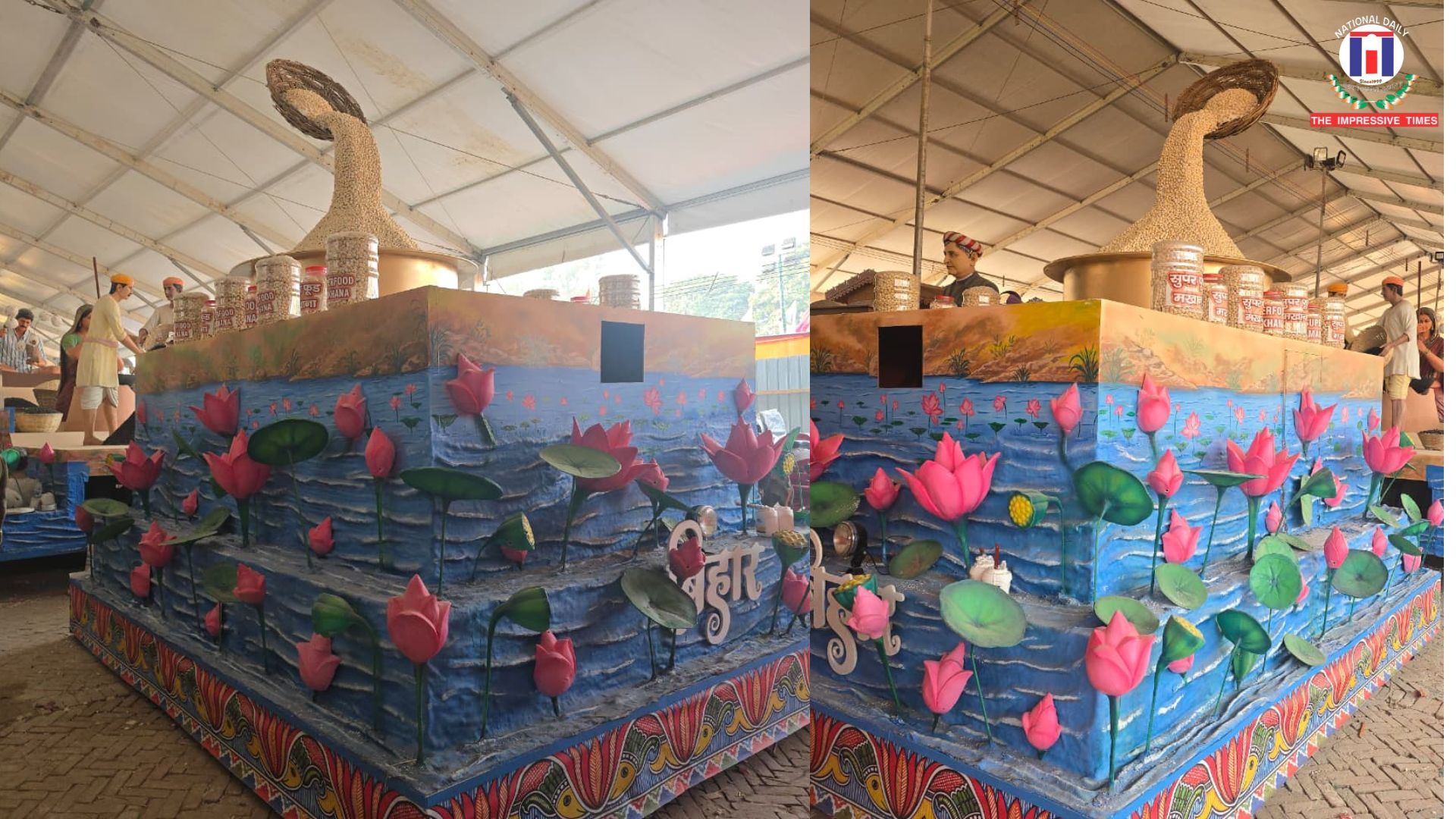
This year, Bihar’s tableau at Bharat Parv is themed “Makhana: The Superfood Journey from Local to Global.”
The celebrated verse by Acharya Somdev (Gauri Shankar Prasad Srivastava) —
“Pag pag pokhari, machh makhan, saras bol muski mukh paan…” —
beautifully captures the essence of Mithila and its deep-rooted association with makhana.
Often referred to as Bihar’s “white gold,” makhana has travelled from the ponds of Mithilanchal to dining tables across the world, earning recognition as a global superfood. It represents local skill with global relevance.
Known internationally as fox nut or lotus seed, makhana from Mithilanchal has achieved worldwide recognition. India contributes the majority of global makhana production, with Bihar accounting for nearly 85–90% of this share. In 2022, Mithila Makhana received the GI tag, further strengthening its distinct identity in global markets.
Visual Narrative of the Tableau
The Bihar tableau visually traces the complete journey of makhana in two segments:
Tractor Section:
A striking depiction of white, popped lava makhana emerging amidst lotus leaves, the GI tag symbol placed prominently ahead, and borders adorned with Mithila painting motifs.
Trailer Section:
A detailed portrayal of the entire makhana value chain — harvesting, seed collection, grading, roasting, cracking, packaging, and quality inspection.
On one side, a woman roasting makhana in an iron pan over a traditional earthen stove; on the other, a man cracking makhana using a wooden mortar — together symbolising traditional labour, women’s participation, and indigenous skills.
The tableau conveys that makhana is not merely an agricultural produce, but a confluence of heritage, hard work, women’s empowerment, and entrepreneurship, directly linking Bihar to global markets.
Makhana and Union Budget 2025–26: A New Opportunity for Bihar
The Union Budget 2025–26 marks a historic step for makhana farmers of Bihar. The Central Government has announced the establishment of a National Makhana Board in Bihar, approving a development package of approximately ₹475 crore.
The initiative aims to strengthen production, processing, value addition, and marketing of makhana, ensuring sustainable income growth for farmers.
Makhana: A Nutritional Powerhouse
Beyond its economic significance, makhana is highly valued for its nutritional benefits. It is:
Rich in protein, calcium, fibre, and antioxidants
Helpful in diabetes management and weight control
Beneficial for bone and muscle health
A low-calorie, low-fat, plant-based superfood
For centuries, makhana has been an integral part of Indian religious rituals and traditional cuisine. Today, it is globally recognised as a modern health superfood.
From Bihar to the World: The Message of the Tableau
Bihar’s tableau at Bharat Parv conveys a larger message — showcasing how:
Traditional knowledge can integrate with modern technology
Local livelihoods can access global markets
Farmers, women workers, and small entrepreneurs can become central to the development narrative
The establishment of the Makhana Board, rising exports, GI tagging, and the tableau’s display at Bharat Parv together signal that Bihar’s makhana is no longer just “a pond-based produce,” but is emerging as “India’s global identity.”
At Bharat Parv 2026, Bihar’s tableau will present to the nation and the world how tradition, toil, and progress together are taking makhana from local roots to global reach.


























No Comments: