Shivraj Chouhan Introduces ‘Viksit Bharat – Guarantee for Rozgar and Ajeevika Mission (Gramin)’ (VB G-RAM-G) Bil
Govt Introduces ‘Viksit Bharat–G RAM G’ Bill to Expand Rural Employment Guarantee to 125 Days

 The Impressive Times
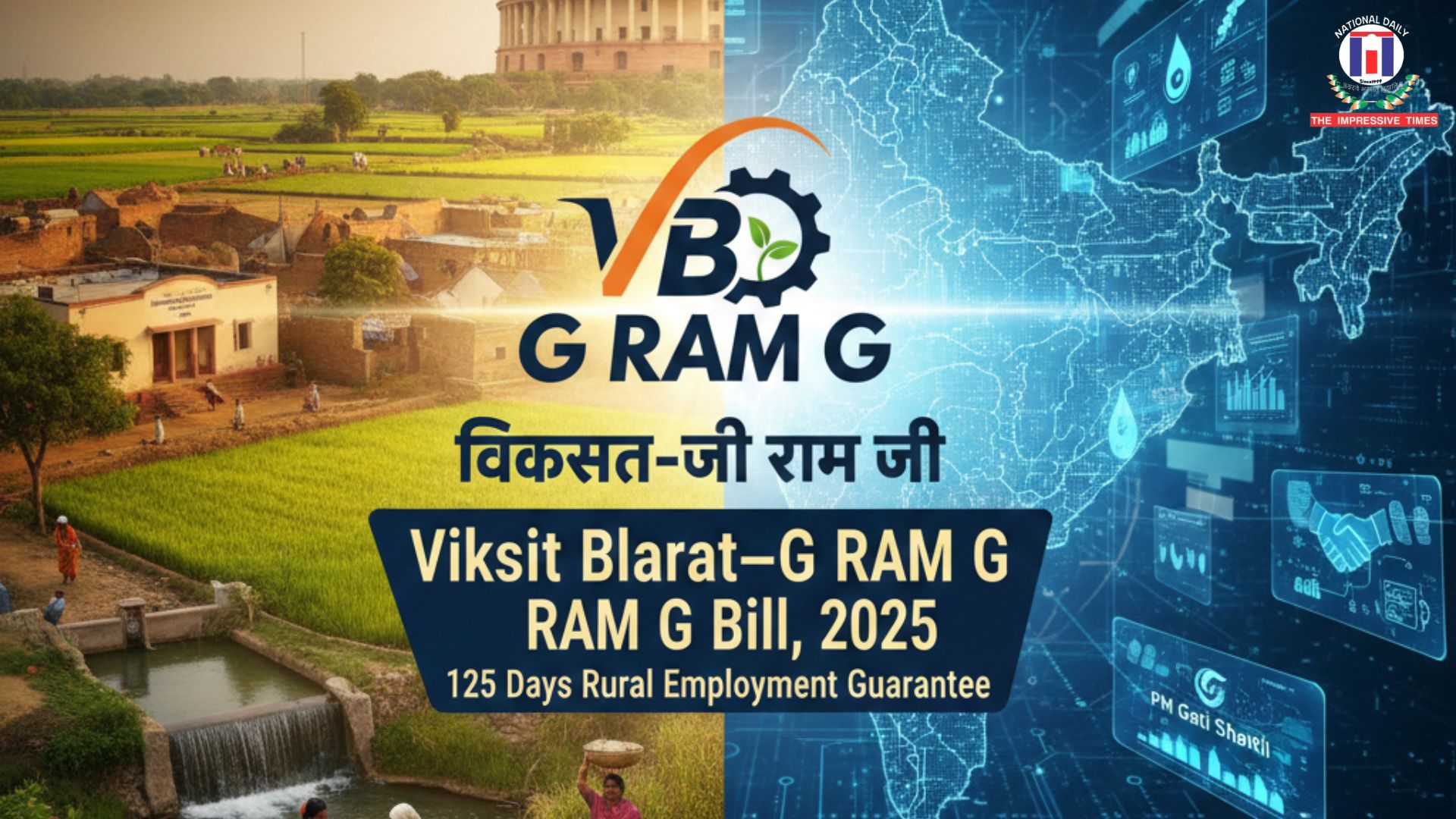
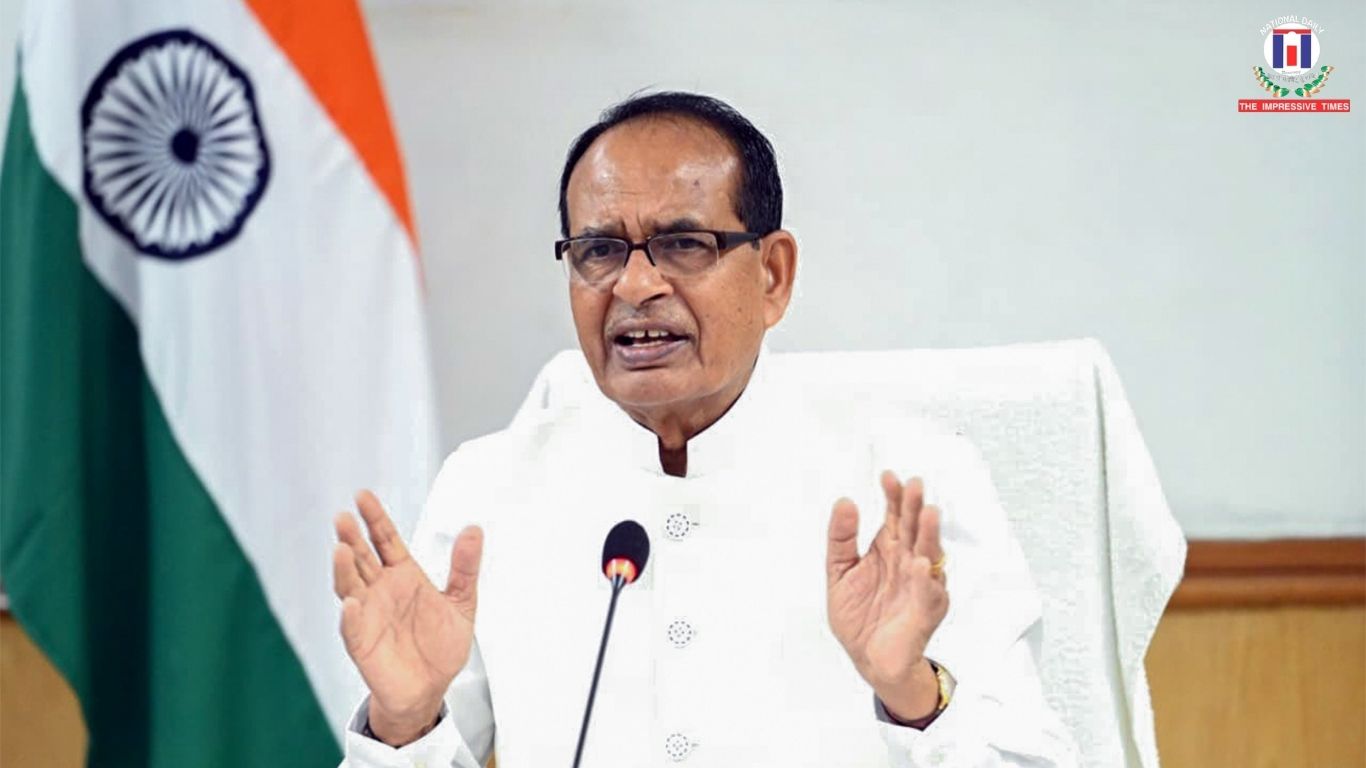
New Delhi – Union Minister for Rural Development and Agriculture & Farmers’ Welfare Shivraj Singh Chouhan on Monday introduced the Viksit Bharat – Guarantee for Rozgar and Ajeevika Mission (Gramin) Bill, 2025, also referred to as VB G RAM G (विकसित भारत–जी राम जी), in the Lok Sabha.
The proposed legislation seeks to strengthen India’s rural development framework in line with the vision of Viksit Bharat @2047 by providing a statutory guarantee of 125 days of wage employment per financial year to rural households whose adult members are willing to undertake unskilled manual work.
The Bill aims to create a convergence-driven and saturation-focused rural development architecture, centred on empowerment, growth, and resilience. By expanding employment opportunities and integrating infrastructure creation, the proposed framework is designed to accelerate rural transformation while ensuring sustainable livelihoods.
A key feature of the Bill is the institutionalisation of scheme convergence through unified planning, anchored in Viksit Gram Panchayat Plans (VGPPs). These bottom-up plans will be prepared by Gram Panchayats on a saturation basis and aggregated at block, district and state levels to ensure alignment with national and sectoral priorities.
All works undertaken under the Bill will be consolidated into a Viksit Bharat National Rural Infrastructure Stack, creating a unified national framework for rural public works. Priority will be given to:
Planning will be enabled through spatial technologies and integrated with PM Gati Shakti to ensure coordinated and efficient execution.
To ensure the availability of farm labour during peak sowing and harvesting periods, States will be allowed to notify up to 60 days in a financial year during which works under the Bill will not be undertaken.
The scheme will operate as a Centrally Sponsored Scheme (CSS). The cost-sharing pattern will be 90:10 for North-Eastern and Himalayan States/UTs and 60:40 for other States. States will be required to prepare and notify their implementation schemes within six months of the Act coming into force.
Funds will be allocated to States based on objective and normative parameters, with transparent and need-based intra-State distribution across districts and Gram Panchayats to promote equity and balanced development.
The Bill mandates a comprehensive digital governance ecosystem, including biometric authentication, mobile-based reporting, real-time dashboards, AI-enabled analytics and strengthened social audit mechanisms.
Gram Panchayats will hold weekly public disclosure meetings at Panchayat Bhavans to share details of works, payments, grievances, progress and muster rolls. These disclosures will also be automatically generated and made available in both physical and digital public formats.
Wage rates will be notified by the Central Government, with existing MGNREGA wage rates continuing until new rates are announced. The Bill also provides for unemployment allowance, payable by State Governments if employment is not provided within 15 days of demand.
The government noted that rural India has seen significant transformation over the past two decades, driven by expanded infrastructure, digital inclusion, financial access and scheme saturation. However, rising aspirations, climate challenges and evolving workforce patterns call for a more integrated, technology-enabled and future-oriented approach.
By increasing the guaranteed employment from 100 to 125 days and anchoring it in a comprehensive rural infrastructure framework, the proposed legislation aims to strengthen livelihoods, reduce disparities and support India’s long-term development goals under Viksit Bharat @2047.
























No Comments: