Trump Announces 100% Tariff on Imported Pharmaceuticals Without US-Based Manufacturing
New tariff policy to take effect from October 1, 2025; exemptions for companies already building plants in the US.

 The Impressive Times
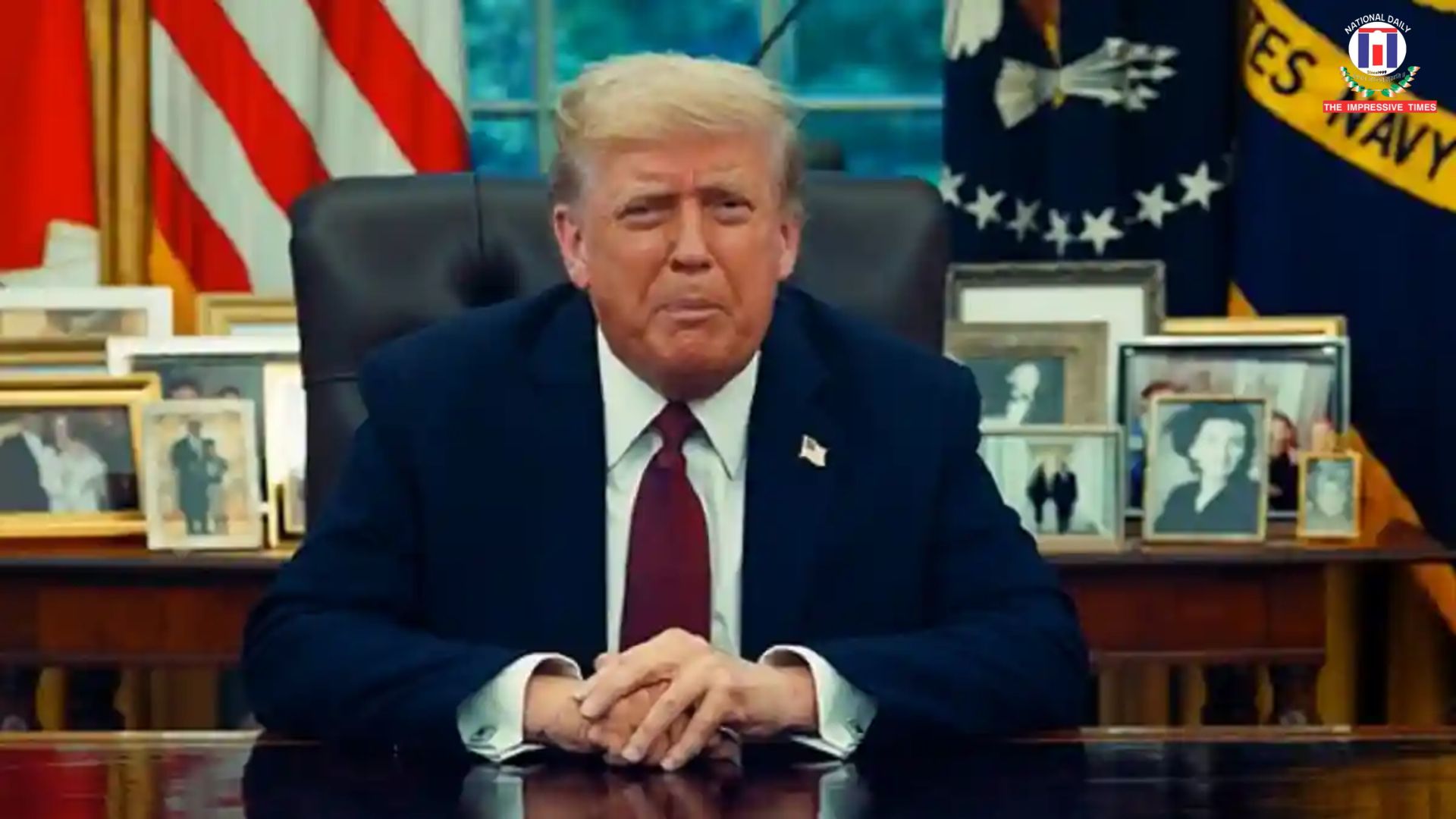
Washington, DC [US], September 26: United States President Donald Trump on Friday announced a 100% tariff on branded and patented pharmaceutical products that are imported into the country without US-based manufacturing facilities. The move, effective October 1, 2025, aims to push global pharmaceutical companies to set up production within the United States.
In a post on Truth Social, Trump stated:
“Starting October 1st, 2025, we will be imposing a 100% Tariff on any branded or patented Pharmaceutical Product, unless a Company IS BUILDING their Pharmaceutical Manufacturing Plant in America. ‘IS BUILDING’ will be defined as ‘breaking ground’ and/or ‘under construction.'”
He clarified that companies which have already begun construction of plants in the US will be exempt from the new tariff.
Alongside pharmaceuticals, the Trump administration also unveiled sweeping tariffs on household products, including:
50% tariff on kitchen cabinets, bathroom vanities, and related products.
30% tariff on upholstered furniture.
Heavy tariffs on imported trucks and additional goods.
According to CNN, these measures have already contributed to a 4.7% rise in furniture prices compared to last year, with living room and dining room furniture witnessing a sharp 9.5% price hike.
The tariffs largely target imports from China and Vietnam, the top two sources of US furniture imports, but extend to several other nations. Recent tariff hikes also include:
50% tariffs on Indian goods (with an extra 25% linked to trade with Russia).
50% on Brazilian goods.
30% on South African goods.
20% on Vietnamese goods.
15% on Japanese and South Korean goods.
Trump defended the tariffs as a measure to curb “unfair flooding” of goods into the US market and to rebuild domestic manufacturing.
“It is a very unfair practice, but we must protect, for National Security and other reasons, our Manufacturing process,” he said.
The announcement marks one of the most aggressive steps yet by the Trump administration to re-shore manufacturing and reduce dependence on imports in critical sectors like pharmaceuticals and furniture manufacturing.










































No Comments: