
 The Impressive Times
Deepti
info@impressivetimes.com
In an age of growing reliance on short-term online certifications and micro-courses, a new survey shows that traditional degrees continue to carry more weight among Indian professionals seeking career advancement.
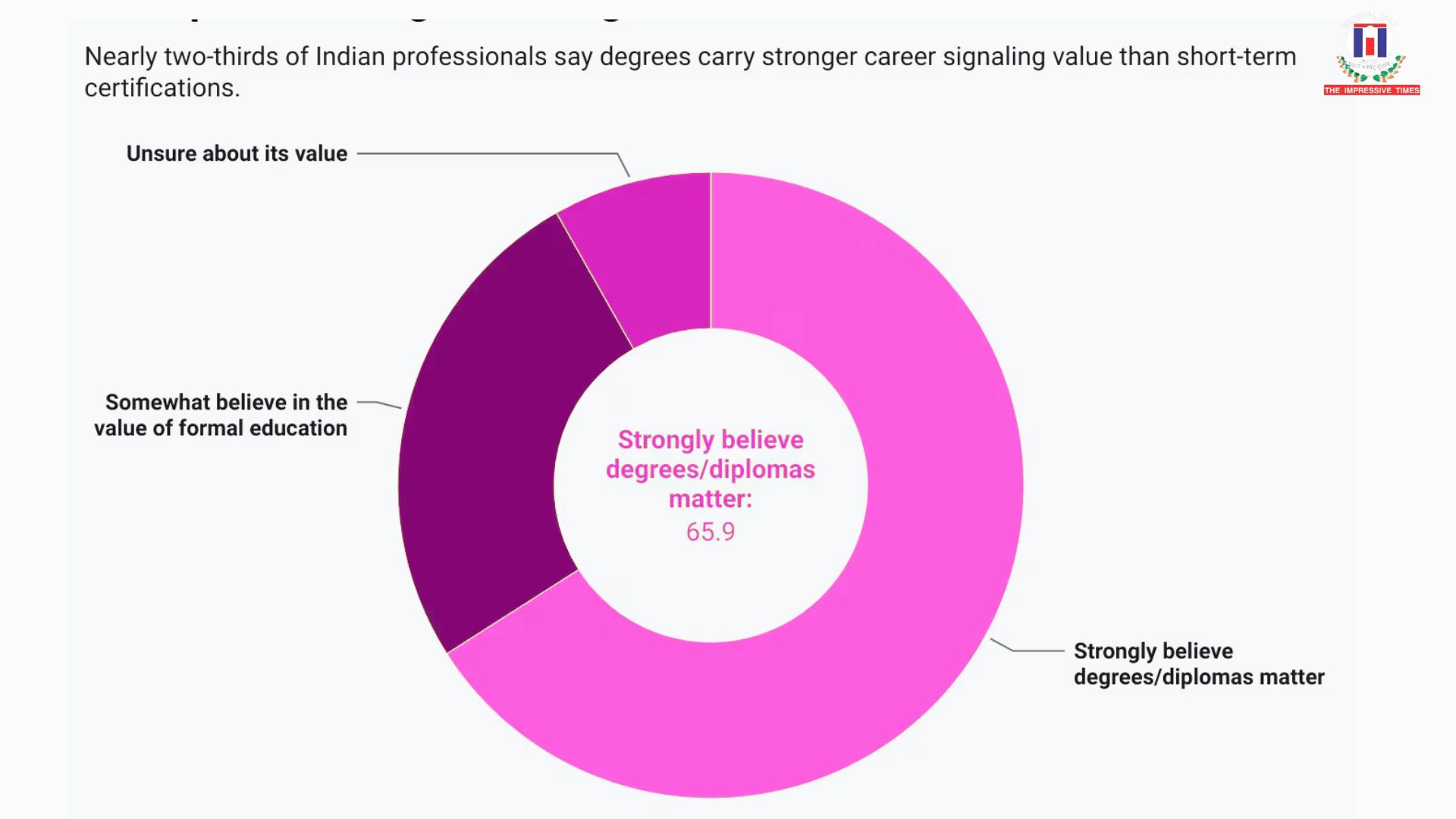
According to the ‘Impact of Upskilling on Performance Appraisals’ report by TeamLease EdTech, nearly 66% of professionals across sectors such as Technology, Sales, Finance, HR, and Operations said they “most definitely” believe formal degrees and diplomas have stronger value when it comes to career growth. Only 8% of respondents expressed uncertainty about their relevance.
While short-term courses remain popular—used by over 50% of respondents for immediate learning needs—the preference for degrees persists when it comes to long-term progression, promotions, and role shifts. This trend is especially prominent in traditional sectors where formal education is still viewed as a reliable metric in appraisals and promotion cycles.
The survey gathered insights from 14,316 working professionals and found that 84% had engaged in some form of upskilling in the past year. Among them, those who chose longer-duration formal learning reported greater confidence in their growth trajectory, even when promotions were not immediate.
Interestingly, 46% of professionals funded their own upskilling efforts, while only 24% received full sponsorship from employers. Self-funding was particularly high in the tech and finance sectors, with 78% of professionals covering their own costs.
The report also reveals that while short-term courses are widely used to stay updated and meet on-the-job challenges, degrees are still considered more valuable for long-term career planning. Around 61% of respondents said future career planning was their main motivation for upskilling, and those with a long-term mindset were three times more likely to report clarity in their career path.
TeamLease concludes that Indian professionals are following a dual-track approach—using short courses for immediate skill-building while investing in degrees and diplomas for sustained career advancement.

























No Comments: