Chief Justice of India Surya Kant Questions Centre’s Stand on Religious Practices Review
Supreme Court Affirms Role in Upholding Constitutional Limits on Faith

 The Impressive Times
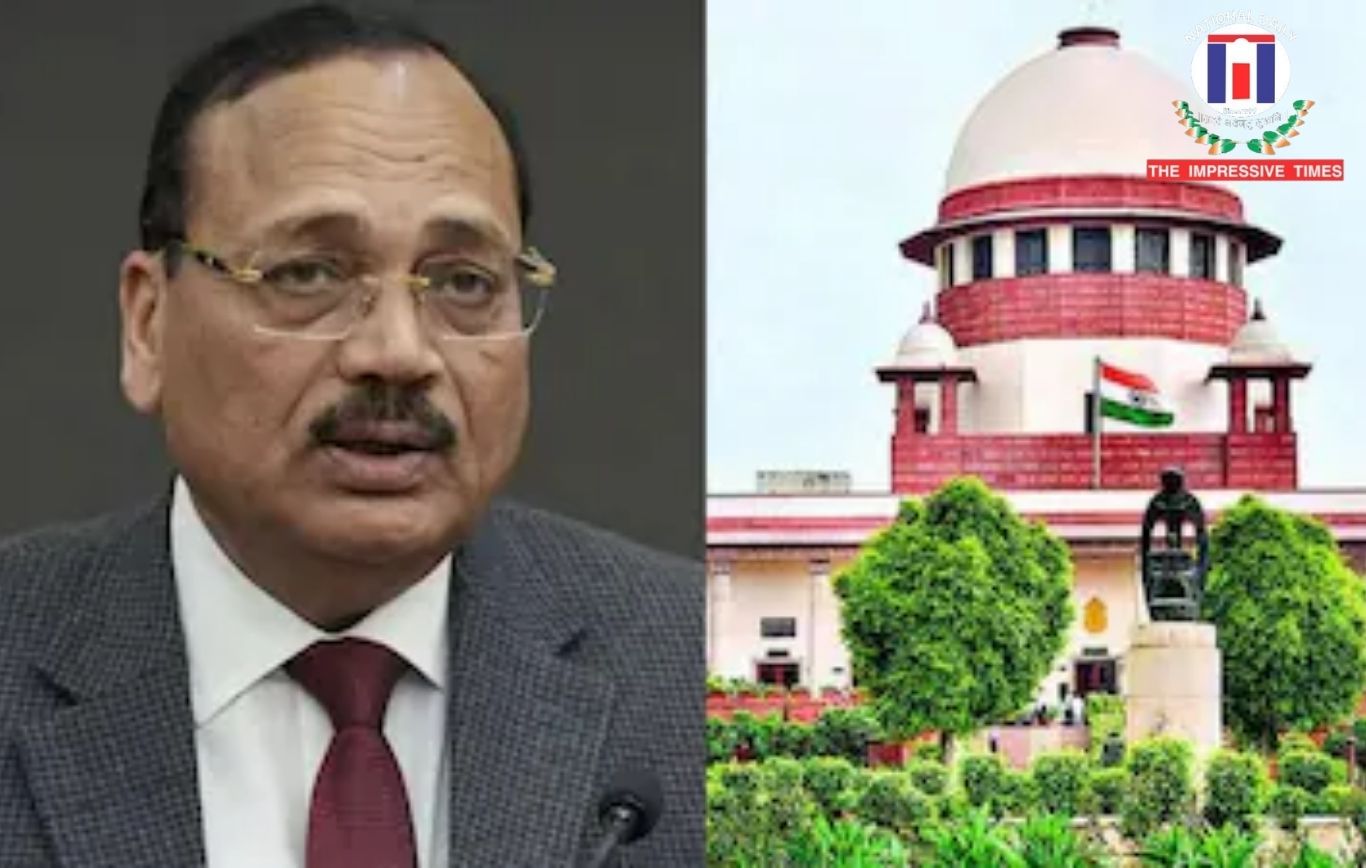
New Delhi, April 9 2026: Chief Justice of India Surya Kant led a Constitution bench that firmly pushed back against the Union government’s argument that courts should not examine matters of religious faith, asserting that judicial oversight cannot be entirely excluded when constitutional values are at stake.
The observations came during continued hearings in the long pending Sabarimala case, where the Centre maintained that issues rooted in faith and denominational practices fall outside the scope of judicial scrutiny.
The bench made it clear that while courts exercise restraint in religious matters, they cannot abdicate their responsibility if a practice appears to violate fundamental rights or constitutional principles.
The Chief Justice noted that in instances where a practice is visibly in conflict with public order, morality, or health, courts may not require extensive examination before intervening.
The Centre, represented by Solicitor General Tushar Mehta, argued that judges lack the institutional expertise to determine whether a religious practice is irrational or superstitious, suggesting that such reforms should be left to legislative processes.
However, the bench expressed reservations over this position, indicating that such a broad exclusion of judicial review could undermine constitutional safeguards.
Justice Ahsanuddin Amanullah described the argument as overly simplistic, stating that courts do retain the authority to assess whether certain practices may cross into impermissible territory.
Justice MM Sundresh cautioned that adopting a completely hands off approach would weaken the judiciary’s role, particularly in cases where practices are clearly incompatible with constitutional values.
Drawing parallels with historical practices that were later outlawed, the bench highlighted the importance of judicial intervention in safeguarding rights.
Justice Joymalya Bagchi raised hypothetical scenarios to test the Centre’s argument, questioning whether courts would remain powerless if harmful practices were justified under the guise of religion.
The Centre responded that such situations could still be addressed under the framework of public order and morality, without necessarily categorizing them as superstition.








































No Comments: